Kristiansund
A town built on four islands around a harbour, made rich by dried salt cod and crossed by a small passenger ferry since 1876.
Updated 21 October 2026
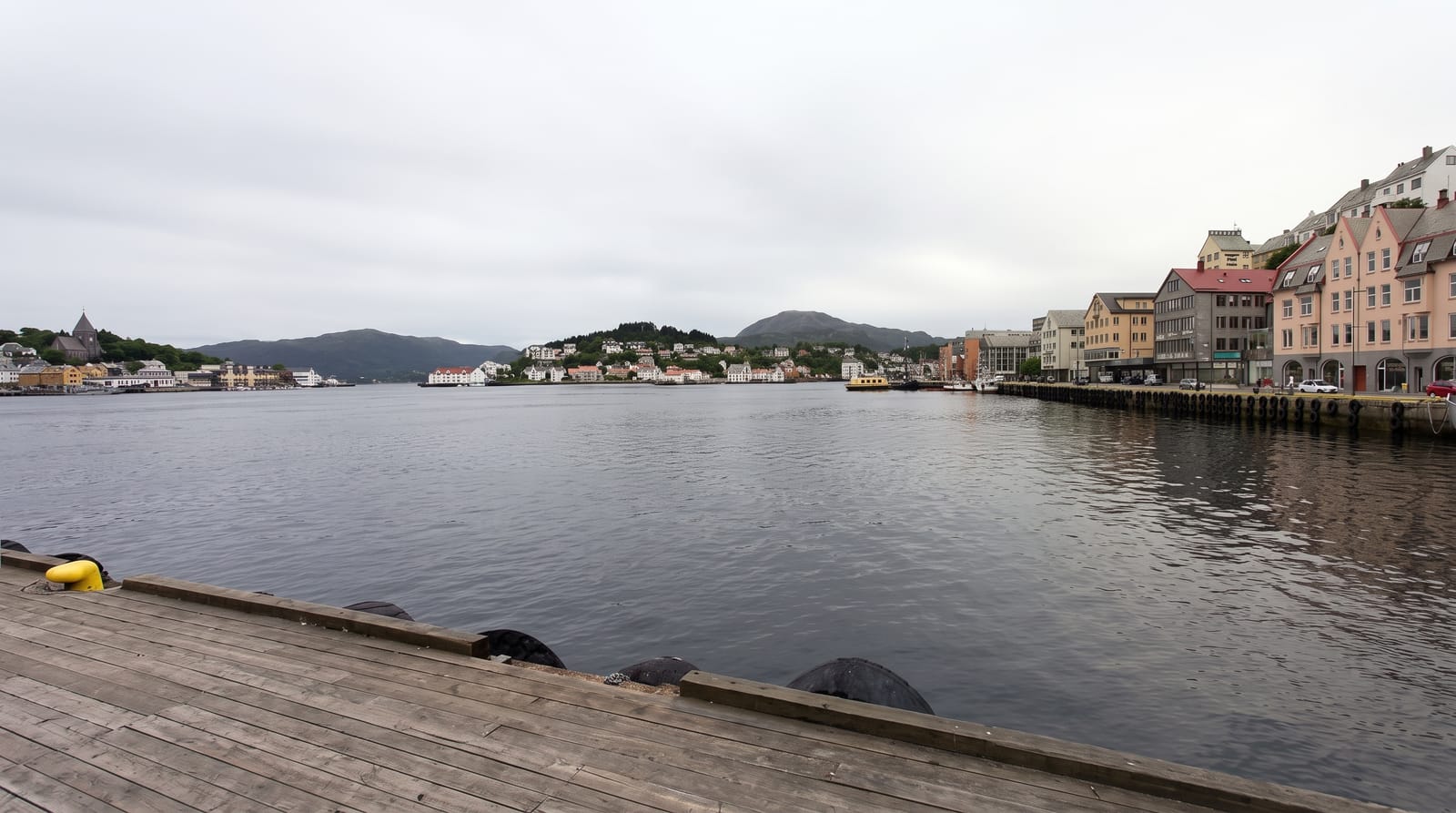
AI illustration
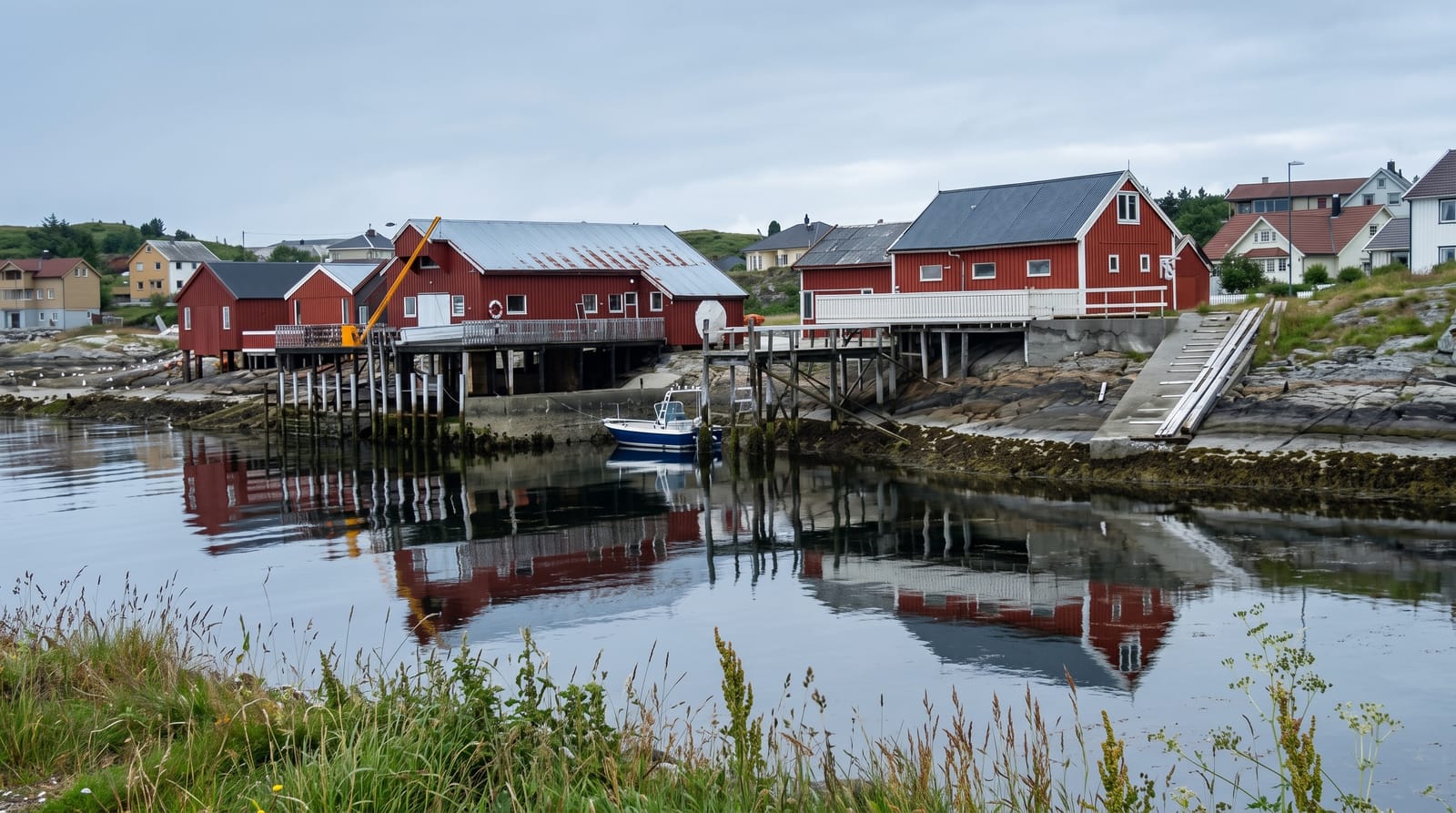
Kristiansund is spread across four islands around a central harbour, and the crossing between them is made by the Sundbaten, a small passenger ferry service running since 1876 and among the oldest continuously operating public transport routes in the world; the little wooden boats take a few minutes between quays. The town's wealth came from klippfisk, cod split, salted and dried on the bare rock, exported to Spain, Portugal and Brazil from the eighteenth century onward, and the Norwegian Clipfish Museum in an old wharf building covers the trade. Almost the entire town was destroyed by bombing in 1940 and rebuilt in a postwar style, so the historic fabric is concentrated in a few surviving quarters like Innlandet.
History
Settlement here goes back to about 8000 BC, first found at Voldvatnet in 1909. A small settlement grew around the harbour in the 17th century and became a ladested in 1631; Dutch sailors brought clipfish production at the end of that century, and the trade helped the town gain kjøpstad status in 1742. It became a municipality on 1 January 1838 and was merged with Grip in 1964 and with Frei in 2008 (Wikipedia, Kristiansund Municipality).
What's there
- The Sundbaten - a small passenger ferry running since 1876.
- The Clipfish Museum - the dried cod trade in an old wharf building.
- Innlandet - a surviving quarter of older timber houses.
- The four-island layout - a town arranged around its central harbour.
When to go
May to September for the best weather and the fullest ferry and museum schedules; the Sundbaten runs year-round on weekdays. The Opera festival in February is a long-standing local event.
Before you go
Most of the town is postwar reconstruction after the 1940 bombing, so visitors expecting an old wooden town will find only fragments. The weather is wet and windy for much of the year. Some museums open in summer only.
Nearby
The Atlantic Road runs southwest; Grip island lies offshore and Molde is south-west along the coast.
Key facts
Source: Wikidata, item Q109483, read on 18 October 2026.
What to pack for Kristiansund
Chosen from what this place is for. Tap a kit for the full checklist.
- Comfortable walking shoes - Sightseeing means kilometres of pavement and cobbles daily. Find on Amazon
- A slim anti-theft daypack - Zips that close properly; keep it in front in crowds and on transit. Find on Amazon
- A refillable water bottle - Many cities have public fountains; save money and plastic. Find on Amazon
- A light layer + compact umbrella - For museum air-con and a sudden shower. Find on Amazon
Some links on this page are Amazon affiliate links - if you buy through them we may earn a small commission at no extra cost to you.
All packing kitsPlan your trip
Where to start if Kristiansund is going on the list.
Booking links on this page are affiliate links - if you book through them we may earn a small commission at no extra cost to you. It never changes what we write about a place.
Opening times, ticket prices and seasonal closures change - check the official source before you go: official site.