Bradford-on-Avon
A Wiltshire wool town of terraced weavers' cottages, holding a Saxon church that was lost for eight hundred years.
Updated 20 October 2026
AI illustration
The town made cloth from the medieval period and the money built terraces of weavers' cottages up the steep slope above the Avon, each with long upper windows to light the looms, along with clothiers' houses and a fourteenth-century tithe barn 55 metres long with a stone roof of around a hundred tonnes. Its oddest survival is St Laurence's, a small Saxon church of probably the tenth or eleventh century that was absorbed into the town: the nave became a cottage, the chancel a school, and it was only in 1856 that a vicar looking down from a hill recognised the shape of a church in the roofline and the building was identified and cleared. The medieval town bridge carries a small domed lock-up, originally a chapel, later a gaol for drunks.
What's there
- St Laurence's - a Saxon church built over and lost until 1856.
- The weavers' terraces - cottages climbing the slope with long loom windows.
- The tithe barn - a fourteenth-century barn fifty-five metres long, free to enter.
- The bridge lock-up - a domed cell on the medieval bridge, once a chapel.
When to go
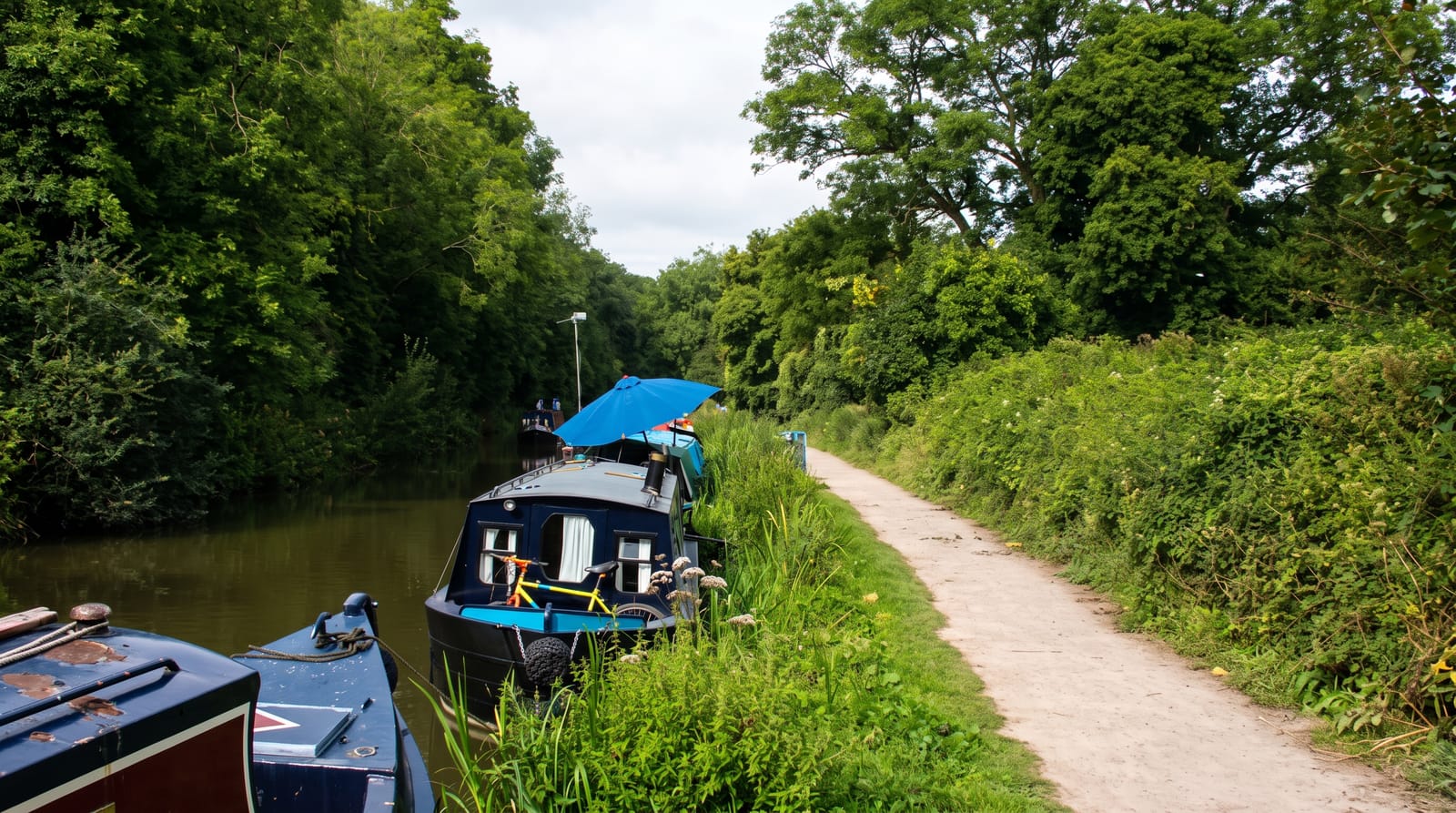
April to October for walking the steep terraces and the canal towpath; the town is a short train ride from Bath and much quieter. The Kennet and Avon Canal runs above the town with an aqueduct nearby.
Things to know
The town is built on a steep hill and the cottage terraces involve serious climbing on narrow paths. St Laurence's is small and plain inside, with nothing but the fabric to see. Parking is limited.
Nearby
Bath lies northwest; the Kennet and Avon Canal and Avoncliff aqueduct are alongside.
Key facts
Source: Wikidata, item Q896940, read on 18 October 2026.
What to pack for Bradford-on-Avon
Chosen from what this place is for. Tap a kit for the full checklist.
- Comfortable walking shoes - Sightseeing means kilometres of pavement and cobbles daily. Find on Amazon
- A slim anti-theft daypack - Zips that close properly; keep it in front in crowds and on transit. Find on Amazon
- A refillable water bottle - Many cities have public fountains; save money and plastic. Find on Amazon
- A light layer + compact umbrella - For museum air-con and a sudden shower. Find on Amazon
Some links on this page are Amazon affiliate links - if you buy through them we may earn a small commission at no extra cost to you.
All packing kitsPlan your trip
Where to start if Bradford-on-Avon is going on the list.
Booking links on this page are affiliate links - if you book through them we may earn a small commission at no extra cost to you. It never changes what we write about a place.
Opening times, ticket prices and seasonal closures change - check the official source before you go: official site.