Bath
An elegant Georgian city built around Roman hot springs - honey-stone crescents and the ancient Roman Baths, a UNESCO gem in the green hills of the West Country.
Updated 18 October 2026
AI illustration
UNESCO World Heritage
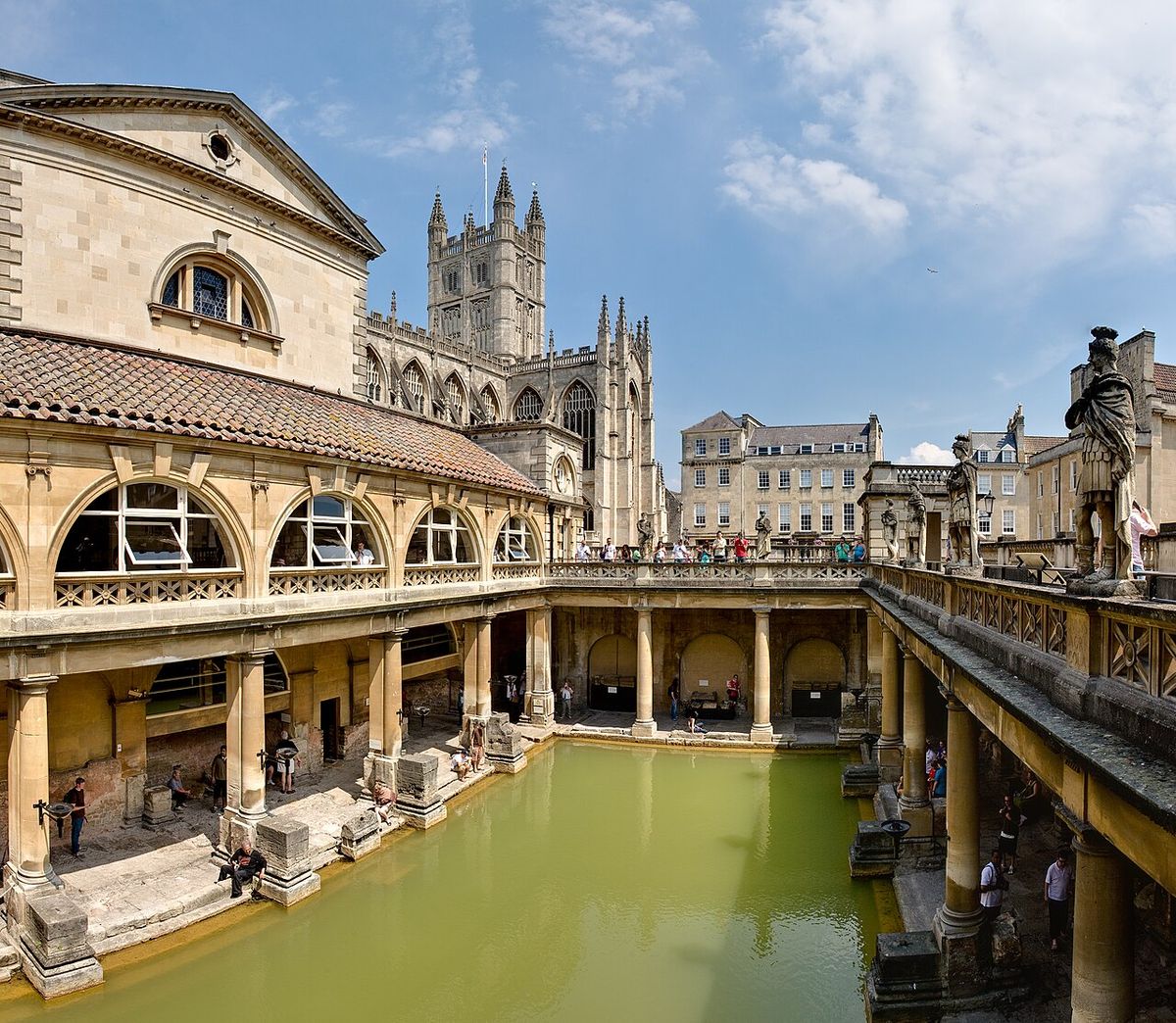
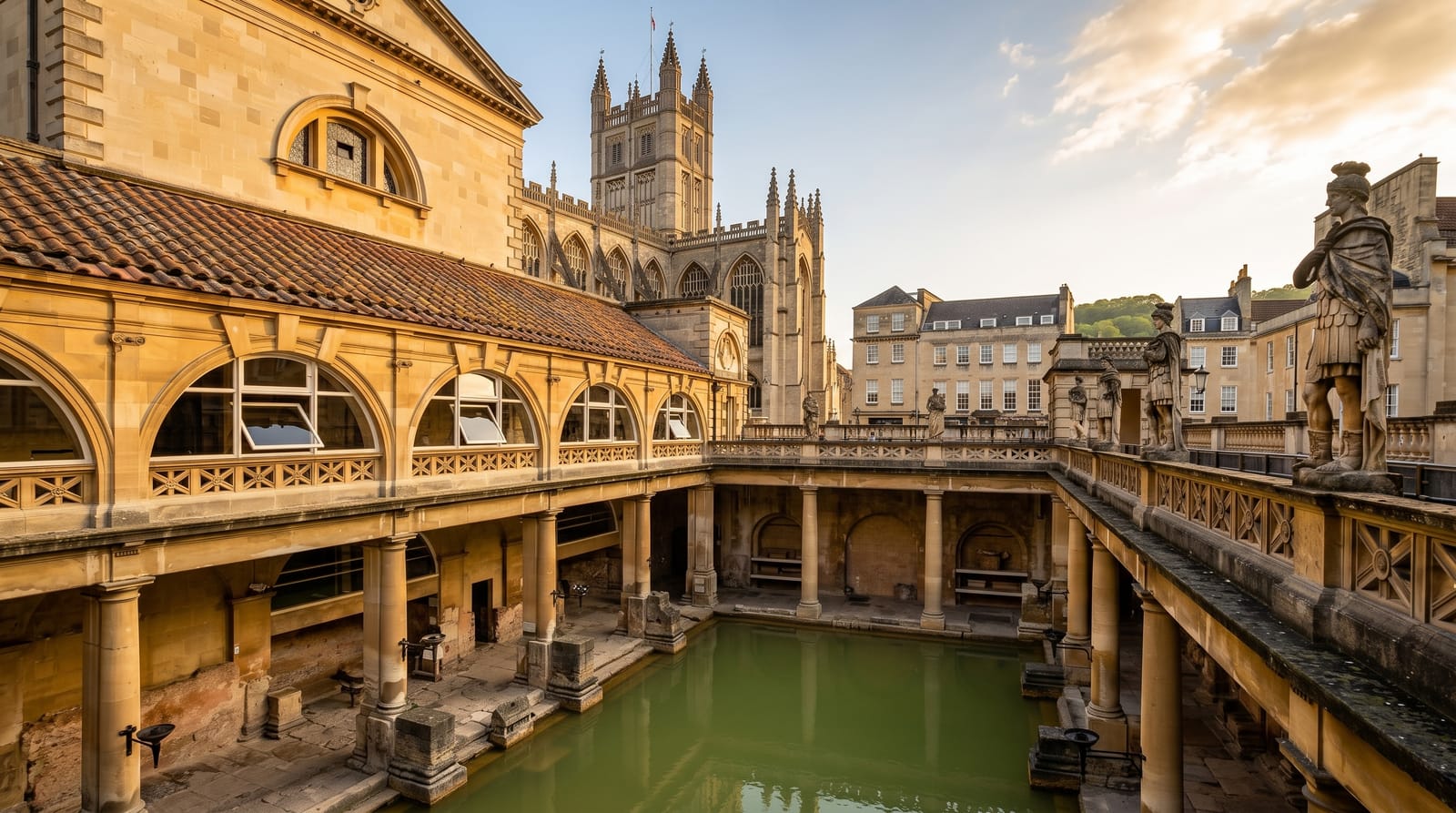
Bath is one of the most elegant cities in Britain, a UNESCO gem built in honey-coloured stone around the only natural hot springs in the country. The Romans built a grand bathing complex here, remarkably preserved as the Roman Baths, and the Georgians made it a fashionable spa, laying out the sweeping Royal Crescent and the Circus in perfect classical proportion, all cradled in the green hills of the West Country.
History
The hot spring may have been a British shrine to the water goddess Sulis, whose name survived in the Roman town of Aquae Sulis, where a temple was built in 60-70 AD and the baths grew over the next 300 years; curse tablets scratched on metal have been recovered from the sacred spring. The West Saxons took the town in 577 after the Battle of Deorham, a monastery was founded probably in 675 by Osric, King of the Hwicce, and the abbey, rebuilt in the 12th and 16th centuries, became a religious centre. In the 17th century the waters were claimed to cure ills, Bath became a fashionable spa in the Georgian era, building the Royal Crescent, the Circus and the Pump Room in Bath stone, and it became a World Heritage Site in 1987 and later one of the Great Spa Towns of Europe (Wikipedia, Bath, Somerset).
What's there
- The Roman Baths - the remarkably preserved ancient bathing complex.
- The Royal Crescent - the sweeping curve of Georgian townhouses.
- The Circus and Georgian streets - the elegant honey-stone architecture.
- Bath Abbey and the Pump Room - the abbey and the spa's elegant tea room.
When to go
Spring to autumn for the best weather and green surroundings; December brings a famous Christmas market. It is an easy day trip from London, but staying overnight lets you enjoy the Georgian city once the day-trippers leave.
Before you go
It is very popular and the centre gets busy with day-trippers and tour groups; mornings and evenings are calmer. The Roman Baths are ticketed, timed and busy, so book ahead. The city is compact and hilly, best enjoyed on foot at an unhurried pace.
Nearby
The Cotswolds, Stonehenge and the city of Bristol are all within easy reach.
Key facts
Source: Wikidata, item Q22889, read on 18 October 2026.
What to pack for Bath
Chosen from what this place is for. Tap a kit for the full checklist.
- Comfortable walking shoes - Sightseeing means kilometres of pavement and cobbles daily. Find on Amazon
- Modest clothing - Shoulders and knees covered - the single most common requirement. Find on Amazon
- Shelter suited to the place - Tent, tarp or hut booking - match it to the terrain and rules. Find on Amazon
- Swimwear - Needed at most public thermal pools; some traditional baths are nude and single-sex. Find on Amazon
Some links on this page are Amazon affiliate links - if you buy through them we may earn a small commission at no extra cost to you.
All packing kitsPlan your trip
Where to start if Bath is going on the list.
Booking links on this page are affiliate links - if you book through them we may earn a small commission at no extra cost to you. It never changes what we write about a place.
Opening times, ticket prices and seasonal closures change - check the official source before you go: official site.