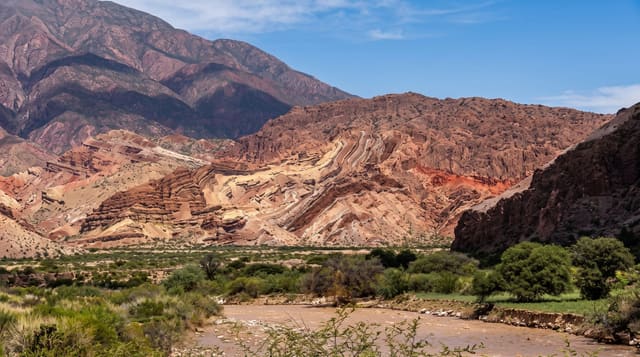
Cafayate
The sunny wine town of the Calchaquí Valleys, home of high-altitude Torrontés, with a shaded plaza, bodegas on the doorstep and red rock all around.
Updated 18 October 2026
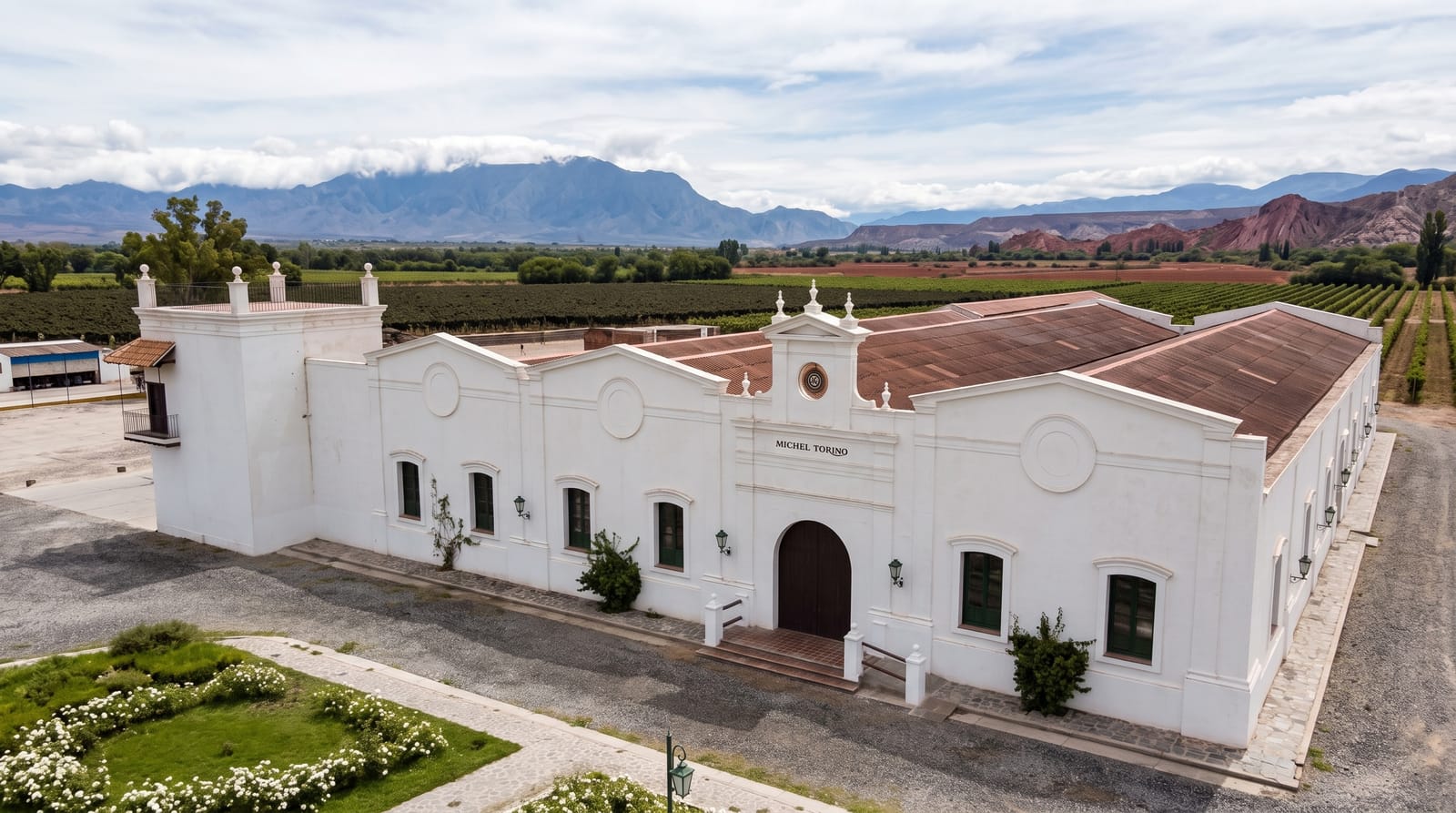
AI illustration
Cafayate is the centre of winemaking in the Calchaquí Valleys, a low-slung town of adobe and brick at around 1,700 metres where the sun is fierce, the air is dry and vineyards run right to the edge of the streets. Its signature is Torrontés, an aromatic white grape that finds its finest expression here, floral on the nose and dry on the palate, alongside deep, high-altitude Malbec and Cabernet. Many bodegas, from century-old family estates to modern boutique wineries, are within walking or cycling distance of the plaza, and tasting rooms are informal and inexpensive by international standards. The town itself is pleasantly slow: a shaded square, an ice cream shop famous for its wine-flavoured scoops, a wine museum, and craft stalls selling ponchos and ceramics from the surrounding valleys.
History
Before the Spanish arrived the Calchaquí Valleys were home to the Cafayates, a Diaguita-Calchaquí people who spoke Cacán and who, like other Diaguita groups, had recently come under Inca influence after a long resistance, and who later fiercely resisted the Spaniards; the name is thought to mean grave of sorrows in Cacán. Manuel Fernando de Aramburu founded the town in 1840 on the site of a mission, and in 1863 it became the capital of the new Cafayate Department (Wikipedia, Cafayate).
Highlights
- The bodegas - historic and boutique wineries within reach of the plaza on foot or bike.
- Torrontés tastings - the aromatic high-altitude white the valley is known for.
- The shaded plaza - the town's slow centre with craft stalls and cafes.
- The wine ice cream - the local Torrontés and Cabernet scoops beside the square.
When to go
April to November is dry and mild; February and March bring the grape harvest and its festivals, along with heat and afternoon storms. The town is at its busiest during Argentine holidays. Days are hot even in winter, nights cool sharply.
Things to know
Cafayate is small and low-key, and two days is enough; travellers expecting Mendoza's scale or polish will find it modest. Some bodegas require booking, and tasting rooms can close early or over the long lunch. Summer heat is severe, and the drive in is long.
Nearby
The Quebrada de las Conchas runs north toward Salta; Molinos and Cachi lie north up the valley.
Key facts
Source: Wikidata, item Q1025501, read on 18 October 2026.
What to pack for Cafayate
Chosen from what this place is for. Tap a kit for the full checklist.
- Padded shorts - The one thing that makes a full day in the saddle bearable. Find on Amazon
- Comfortable walking shoes - Sightseeing means kilometres of pavement and cobbles daily. Find on Amazon
- Helmet - Bring your own if you have a good one; rentals vary wildly. Find on Amazon
- A slim anti-theft daypack - Zips that close properly; keep it in front in crowds and on transit. Find on Amazon
Some links on this page are Amazon affiliate links - if you buy through them we may earn a small commission at no extra cost to you.
All packing kitsPlan your trip
Where to start if Cafayate is going on the list.
Booking links on this page are affiliate links - if you book through them we may earn a small commission at no extra cost to you. It never changes what we write about a place.
Opening times, ticket prices and seasonal closures change - check the official source before you go: official site.