Duodji
Sami handicraft in reindeer horn, birch, leather and pewter, made to be used rather than displayed.
Updated 4 September 2026
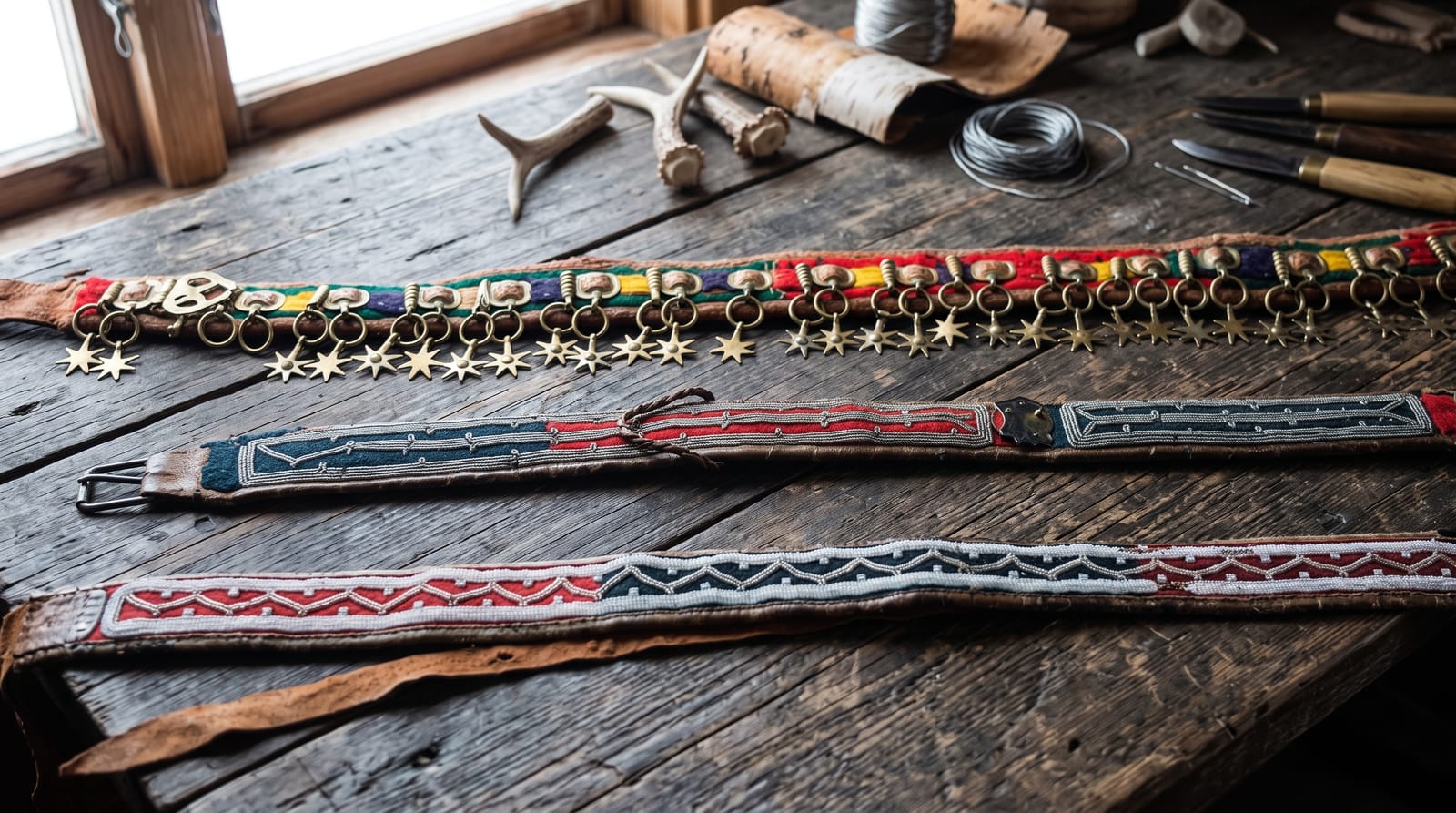
AI illustration
Duodji covers the whole range of Sami making: knives with reindeer-horn handles and carved sheaths, wooden cups called guksi cut from birch burl, coffee bags and shoes from reindeer leather, woven bands, and pewter-thread embroidery worked onto leather in fine coiled patterns. The principle behind it is function; objects were made to be used in a herding life, and decoration follows the form rather than replacing it. Materials come from the animals and trees at hand. A registered trademark, Sami Duodji, identifies work made by Sami makers to traditional standards, distinguishing it from mass-produced imitations sold to tourists, which are common. Workshops in Kautokeino and Karasjok sell directly, and markets at Easter bring makers together.
What you'll find
- The reindeer-horn knives - carved handles and sheaths, made to be used.
- The birch guksi - drinking cups cut from burl wood.
- The pewter embroidery - fine coiled metal thread worked onto leather.
- The Sami Duodji mark - a trademark identifying authentic Sami-made work.
When to go
Year-round at workshops and shops; the Easter markets in Kautokeino and Karasjok bring the widest selection and the makers themselves. Winter is when much of the making happens indoors.
What to expect
Souvenir shops across northern Norway sell imitation Sami goods made elsewhere, so looking for the Sami Duodji mark matters. Genuine pieces are expensive, reflecting the hours involved. Photographing makers or their work without asking is unwelcome.
Nearby
Kautokeino and Karasjok are the main centres; Juhls Silver Gallery and Sapmi Park are close to each.
What to pack for Duodji
Chosen from what this place is for. Tap a kit for the full checklist.
- Comfortable walking shoes - Sightseeing means kilometres of pavement and cobbles daily. Find on Amazon
- A slim anti-theft daypack - Zips that close properly; keep it in front in crowds and on transit. Find on Amazon
- A refillable water bottle - Many cities have public fountains; save money and plastic. Find on Amazon
- A light layer + compact umbrella - For museum air-con and a sudden shower. Find on Amazon
Some links on this page are Amazon affiliate links - if you buy through them we may earn a small commission at no extra cost to you.
All packing kitsPlan your trip
Where to start if Duodji is going on the list.
Booking links on this page are affiliate links - if you book through them we may earn a small commission at no extra cost to you. It never changes what we write about a place.
Opening times, ticket prices and seasonal closures change - check the official source before you go: official site.