Bergen Railway
A 496-kilometre line between Oslo and Bergen crossing the Hardangervidda plateau at over 1,200 metres.
Updated 21 October 2026
AI illustration
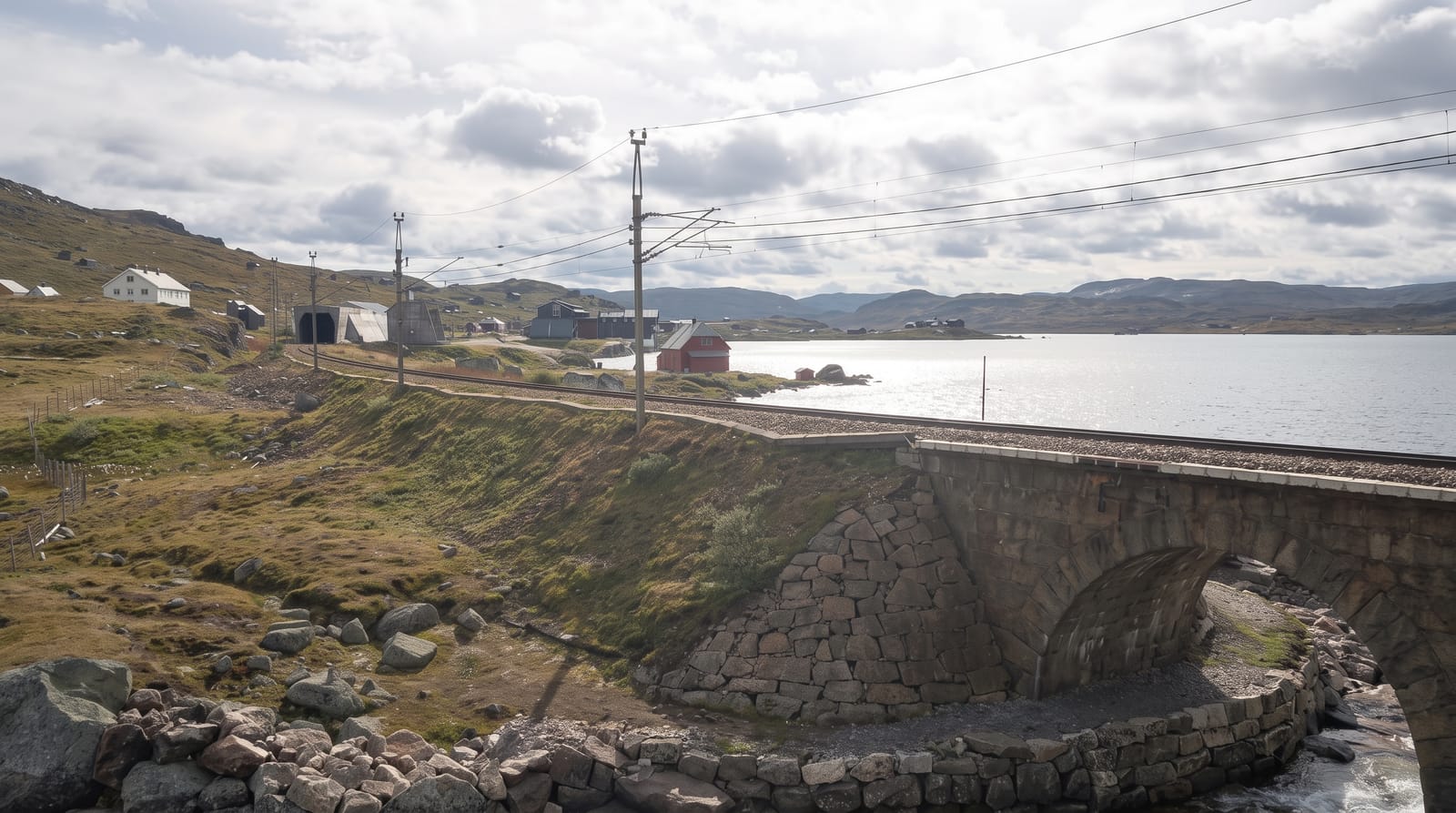
The Bergensbanen opened in 1909 after more than a decade of construction that used thousands of navvies working through winters at altitude, and it remains the highest main railway line in northern Europe, crossing the Hardangervidda with its highest point near Finse at 1,237 metres. The journey takes about seven hours over 496 kilometres, running from the farmland around Oslo up through Hallingdal, across a bare high plateau of snow, rock and frozen lakes where nothing grows, then down through Myrdal, where the Flam line branches off, and along the Voss valley to the coast at Bergen. Winter journeys cross a landscape under deep snow, with the line kept open by snow sheds and clearance trains.
History
The first proposal for a railway between Norway's two largest cities was published by Andreas Tanberg Gløersen on 24 August 1871. The line opened from Bergen to Voss in 1883 as the narrow-gauge Voss Line, was carried over the mountains to Oslo in 1909, when the whole route was converted to standard gauge, and was electrified in 1954-64 (Wikipedia, Bergen Line).
What's there
- The plateau crossing - bare high ground above the treeline near Finse.
- The Myrdal junction - the branch where the Flam Railway descends.
- The snow sheds - timber structures protecting the line from drifting.
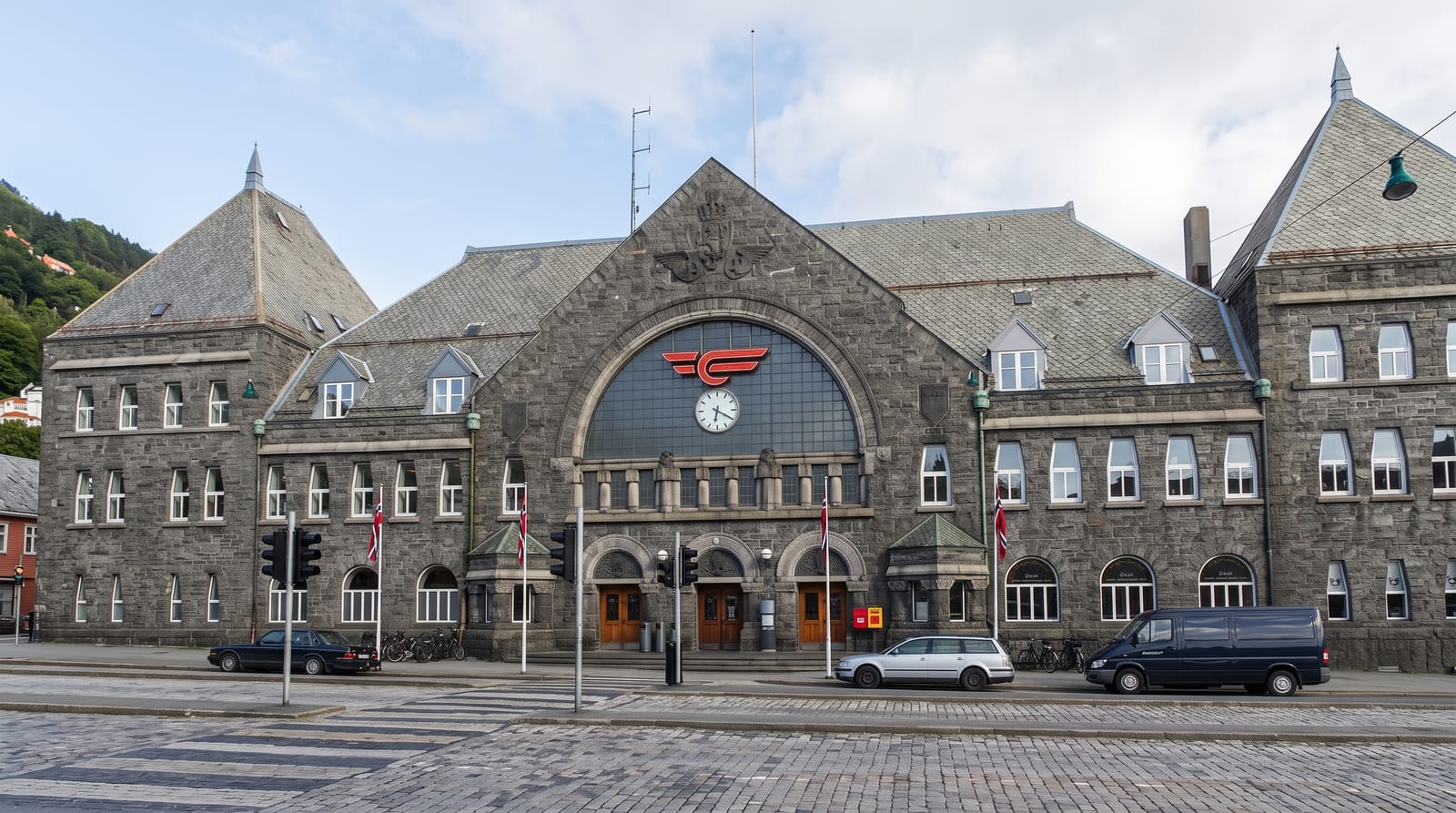
- The descent to Bergen - the Voss valley and fjord country in the west.
When to go
Year-round; summer shows the plateau's lakes and light, and winter crosses deep snow with a very different character. Several departures run daily, including a night train, and seats need booking in summer.
What to expect
Seven hours is a long sit, and the best scenery is concentrated in the middle two hours on the plateau. Views alternate between sides of the train. Weather on the plateau frequently means cloud and nothing to see.
Nearby
Finse, Myrdal and the Flam Railway lie on the route; Voss and Hardangervidda are alongside.
Key facts
Source: Wikidata, item Q777060, read on 18 October 2026.
What to pack for Bergen Railway
Chosen from what this place is for. Tap a kit for the full checklist.
- Warm base layers - Merino or synthetic against the skin - never cotton, which chills when damp. Find on Amazon
- Comfortable walking shoes - Sightseeing means kilometres of pavement and cobbles daily. Find on Amazon
- An insulated + windproof jacket - A down or synthetic layer under a hard shell handles most cold. Find on Amazon
- A slim anti-theft daypack - Zips that close properly; keep it in front in crowds and on transit. Find on Amazon
Some links on this page are Amazon affiliate links - if you buy through them we may earn a small commission at no extra cost to you.
All packing kitsPlan your trip
Where to start if Bergen Railway is going on the list.
Booking links on this page are affiliate links - if you book through them we may earn a small commission at no extra cost to you. It never changes what we write about a place.
Opening times, ticket prices and seasonal closures change - check the official source before you go: official site.