The Osun-Osogbo Sacred Grove
A riverside forest outside Osogbo holding shrines to the Yoruba goddess Osun, with sculptures added from the 1950s.
Updated 18 October 2026
AI illustration
UNESCO World Heritage
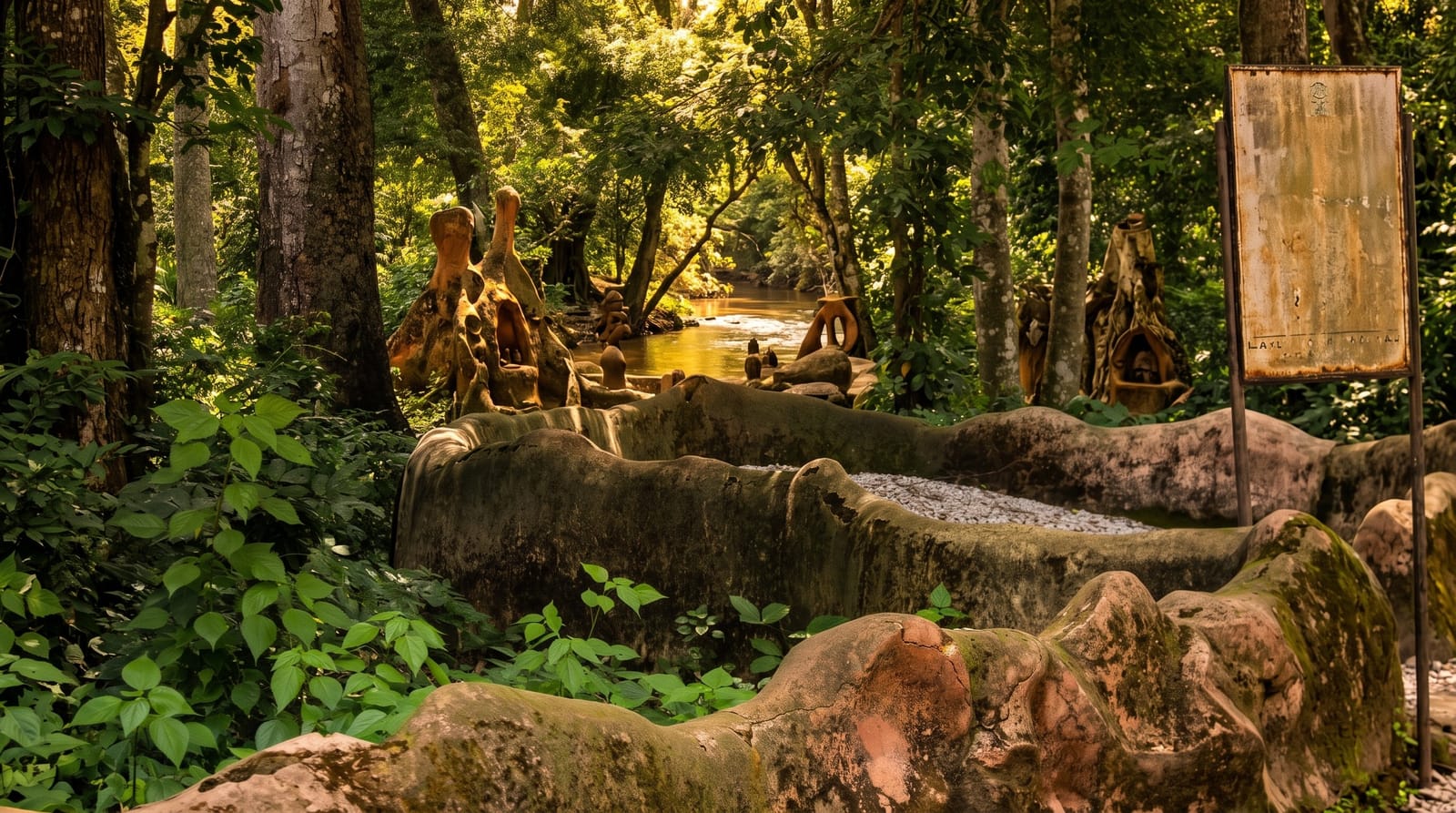
The grove covers around seventy-five hectares of dense forest along the Osun river outside Osogbo, and it is the last substantial sacred grove of its kind in Yorubaland, the others having been cleared as settlements grew. It holds some forty shrines and sculptures to Osun, the river goddess, and other orisa. Its present form owes much to Susanne Wenger, an Austrian artist who settled in Osogbo in the 1950s, became a priestess of Obatala and worked with local artists to rebuild the shrines and add the large organic cement sculptures that stand among the trees. It was inscribed as a World Heritage site in 2005. The annual Osun-Osogbo festival in August brings very large crowds.
History
The grove is several centuries old and one of the last of the sacred forests that once bordered most Yoruba towns before they grew. In the 1950s it was desecrated: shrines were neglected, priests left as customary duties and sanctions weakened, and fishing, hunting and felling, all forbidden, went on freely, until the Austrian Susanne Wenger, who lived from 1915 to 2009, helped restore the traditional protections with the support of the Ataoja, the king of the time, and local people, forming the New Sacred Art movement to resist land speculators. In 2005 the grove became a World Heritage Site (Wikipedia, Osun-Osogbo).
Highlights
- The river shrines - the shrine buildings along the Osun.
- Wenger's sculptures - the large cement forms among the trees.
- The Osun temple - the principal shrine to the goddess.
- Old-growth forest - the surviving trees along the river.
When to go
November to March in the dry season for the easiest walking. The Osun-Osogbo festival in August is the great occasion and fills the grove and the town entirely; it is also when accommodation is impossible.
Things to know
This is an active place of worship and parts are restricted; guides are required and photography is limited in places. Some sculptures have deteriorated. Festival crowds are enormous. Paths are muddy after rain.
Nearby
Osogbo town adjoins the grove; Ile-Ife lies south.
Key facts
Source: Wikidata, item Q621498, read on 18 October 2026.
What to pack for The Osun-Osogbo Sacred Grove
Chosen from what this place is for. Tap a kit for the full checklist.
- Travel rod + reel - A packable multi-piece rod fits in a case and covers most holiday fishing. Find on Amazon
- Comfortable walking shoes - Sightseeing means kilometres of pavement and cobbles daily. Find on Amazon
- Modest clothing - Shoulders and knees covered - the single most common requirement. Find on Amazon
- A small tackle selection - Hooks, weights, line and a few lures or flies suited to local waters. Find on Amazon
Some links on this page are Amazon affiliate links - if you buy through them we may earn a small commission at no extra cost to you.
All packing kitsPlan your trip
Where to start if The Osun-Osogbo Sacred Grove is going on the list.
Booking links on this page are affiliate links - if you book through them we may earn a small commission at no extra cost to you. It never changes what we write about a place.
Opening times, ticket prices and seasonal closures change - check the official source before you go: official site.
