Ile-Ife
The city Yoruba tradition names as the origin of the world, with a museum of naturalistic bronze and terracotta heads.
Updated 21 October 2026
Ile-Ife holds a position in Yoruba tradition as the place where creation began and from which the Yoruba peoples dispersed, and it remains the ritual centre, with the Ooni as its ruler. Its archaeological importance is separate and considerable: from the twelfth to fifteenth centuries artists here produced heads and figures in terracotta and in copper alloy of a naturalism that startled European scholars when first published in the early twentieth century, and which are now recognised as one of the great sculptural traditions of the world. The Ife Museum holds a collection of them. The Ooni's palace, the Opa Oranmiyan staff, groves and shrines around the city complete a visit.
History
Ifẹ was founded sometime between 1000 BC and 500 BC, and by 900 AD it had become an important West African trading centre producing sophisticated art. In Yoruba tradition Oduduwa created the land here on the primordial ocean and his descendants founded the kingdoms of Yorubaland, and Olokun Grove may be one of the earliest glass workshops in West Africa, at its peak from the 11th to the 15th century (Wikipedia, Ifẹ).
What's there
- The Ife Museum - the naturalistic terracotta and copper alloy heads.
- The Ooni's palace - the compound of the Yoruba ritual ruler.
- Opa Oranmiyan - the tall carved granite staff in the city.
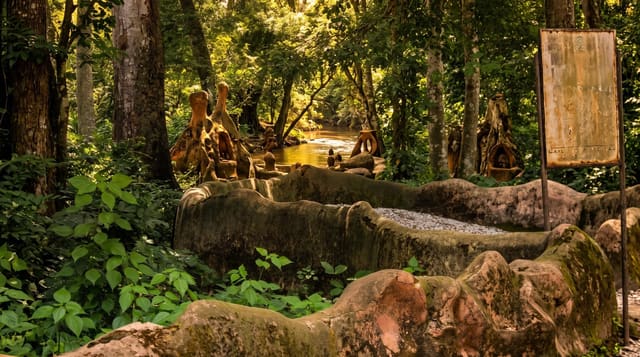
- Shrines and groves - the ritual sites around Ile-Ife.
When to go
November to March in the dry season. Olojo, the annual festival at which the Ooni wears the Are crown, falls usually around October and is the great ceremonial occasion. Weekday mornings suit the museum.
Practical notes
Some of the finest Ife pieces are held abroad or in Lagos rather than in the city. The museum is small and dated. Palace access is restricted and photography usually prohibited. Shrine visits require permission and are not tourist sites.
Nearby
Osun-Osogbo grove lies north; Ibadan is west.
Key facts
Source: Wikidata, item Q180084, read on 18 October 2026.
What to pack for Ile-Ife
Chosen from what this place is for. Tap a kit for the full checklist.
- Comfortable walking shoes - Sightseeing means kilometres of pavement and cobbles daily. Find on Amazon
- Modest clothing - Shoulders and knees covered - the single most common requirement. Find on Amazon
- A slim anti-theft daypack - Zips that close properly; keep it in front in crowds and on transit. Find on Amazon
- A scarf or shawl - To cover the head or shoulders on entry; women especially at mosques. Find on Amazon
Some links on this page are Amazon affiliate links - if you buy through them we may earn a small commission at no extra cost to you.
All packing kitsPlan your trip
Where to start if Ile-Ife is going on the list.
Booking links on this page are affiliate links - if you book through them we may earn a small commission at no extra cost to you. It never changes what we write about a place.
Opening times, ticket prices and seasonal closures change - check the official source before you go: official site.