Mawphlang Sacred Forest
A forest protected by Khasi religious law for centuries, where nothing may be taken out, not even a dead leaf.
Updated 4 September 2026
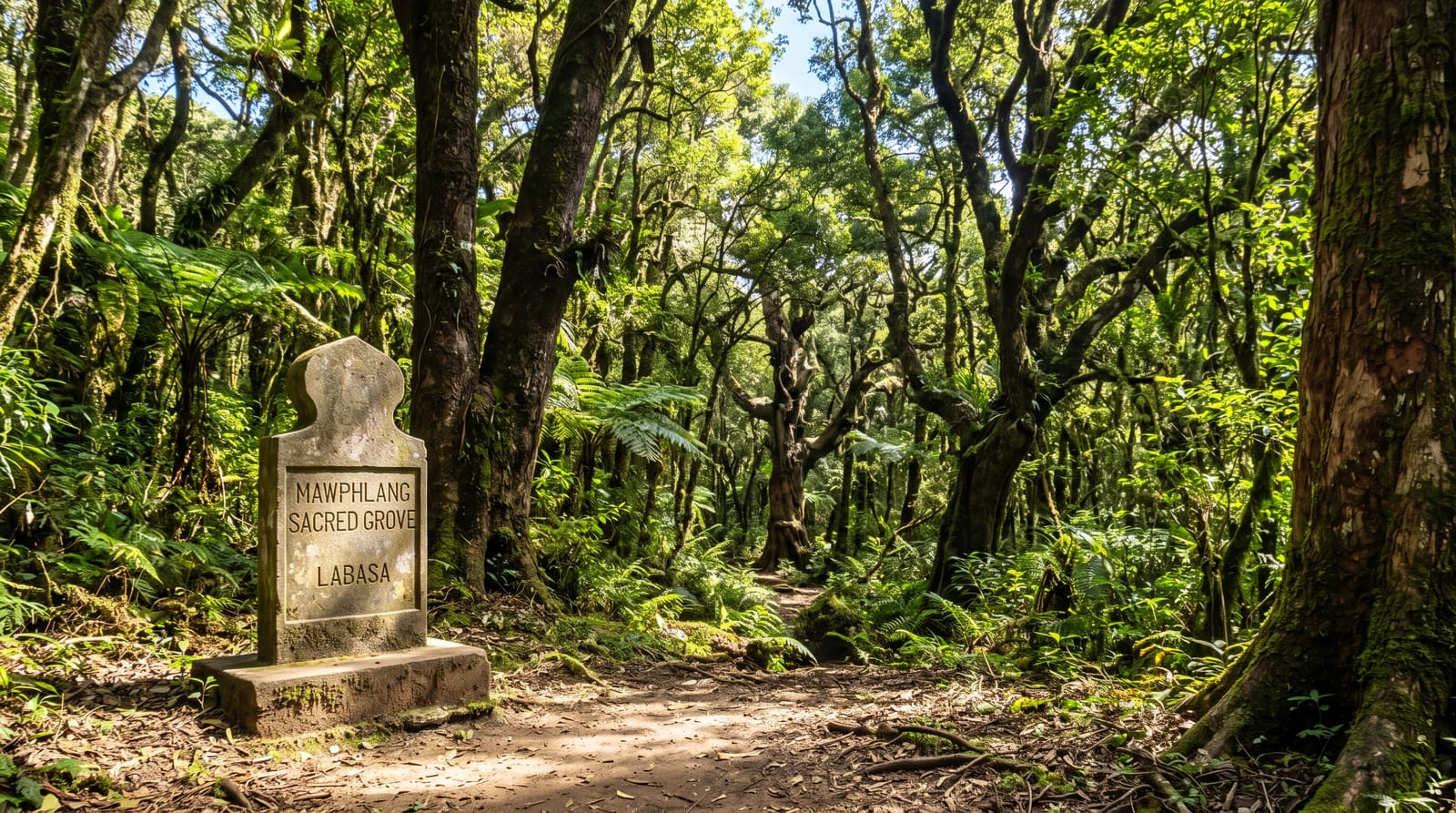
AI illustration
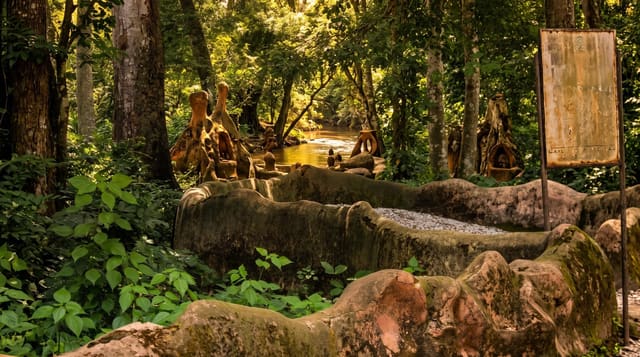
Law Kyntang Mawphlang is a sacred grove protected under Khasi custom for centuries, held to be the dwelling of the guardian deity Labasa, and the governing rule is absolute: nothing may be removed from it, not a branch, a stone or a fallen leaf, and stories are told locally of those who tried. The result is a patch of undisturbed subtropical forest, dark and moss-hung with dense epiphytes and rare orchids, standing in sharp contrast to the open grazed grassland immediately around it, where the boundary is visible as a wall of trees. Village guides take visitors through and explain the ritual stones used for sacrifices at the entrance.
What you'll find
- The forest edge - a wall of trees against bare grassland outside.
- The undisturbed interior - moss, epiphytes and rare orchids under old canopy.
- The ritual stones - monoliths at the entrance used for offerings.
- The taking prohibition - the rule that nothing at all leaves the grove.
When to go
September to May; the monsoon makes paths muddy and leech-ridden though the forest is at its most lush. Guides from the village are compulsory and available at the entrance.
Good to know
A local guide is required and entry alone is not permitted. Nothing may be removed, including stones or leaves as souvenirs, and this is taken seriously. Paths are wet and slippery year-round.
Nearby
Shillong lies northeast; Cherrapunji is south.
What to pack for Mawphlang Sacred Forest
Chosen from what this place is for. Tap a kit for the full checklist.
- Broken-in walking shoes or boots - Grip and ankle support matter more than looks; never hike in brand-new boots. Find on Amazon
- Strong insect repellent - DEET or picaridin; the jungle is where bites and disease risk are highest. Find on Amazon
- Modest clothing - Shoulders and knees covered - the single most common requirement. Find on Amazon
- Layers + a waterproof shell - Mountain weather turns fast; a packable rain jacket saves the day. Find on Amazon
Some links on this page are Amazon affiliate links - if you buy through them we may earn a small commission at no extra cost to you.
All packing kitsPlan your trip
Where to start if Mawphlang Sacred Forest is going on the list.
Booking links on this page are affiliate links - if you book through them we may earn a small commission at no extra cost to you. It never changes what we write about a place.
Opening times, ticket prices and seasonal closures change - check the official source before you go: official site.