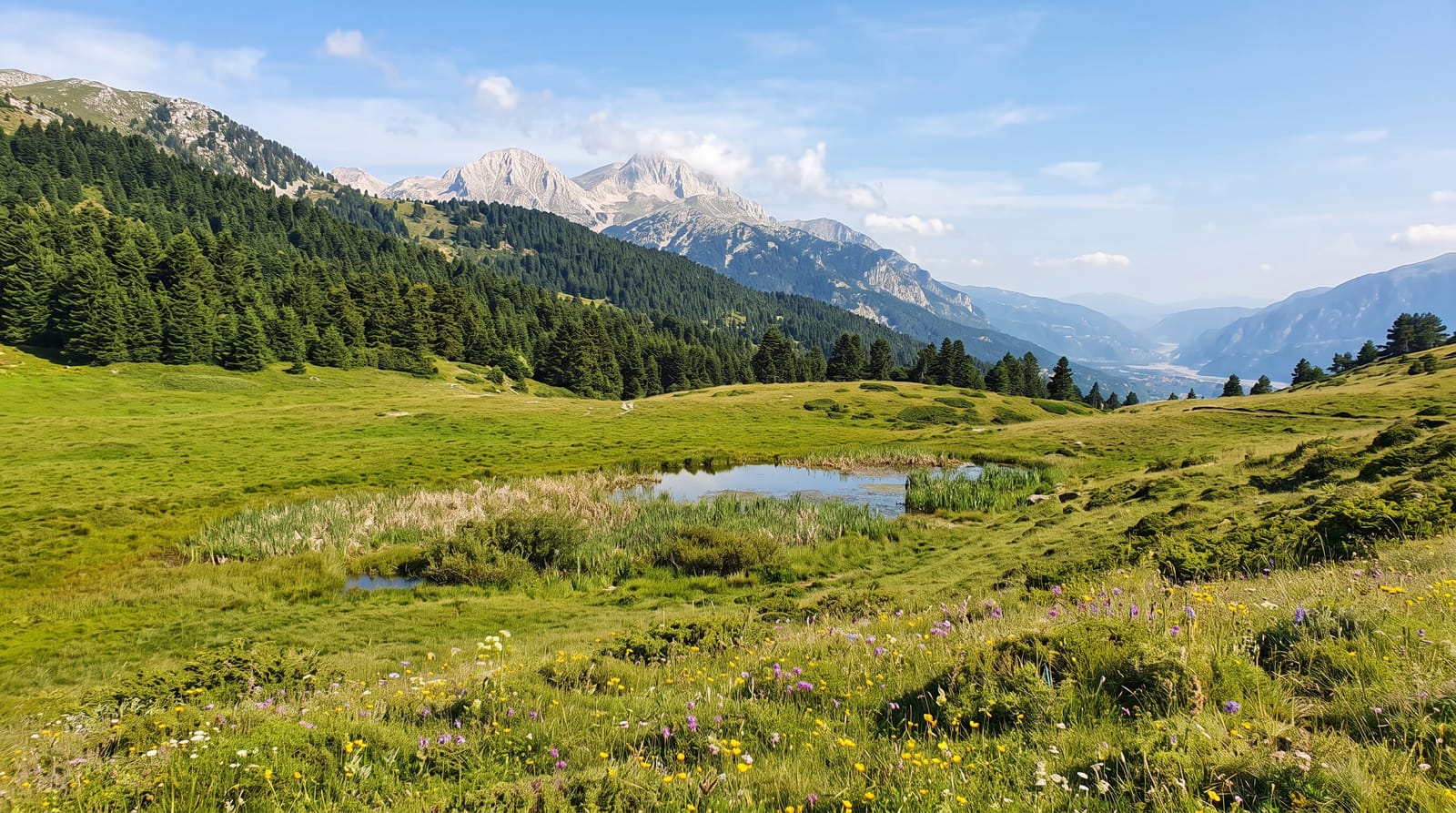
Montagne d'Ambre National Park
A cool rainforest island on a volcanic massif in the dry far north, full of crater lakes, waterfalls and some of the world's smallest chameleons.
Updated 13 September 2026
Montagne d'Ambre is a volcanic massif that catches enough rain to hold montane rainforest in a region that is otherwise dry, so the park works as an island of green with its own set of species. Well-made trails lead to the Sacred Waterfall, the Cascade Antomboka and two crater lakes, and the walking is easy by Malagasy standards, on graded paths under tall forest. The draw for many is Brookesia, the leaf chameleons, including some of the smallest reptiles in the world at little more than a fingernail, which guides find in the leaf litter. Crowned and Sanford's brown lemurs are common, and the bird list is strong. Temperatures are noticeably cooler than the coast, and mist through the canopy is normal in the mornings.
What's there
- Leaf chameleons - Brookesia species barely larger than a fingernail.
- Waterfalls - the Sacred Waterfall and Cascade Antomboka.
- Crater lakes - still water in old volcanic craters.
- Crowned lemurs - troops along the main trails.
When to go
April to November for drier trails; the forest is wet at any time and mornings are misty. December to March brings heavy rain. Early morning gives the best wildlife activity and the clearest light.
Good to know
It rains here even in the dry season and paths are slippery. The smallest chameleons need a guide's eye to find at all. It is cool and damp rather than tropical, and warm layers are needed. The park is close to Diego Suarez and gets day-trippers, so early starts are quieter.
Nearby
Diego Suarez lies north; Tsingy Rouge is northeast.
Key facts
Source: Wikidata, item Q1968934, read on 18 October 2026.
What to pack for Montagne d'Ambre National Park
Chosen from what this place is for. Tap a kit for the full checklist.
- Broken-in walking shoes or boots - Grip and ankle support matter more than looks; never hike in brand-new boots. Find on Amazon
- Binoculars - The single best wildlife tool - even a compact pair transforms a sighting. Find on Amazon
- Strong insect repellent - DEET or picaridin; the jungle is where bites and disease risk are highest. Find on Amazon
- Modest clothing - Shoulders and knees covered - the single most common requirement. Find on Amazon
Some links on this page are Amazon affiliate links - if you buy through them we may earn a small commission at no extra cost to you.
All packing kitsPlan your trip
Where to start if Montagne d'Ambre National Park is going on the list.
Booking links on this page are affiliate links - if you book through them we may earn a small commission at no extra cost to you. It never changes what we write about a place.
Opening times, ticket prices and seasonal closures change - check the official source before you go: official site.