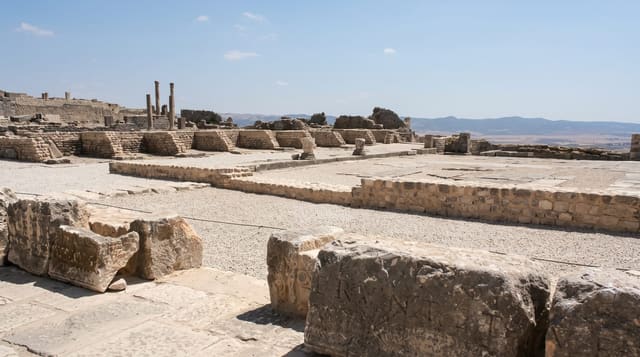
Hintang Archaeological Park
Rows of upright stone slabs and buried disc-covered chambers on remote ridges in Houaphanh, older than the Plain of Jars and far less understood.
Updated 1 September 2026
Along a series of ridges in Houaphanh stand groups of thin upright stones, some over two metres tall, set in rows with large stone discs beside them covering underground chambers. The French archaeologist Madeleine Colani excavated here in the 1930s and found burial goods below the discs. Estimates put the sites in the first millennium BCE, which makes them older than the jar sites to the south, and the relationship between the two remains unresolved. There are dozens of groups scattered along the ridges and only the main one is easily reached.
What you'll find
- The standing slabs - thin upright stones set in rows along the ridge lines.
- The discs - flat stone lids covering the buried chambers beside them.
- The main site at San Kong Phanh - the group with a path and interpretation, closest to the road.
- The outlying groups - dozens more along the ridges, reached only on foot with a guide.
When to go
November to March, when the tracks are dry. The ridges catch mist in the early morning, which is atmospheric and also means you see nothing. The wet season makes the access road difficult and the ridge paths slippery.
Things to know
Very little is known about who raised these stones or why, and anyone giving you a confident explanation is inventing it. The main site is modest and takes half an hour; the reward is in walking between groups, which needs a guide and time. The road in is poor.
Nearby
Sam Neua is the nearest town, and the Plain of Jars lies southwest across the mountains.
What to pack for Hintang Archaeological Park
Chosen from what this place is for. Tap a kit for the full checklist.
- Head torch + spare batteries - Hands-free light is essential; caves are truly dark. Find on Amazon
- Comfortable walking shoes - Sightseeing means kilometres of pavement and cobbles daily. Find on Amazon
- Grippy closed shoes - Cave floors are wet, muddy and slick with formations. Find on Amazon
- A slim anti-theft daypack - Zips that close properly; keep it in front in crowds and on transit. Find on Amazon
Some links on this page are Amazon affiliate links - if you buy through them we may earn a small commission at no extra cost to you.
All packing kitsPlan your trip
Where to start if Hintang Archaeological Park is going on the list.
Booking links on this page are affiliate links - if you book through them we may earn a small commission at no extra cost to you. It never changes what we write about a place.
Opening times, ticket prices and seasonal closures change - check the official source before you go: official site.