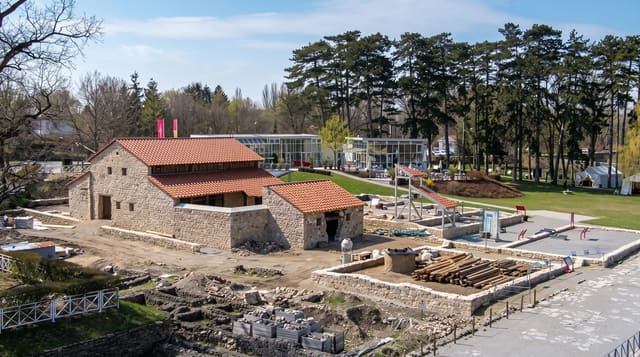
Wat Phou
A Khmer temple older than Angkor climbing a hillside in terraces towards a spring that has been sacred for over a thousand years.
Updated 18 October 2026
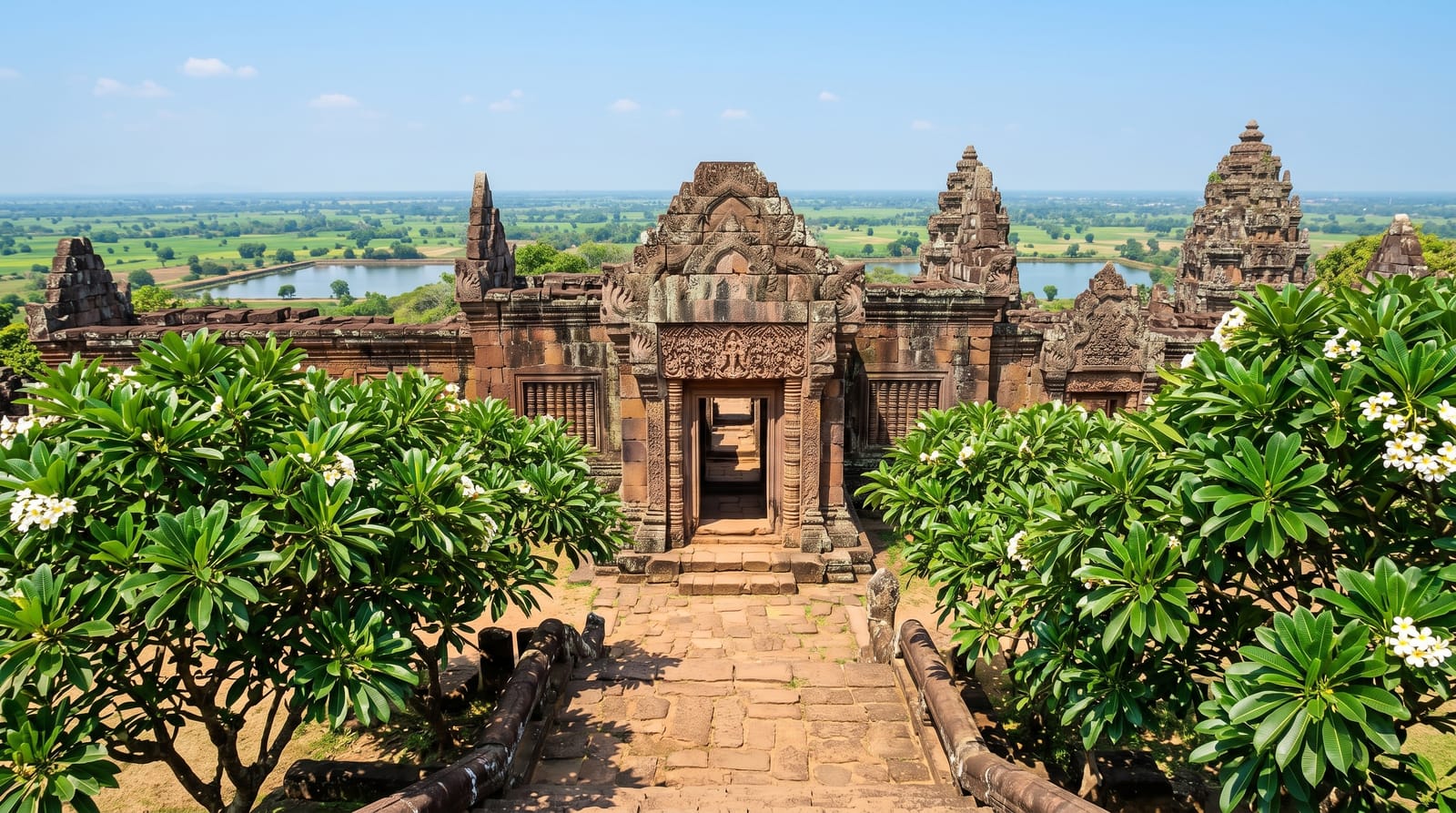
AI illustration
UNESCO World Heritage
Wat Phou predates Angkor Wat and was built around a natural feature rather than a plan: a spring emerging high on the flank of Phou Kao, a mountain whose summit was read as a linga, the symbol of Shiva. The complex runs up from the Mekong plain in a long axis, past two large barays and a pair of ruined palace buildings, then climbs a steep stone stairway flanked by frangipani trees to the sanctuary near the spring. Water was channelled over the linga inside. The temple was later converted to Theravada Buddhist use, which is why Buddha images sit in a Hindu shrine. Carvings survive on the lintels and doorways, and from the upper terrace the view runs across the barays to the Mekong.
History
A sanctuary centred on a spring and an offering place for a guardian spirit stood here from prehistoric times, and the first megalithic stone structures, with two stone cells, a carved crocodile, serpent stairs and offering platforms, were probably built as early as the 2nd century BC. Vat Phou was first tied to the city of Shrestapura on the Mekong, which by the late 5th century was the capital of a kingdom that texts link with Chenla and Champa; the lingam-shaped summit of the mountain, later called Phou Khao, made it the home of Shiva, and the oldest inscription found here names Devanika, who founded a sacred bathing place and gave thousands of cattle to a temple. A brick building of the 7th century became the focus of later building, Lao and UNESCO projects began in 1987, and in 2001 Vat Phou became a World Heritage Site (Wikipedia, Vat Phou).
What to look for
- The upper sanctuary - the shrine by the sacred spring, with surviving carved lintels.
- The frangipani stairway - the steep processional climb between old trees.
- The palace buildings - two large stone structures on the lower terrace.
- The barays - the ancient reservoirs on the axis approaching the hill.
When to go
November to March, the cool dry season. The Wat Phou festival at the February full moon fills the site with pilgrims and is the most atmospheric time. Mornings avoid both heat and coach parties from Pakse.
Good to know
The stairway is steep, uneven and slippery, with no handrail in most sections, and it is a hard climb in heat. Much of the complex is ruin rather than standing building. The site is quiet outside festival days, which is either the appeal or a sign that half a day is enough.
Nearby
The Bolaven Plateau's coffee farms and waterfalls are inland; Si Phan Don lies south on the Mekong.
Key facts
Source: Wikidata, item Q579860, read on 18 October 2026.
What to pack for Wat Phou
Chosen from what this place is for. Tap a kit for the full checklist.
- Comfortable walking shoes - Sightseeing means kilometres of pavement and cobbles daily. Find on Amazon
- Modest clothing - Shoulders and knees covered - the single most common requirement. Find on Amazon
- A slim anti-theft daypack - Zips that close properly; keep it in front in crowds and on transit. Find on Amazon
- A scarf or shawl - To cover the head or shoulders on entry; women especially at mosques. Find on Amazon
Some links on this page are Amazon affiliate links - if you buy through them we may earn a small commission at no extra cost to you.
All packing kitsPlan your trip
Where to start if Wat Phou is going on the list.
Booking links on this page are affiliate links - if you book through them we may earn a small commission at no extra cost to you. It never changes what we write about a place.
Opening times, ticket prices and seasonal closures change - check the official source before you go: official site.