Samburu National Reserve
Dry northern country along a single life-giving river, home to five species you will not see on the southern savannah.
Updated 29 October 2026
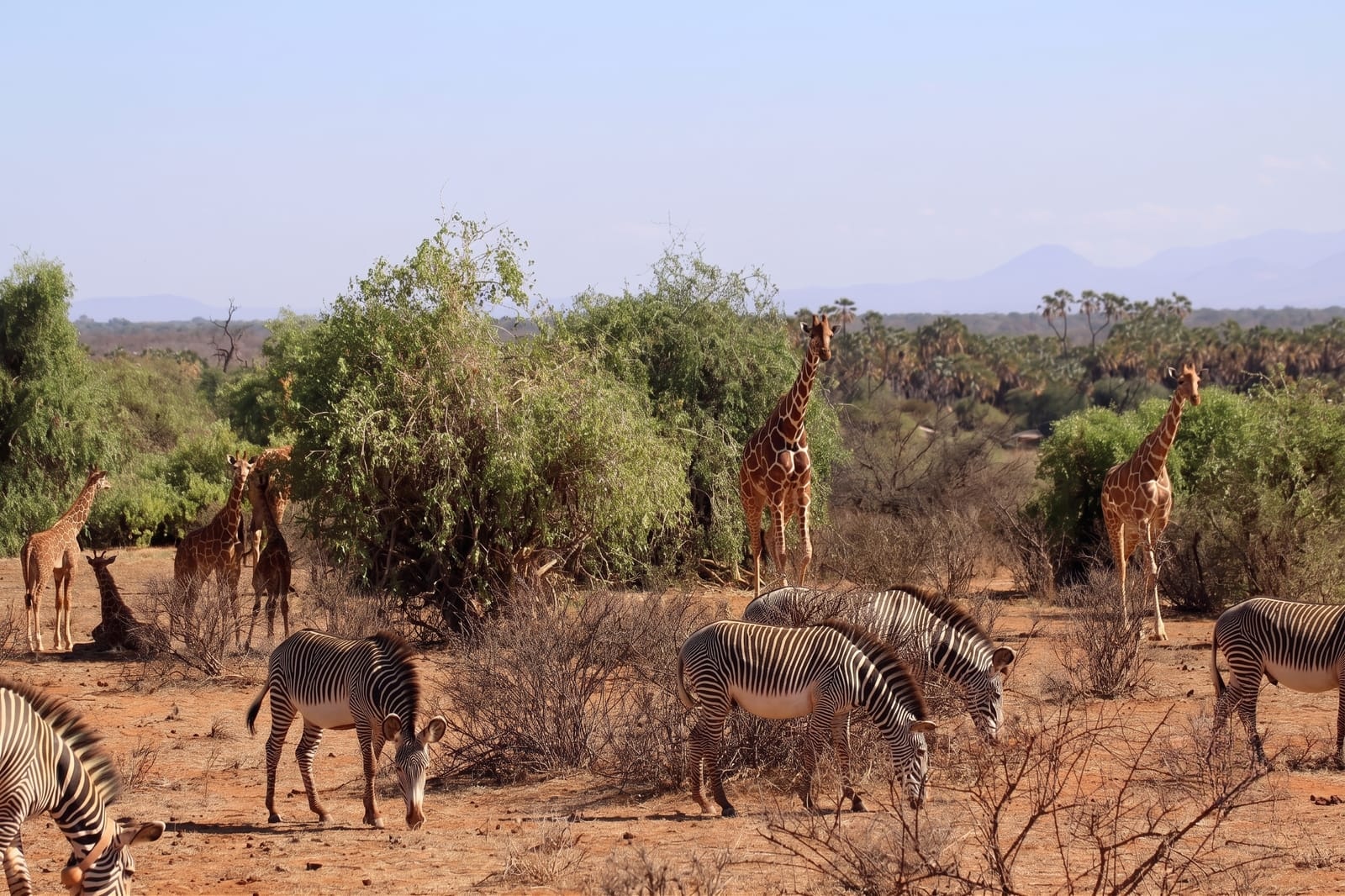
AI illustration
Samburu sits north of the equator in hot, dry, thorn-scrub country, and everything in it depends on the Ewaso Ng'iro river running through the middle. That concentration makes game viewing along the river excellent even when the surrounding land looks empty. What draws specialists is the Samburu Special Five, species adapted to arid country and largely absent further south: Grevy's zebra with its narrow stripes and rounded ears, reticulated giraffe, Beisa oryx, gerenuk that stand on their hind legs to browse, and the Somali ostrich with blue-grey legs. Elephants come to the river in numbers, leopard are seen regularly along the riverine forest, and the birdlife is exceptional. The Samburu people, pastoralists related to the Maasai, live around the reserve.
Background
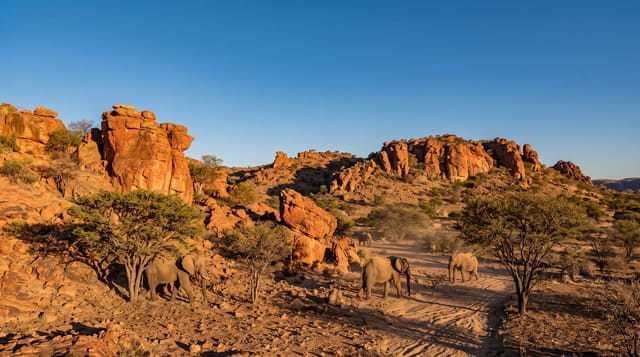
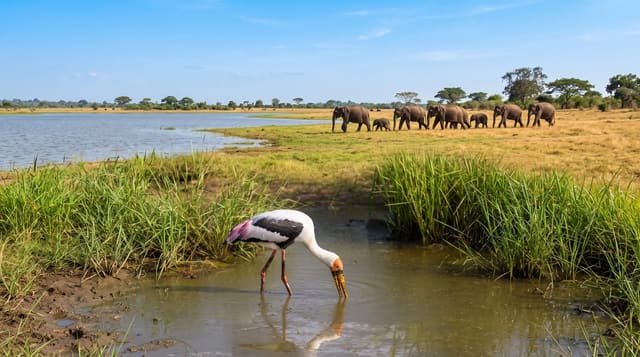
Samburu National Reserve, in Samburu County, Kenya, is a game reserve along the Ewaso Ng'iro river. It covers 165 km² and lies 350 km from Nairobi, at elevations from 800 to 1,230 m. Through its middle flows the Ewaso Ng'iro, whose name means "brown water", past doum palm groves and dense riverine forest, and the reserve also holds two mountains, Koitogor and Ololokwe. Lion, cheetah and African leopard all live here, as do elephant, Cape buffalo and hippopotamus, and it has more than 350 bird species. It was one of the two areas where George and Joy Adamson raised Elsa the Lioness, known from the book and film Born Free, and black rhinoceros were brought back after an absence of 25 years.
Source: Wikipedia, "Samburu National Reserve"
What's there
- The Ewaso Ng'iro river - the reserve's spine, where the game concentrates.
- The Special Five - Grevy's zebra, reticulated giraffe, oryx, gerenuk and Somali ostrich.
- Riverine forest leopards - regular sightings in the doum palm woodland.
- Buffalo Springs and Shaba - the adjoining reserves across the river.
When to go
The dry months, June to October and December to March, concentrate animals at the river and make the tracks easier. Rains in April and November can cut access and swell the river.
Before you go
It is hot, often above 35 degrees, and there is little shade in the middle of the day. The road up from Nairobi is long and the last stretch rough; many visitors fly. Sightings are good but this is a smaller reserve than the Mara and the vehicle density around a leopard can be high. Lodges vary enormously in price and quality.
Nearby
Buffalo Springs and Shaba reserves adjoin; Mount Kenya lies to the south.
Key facts
Source: Wikidata, item Q1817380, read on 18 October 2026.
What to pack for Samburu National Reserve
Chosen from what this place is for. Tap a kit for the full checklist.
- Broken-in walking shoes or boots - Grip and ankle support matter more than looks; never hike in brand-new boots. Find on Amazon
- Binoculars - The single best wildlife tool - even a compact pair transforms a sighting. Find on Amazon
- Loose, light, long clothing - Covering up beats bare skin in the desert - and locals dress this way for a reason. Find on Amazon
- Layers + a waterproof shell - Mountain weather turns fast; a packable rain jacket saves the day. Find on Amazon
Some links on this page are Amazon affiliate links - if you buy through them we may earn a small commission at no extra cost to you.
All packing kitsPlan your trip
Where to start if Samburu National Reserve is going on the list.
Booking links on this page are affiliate links - if you book through them we may earn a small commission at no extra cost to you. It never changes what we write about a place.
Opening times, ticket prices and seasonal closures change - check the official source before you go: official site.