Nara Park and Todai-ji
Japan's ancient first capital - a great park where wild deer roam freely among temples, home to Todai-ji and its colossal bronze Great Buddha, a UNESCO treasure near Kyoto.
Updated 4 August 2026
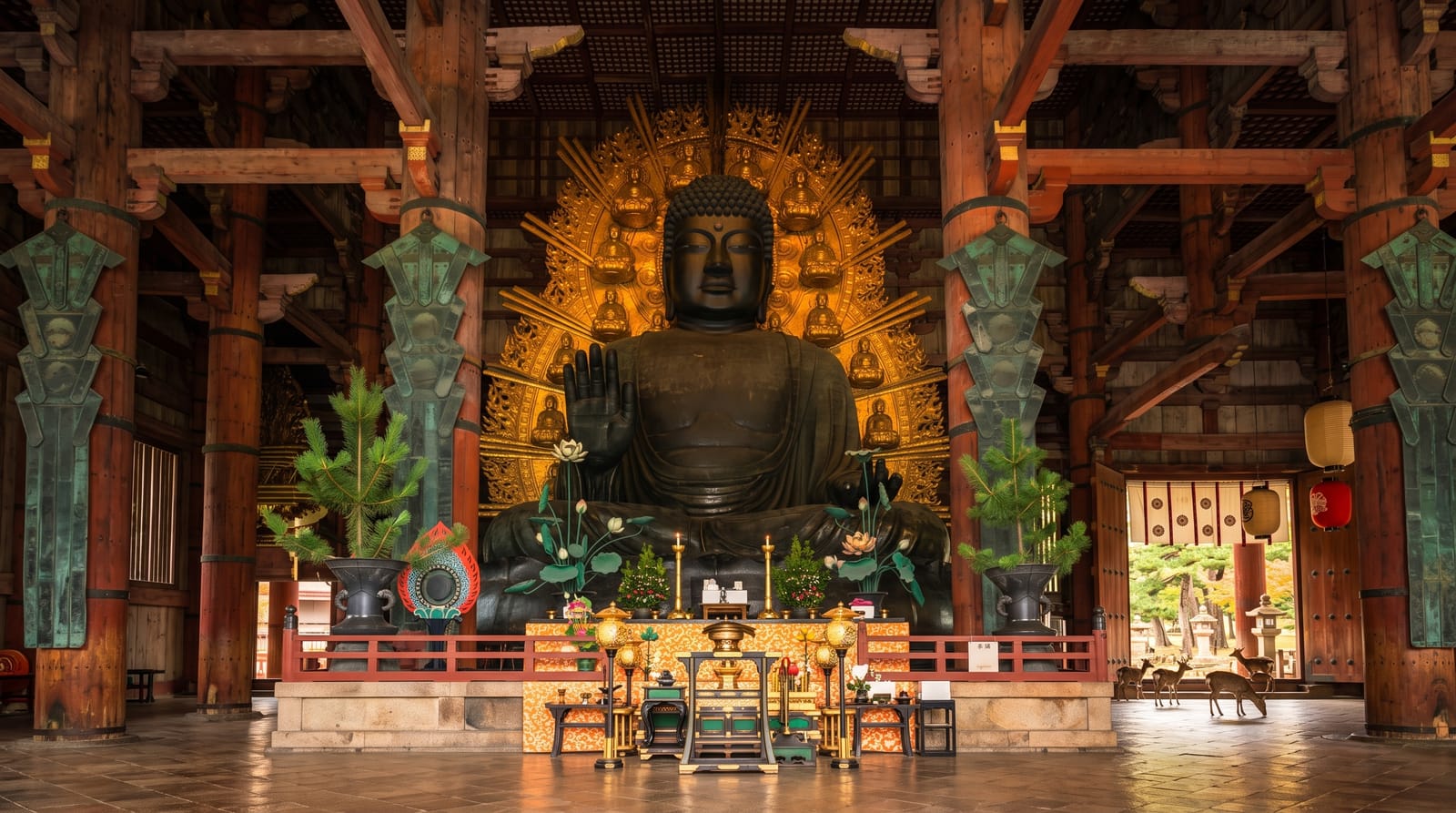
AI illustration
UNESCO World Heritage
Nara was Japan's first permanent capital in the eighth century, and its great park is a UNESCO treasure where over a thousand wild but tame deer, considered messengers of the gods, roam freely among ancient temples and shrines. Its centrepiece is Todai-ji, whose vast wooden hall, one of the largest in the world, houses a colossal fifteen-metre bronze Great Buddha, one of the largest in Japan.
The main sights
- The Great Buddha - the colossal bronze Buddha in Todai-ji's vast hall.
- The free-roaming deer - the tame deer that bow for crackers.
- Kasuga Taisha - the shrine of hundreds of bronze and stone lanterns.
- The park and temples - the great park and its ancient monuments.
When to go
Year-round; an easy day trip from Kyoto or Osaka, loveliest in spring blossom and autumn colour. Go early to enjoy the park and Great Buddha before the crowds and coach tours arrive.
Practical notes
The deer are wild despite being tame, and can nip, headbutt or mob visitors for the crackers sold in the park, so take care, especially with children. It is a popular day trip, busy by midday. The park is large, so allow time to walk between the scattered temples.
Nearby
Kyoto and Osaka are a short train ride; the temple of Horyu-ji is nearby.
What to pack for Nara Park and Todai-ji
Chosen from what this place is for. Tap a kit for the full checklist.
- Comfortable walking shoes - Sightseeing means kilometres of pavement and cobbles daily. Find on Amazon
- Modest clothing - Shoulders and knees covered - the single most common requirement. Find on Amazon
- A slim anti-theft daypack - Zips that close properly; keep it in front in crowds and on transit. Find on Amazon
- A scarf or shawl - To cover the head or shoulders on entry; women especially at mosques. Find on Amazon
Some links on this page are Amazon affiliate links - if you buy through them we may earn a small commission at no extra cost to you.
All packing kitsPlan your trip
Where to start if Nara Park and Todai-ji is going on the list.
Booking links on this page are affiliate links - if you book through them we may earn a small commission at no extra cost to you. It never changes what we write about a place.
Opening times, ticket prices and seasonal closures change - check the official source before you go: official site.