The White City of Tel Aviv
A UNESCO-listed quarter holding the largest concentration of 1930s International Style architecture in the world, all curves, balconies and pale render.
Updated 18 October 2026
AI illustration
UNESCO World Heritage
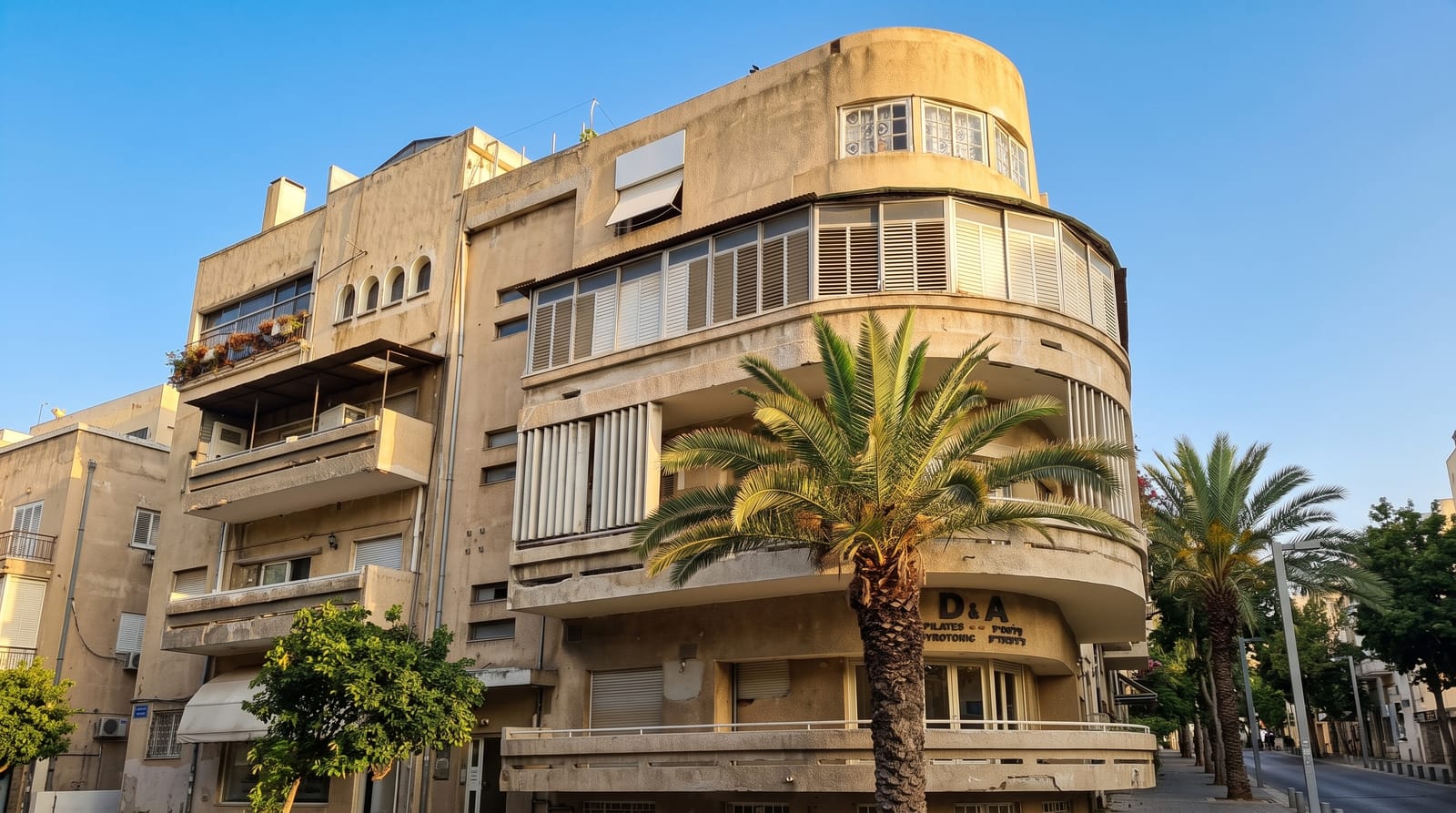
In the 1930s architects trained in the modernist schools of Europe, several of them at the Bauhaus, arrived in Tel Aviv and built a whole city district in the International Style, adapting it to the climate with deep balconies for shade, long ribbon windows, thermometer stairwell glazing and buildings raised on pillars to let the sea breeze through. Some four thousand buildings survive, the largest such concentration anywhere, and UNESCO listed the ensemble as the White City. It is not a museum quarter but a lived-in one: the buildings line Rothschild Boulevard and the streets around Bialik and Dizengoff, some beautifully restored to their original pale render, others peeling and hung with air conditioners and cables. Walking tours, a small Bauhaus centre and a preserved apartment museum explain what to look for, and the boulevard itself, with its shaded central path and kiosks, is the pleasantest way to see it.
History
Tel Aviv was conceived in 1909 as a garden city on the dunes outside Jaffa, and its first mayor, Meir Dizengoff, commissioned the Scottish planner Patrick Geddes to draw up a master plan, begun in 1925 and accepted in 1929, which set the streets and block sizes but prescribed no style. From 1933, when the Nazis came to power and the Bauhaus closed in Berlin, Jewish architects trained there, such as Arieh Sharon, fled to the British Mandate of Palestine, and with locally born architects such as Ben-Ami Shulman they built homes and public buildings in the International Style, mixing in ideas from Le Corbusier and Erich Mendelsohn. More than 4,000 such buildings from the 1930s survive, more than in any other city, and in 2003 UNESCO listed the White City as an outstanding example of new town planning and architecture of the early 20th century (Wikipedia, White City, Tel Aviv).
What to look for
- Rothschild Boulevard - the central shaded promenade lined with restored buildings.
- The Bialik Street quarter - a concentrated group including the old city hall and house museums.
- Dizengoff Square area - the curved corner buildings that define the style.
- A guided walk - the tours that decode balconies, stairwells and pillars.
When to go
Spring and autumn are mildest for walking; summer is hot and humid, so mornings and evenings work better. Free or low-cost guided walks run on a published schedule, usually weekly, and are worth timing your visit around. The boulevard is liveliest in the early evening.
Practical notes
It is an architecture walk, not a sight: the buildings are ordinary apartment blocks, many still shabby and cluttered with later additions, and without a tour or a good eye the quarter can look like any faded 1930s neighbourhood. Restoration is uneven and ongoing. Tel Aviv is expensive, and the heat and humidity in summer make long walks trying.
Nearby
Jaffa's old port is south along the seafront; Carmel Market and the beaches are minutes away.
What to pack for The White City of Tel Aviv
Chosen from what this place is for. Tap a kit for the full checklist.
- Reef-safe sunscreen - High SPF that will not bleach the coral you are swimming over. Find on Amazon
- Loose, light, long clothing - Covering up beats bare skin in the desert - and locals dress this way for a reason. Find on Amazon
- Strong insect repellent - DEET or picaridin; the jungle is where bites and disease risk are highest. Find on Amazon
- Comfortable walking shoes - Sightseeing means kilometres of pavement and cobbles daily. Find on Amazon
Some links on this page are Amazon affiliate links - if you buy through them we may earn a small commission at no extra cost to you.
All packing kitsPlan your trip
Where to start if The White City of Tel Aviv is going on the list.
Booking links on this page are affiliate links - if you book through them we may earn a small commission at no extra cost to you. It never changes what we write about a place.
Opening times, ticket prices and seasonal closures change - check the official source before you go: official site.