Higashiyama and Gion, Kyoto
The old heart of Kyoto - preserved lanes of wooden machiya houses and teahouses climbing to great temples, and the geisha district where old Japan still lives.
Updated 7 August 2026
AI illustration
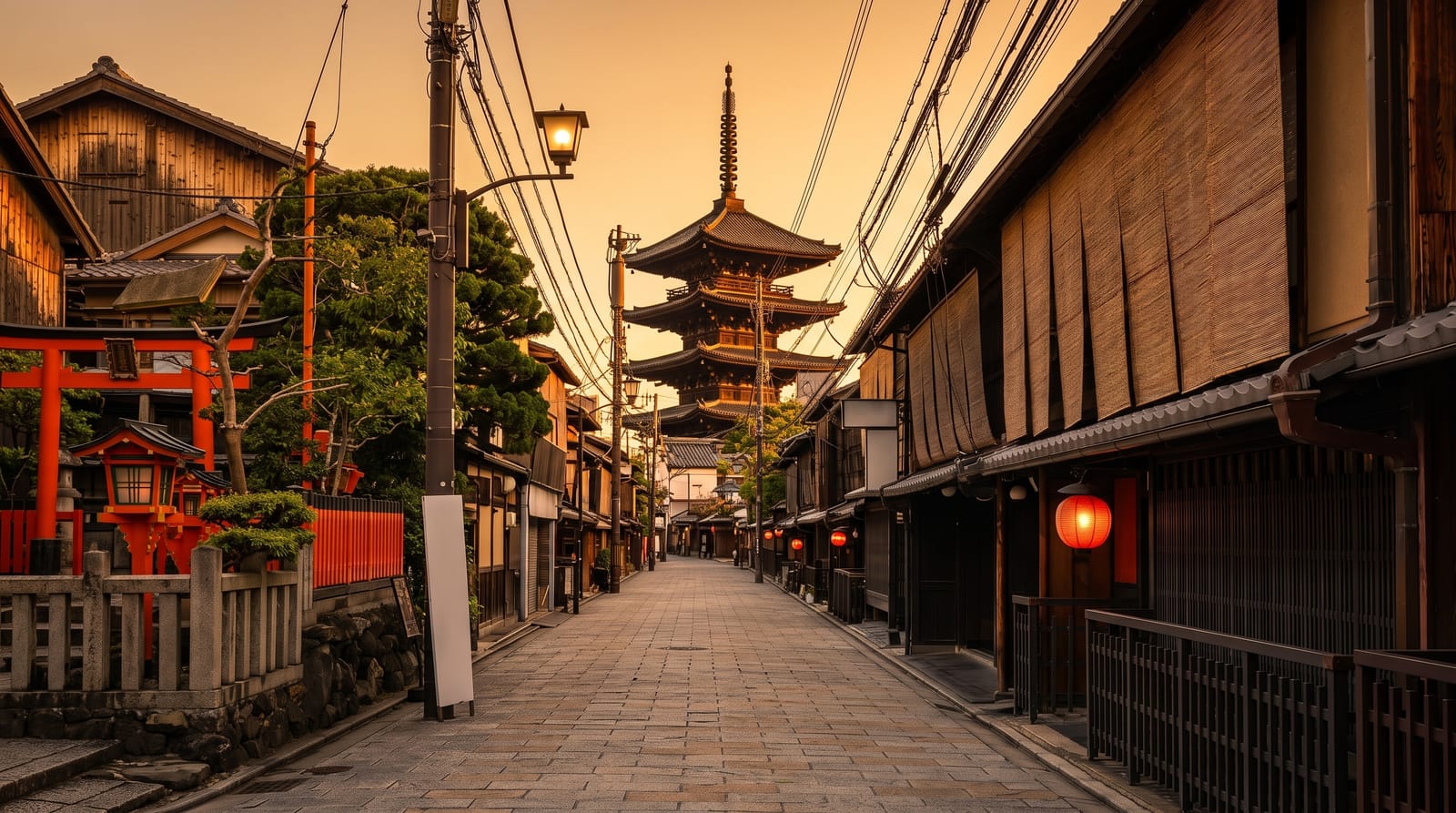
Higashiyama is the best-preserved old district of Kyoto, once Japan's imperial capital for over a thousand years, where steep, atmospheric lanes of wooden machiya houses, teahouses and craft shops climb toward great temples like Kiyomizu-dera. Below lies Gion, the famous geisha district, where lantern-lit streets and wooden facades hold onto old Japan. The district climbs to Kiyomizu-dera, a component of the UNESCO-listed Historic Monuments of Ancient Kyoto.
What to look for
- Kiyomizu-dera - the great temple on its vast wooden veranda over the hillside.
- The preserved lanes - the streets of Sannenzaka and Ninenzaka.
- Gion - the geisha district of teahouses and wooden facades.
- The temples and gardens - the many temples of the eastern hills.
When to go
Spring for cherry blossom and autumn for the fiery maple colour are the most beautiful and the most crowded; go early morning for the lanes before the crowds. Evening in Gion, lantern-lit, is atmospheric.
Good to know
It is extremely popular, so the famous lanes and Kiyomizu-dera are packed by mid-morning, especially in blossom and autumn seasons; go at dawn for the quiet. In Gion, real geisha, or geiko, are rare and should never be chased or blocked for photos, which has become a genuine problem.
Nearby
The temples of eastern Kyoto, the Nishiki food market and the Imperial Palace are elsewhere in the city.
What to pack for Higashiyama and Gion, Kyoto
Chosen from what this place is for. Tap a kit for the full checklist.
- Comfortable walking shoes - Sightseeing means kilometres of pavement and cobbles daily. Find on Amazon
- Modest clothing - Shoulders and knees covered - the single most common requirement. Find on Amazon
- A slim anti-theft daypack - Zips that close properly; keep it in front in crowds and on transit. Find on Amazon
- A scarf or shawl - To cover the head or shoulders on entry; women especially at mosques. Find on Amazon
Some links on this page are Amazon affiliate links - if you buy through them we may earn a small commission at no extra cost to you.
All packing kitsPlan your trip
Where to start if Higashiyama and Gion, Kyoto is going on the list.
Booking links on this page are affiliate links - if you book through them we may earn a small commission at no extra cost to you. It never changes what we write about a place.
Opening times, ticket prices and seasonal closures change - check the official source before you go: official site.