Fushimi Inari Shrine
Kyoto's mesmerising shrine of a thousand gates - endless corridors of vivid vermilion torii winding up a sacred forested mountain, one of the iconic images of Japan.
Updated 20 October 2026
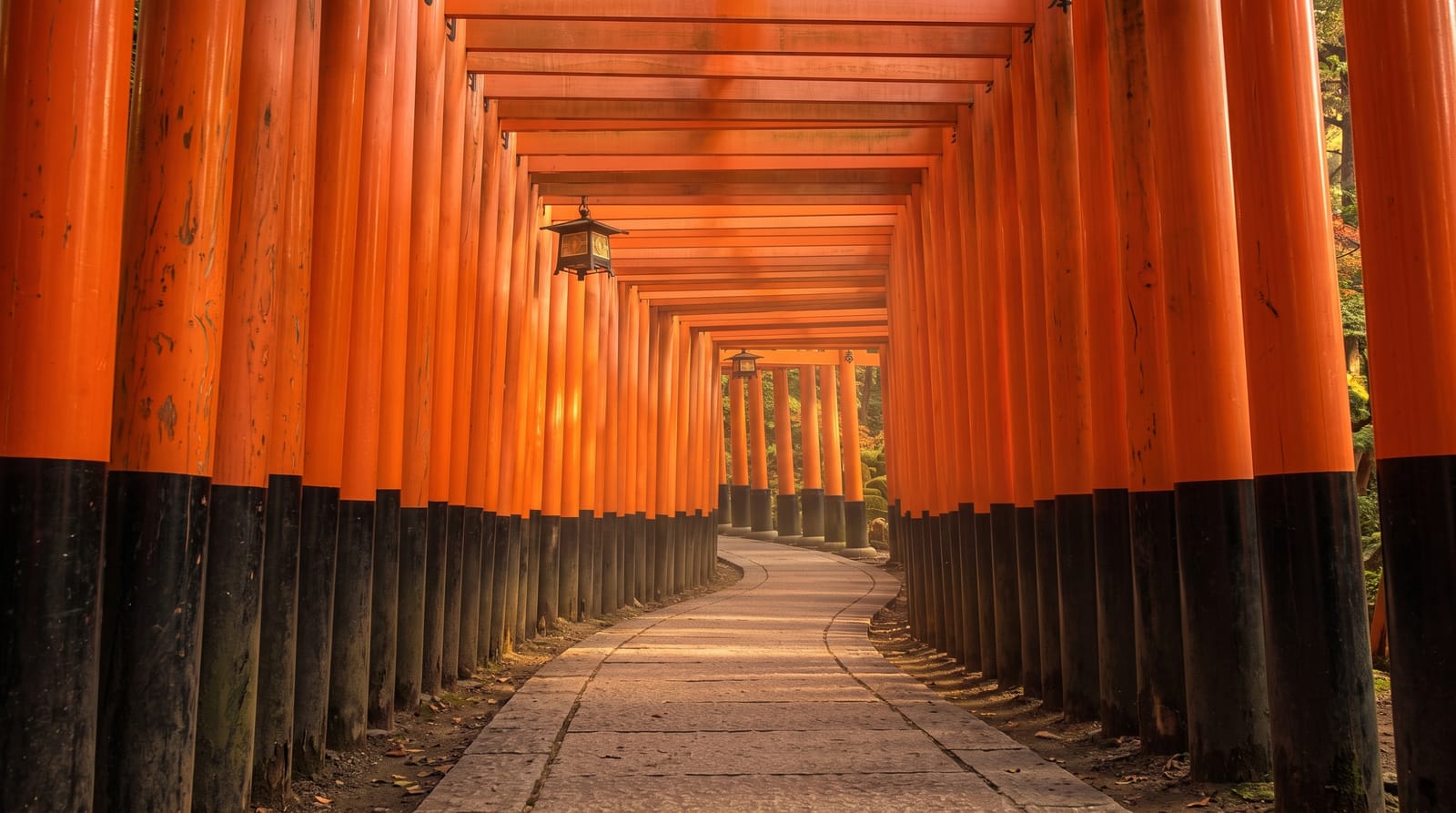
AI illustration
Fushimi Inari is the most mesmerising shrine in Kyoto, dedicated to Inari, the Shinto god of rice and prosperity, and famous for the thousands of vivid vermilion torii gates that form winding tunnels up a sacred forested mountain. Donated by businesses over the centuries, the gates climb through the trees past fox statues and smaller shrines to the summit, one of the most iconic and atmospheric images of Japan.
History
The shrine is traditionally dated to 711 and was founded by the Hata clan, settlers from the Korean Peninsula; the Yamashiro Fudoki says Hata no Irogu shot an arrow at a rice cake, which became a white bird and flew to the peak of Mount Inari, and rice grew where it landed. Each of its roughly 10,000 torii was given by a business, and some 800 stand in a row as the Senbon Torii (Wikipedia, Fushimi Inari-taisha).
What to look for
- The torii tunnels - the endless corridors of vermilion gates up the mountain.
- The fox statues - the stone foxes, messengers of the god Inari.
- The mountain hike - the trail through the gates to the summit.
- The main shrine - the grand shrine buildings at the foot.
When to go
Year-round and open at all hours, free to enter; it is busiest by day, so go at dawn or dusk, or even at night, when the lantern-lit gates are magical and the crowds gone. Spring and autumn are the mildest for the mountain climb.
Good to know
It is extremely popular, so the lower gates are shoulder-to-shoulder by mid-morning; the crowds thin dramatically higher up the mountain and early or late in the day. The full climb to the summit takes a couple of hours and is a real hike. It is free and open around the clock.
Nearby
Central Kyoto and its temples are a short train ride; the Tofuku-ji temple is nearby.
Key facts
Source: Wikidata, item Q714828, read on 18 October 2026.
What to pack for Fushimi Inari Shrine
Chosen from what this place is for. Tap a kit for the full checklist.
- Broken-in walking shoes or boots - Grip and ankle support matter more than looks; never hike in brand-new boots. Find on Amazon
- Comfortable walking shoes - Sightseeing means kilometres of pavement and cobbles daily. Find on Amazon
- Modest clothing - Shoulders and knees covered - the single most common requirement. Find on Amazon
- Layers + a waterproof shell - Mountain weather turns fast; a packable rain jacket saves the day. Find on Amazon
Some links on this page are Amazon affiliate links - if you buy through them we may earn a small commission at no extra cost to you.
All packing kitsPlan your trip
Where to start if Fushimi Inari Shrine is going on the list.
Booking links on this page are affiliate links - if you book through them we may earn a small commission at no extra cost to you. It never changes what we write about a place.
Opening times, ticket prices and seasonal closures change - check the official source before you go: official site.


