Grotte di Castellana
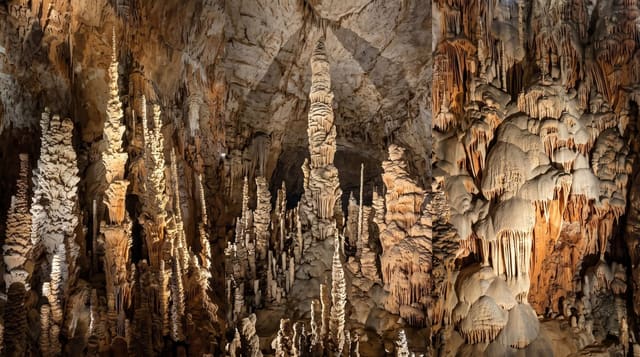
Three kilometres of caves ending in a white alabaster chamber, entered through a sixty-metre natural shaft.
Updated 12 October 2026
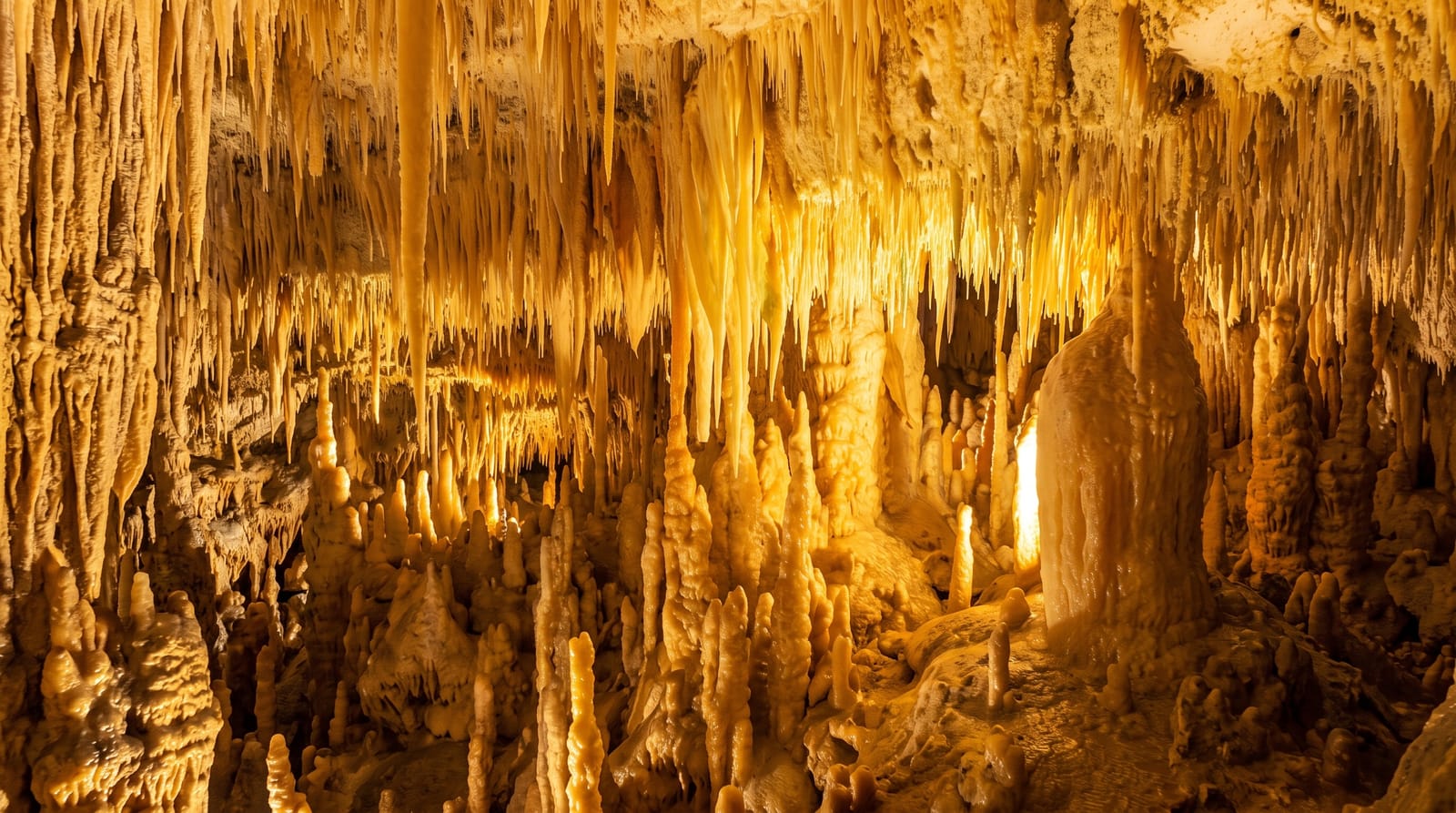
AI illustration
The system was explored in 1938 by Franco Anelli, who descended the Grave, a natural shaft about sixty metres deep open to the sky where locals had long thrown rubbish, and found galleries running for kilometres beyond. The tourist route covers around three kilometres and ends at the Grotta Bianca, a chamber of alabaster-white calcite formations often described as the whitest cave in the world. Chambers along the way carry names from the shapes of their formations. A shorter route stops before the white chamber. The caves are also used for concerts and, occasionally, astronomical observation from the open shaft.
What you'll find
- La Grave - a 60-metre natural shaft open to the sky at the entrance.
- The Grotta Bianca - a chamber of white alabaster calcite at the far end.
- The three-kilometre route - galleries of formations along the full tour.
- The named chambers - halls called after the shapes of their concretions.
When to go
Year-round; the caves hold about eighteen degrees. Tours run at set times in Italian and English, with the long route less frequent. Booking is advisable in summer.
What to expect
The short route does not reach the white chamber; check which tour you are buying. There are many steps and no lift. Photography is generally not allowed.
Nearby
Alberobello lies south; Polignano is on the coast.
Key facts
Source: Wikidata, item Q1547653, read on 18 October 2026.
What to pack for Grotte di Castellana
Chosen from what this place is for. Tap a kit for the full checklist.
- Broken-in walking shoes or boots - Grip and ankle support matter more than looks; never hike in brand-new boots. Find on Amazon
- Head torch + spare batteries - Hands-free light is essential; caves are truly dark. Find on Amazon
- Layers + a waterproof shell - Mountain weather turns fast; a packable rain jacket saves the day. Find on Amazon
- Grippy closed shoes - Cave floors are wet, muddy and slick with formations. Find on Amazon
Some links on this page are Amazon affiliate links - if you buy through them we may earn a small commission at no extra cost to you.
All packing kitsPlan your trip
Where to start if Grotte di Castellana is going on the list.
Booking links on this page are affiliate links - if you book through them we may earn a small commission at no extra cost to you. It never changes what we write about a place.
Opening times, ticket prices and seasonal closures change - check the official source before you go: official site.