Atta Cave
A cave found by quarry blasting in 1907, whose air is used to treat respiratory conditions.
Updated 19 October 2026
AI illustration
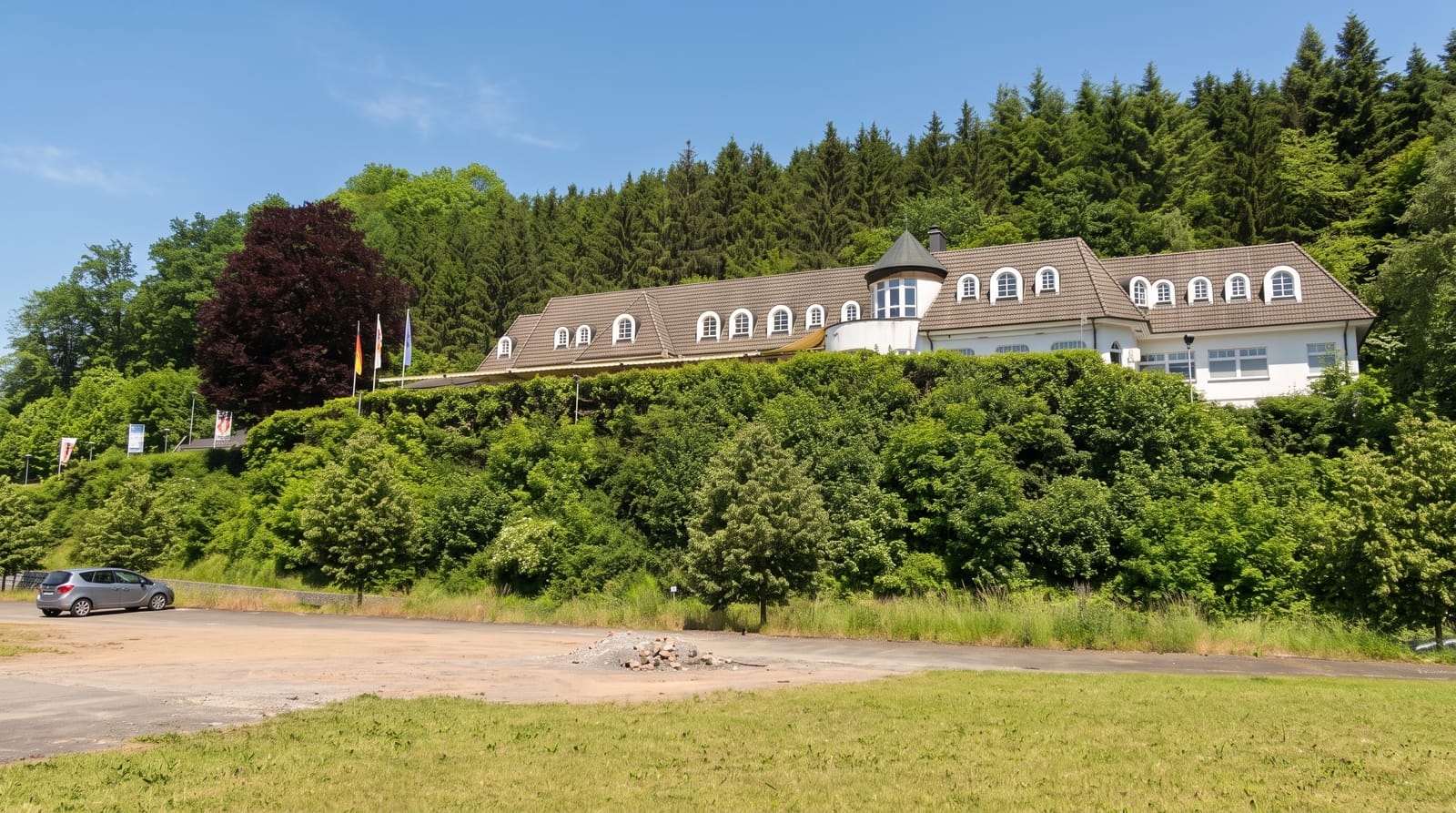
Quarry workers blasting limestone at Attendorn in July 1907 broke into a cave system and it opened to visitors within months. The show route runs about five hundred and seventy metres past chambers of stalactites, straws and curtains, with the formations unusually varied in colour from iron and other minerals in the rock. Beyond the tourist route, further passages are used for speleotherapy: patients with asthma and other respiratory conditions spend time in the cave air, which is close to free of dust and pollen and holds a constant humidity, a treatment offered under German health provisions. The temperature stays around nine degrees.
History
The cave began to form in the Devonian, about 400 million years ago, when the area lay in a bay of the sea, as water seeping through the limestone dissolved caverns, and an earthquake several thousand years ago broke some of its formations. Workers quarrying limestone for the Bigge valley works broke into it on 19 July 1907, and the owners opened it to visitors that same year; further passages were found in 1985 by Elmar Hammerschmidt, and the whole system runs to about 6,000 metres, not fully surveyed. It is the most visited show cave in Germany, with around 350,000 visitors a year, and part of it is used to store cheese (Wikipedia, Atta Cave).
What you'll find
- The coloured formations - dripstone tinted by iron and other minerals.
- The 1907 discovery - a cave opened by quarry blasting and shown within months.
- The therapy passages - sections used for treating respiratory conditions.
- The show route - about 570 metres of walkway through the chambers.
When to go
Year-round; the cave holds about nine degrees so a jacket is needed in summer. Tours run at set times, more often in season. Booking helps on summer weekends.
What to expect
Entry is on a fixed guided tour with steps throughout. The therapy sections are not part of the tourist route. It is cool and damp.
Nearby
The Biggesee reservoir is close; Winterberg lies east.
Key facts
Source: Wikidata, item Q11400, read on 18 October 2026.
What to pack for Atta Cave
Chosen from what this place is for. Tap a kit for the full checklist.
- Broken-in walking shoes or boots - Grip and ankle support matter more than looks; never hike in brand-new boots. Find on Amazon
- Head torch + spare batteries - Hands-free light is essential; caves are truly dark. Find on Amazon
- Strong insect repellent - DEET or picaridin; the jungle is where bites and disease risk are highest. Find on Amazon
- Layers + a waterproof shell - Mountain weather turns fast; a packable rain jacket saves the day. Find on Amazon
Some links on this page are Amazon affiliate links - if you buy through them we may earn a small commission at no extra cost to you.
All packing kitsPlan your trip
Where to start if Atta Cave is going on the list.
Booking links on this page are affiliate links - if you book through them we may earn a small commission at no extra cost to you. It never changes what we write about a place.
Opening times, ticket prices and seasonal closures change - check the official source before you go: official site.