Soest
A town built from green sandstone, so its churches and walls have an unusual olive colour.
Updated 19 October 2026
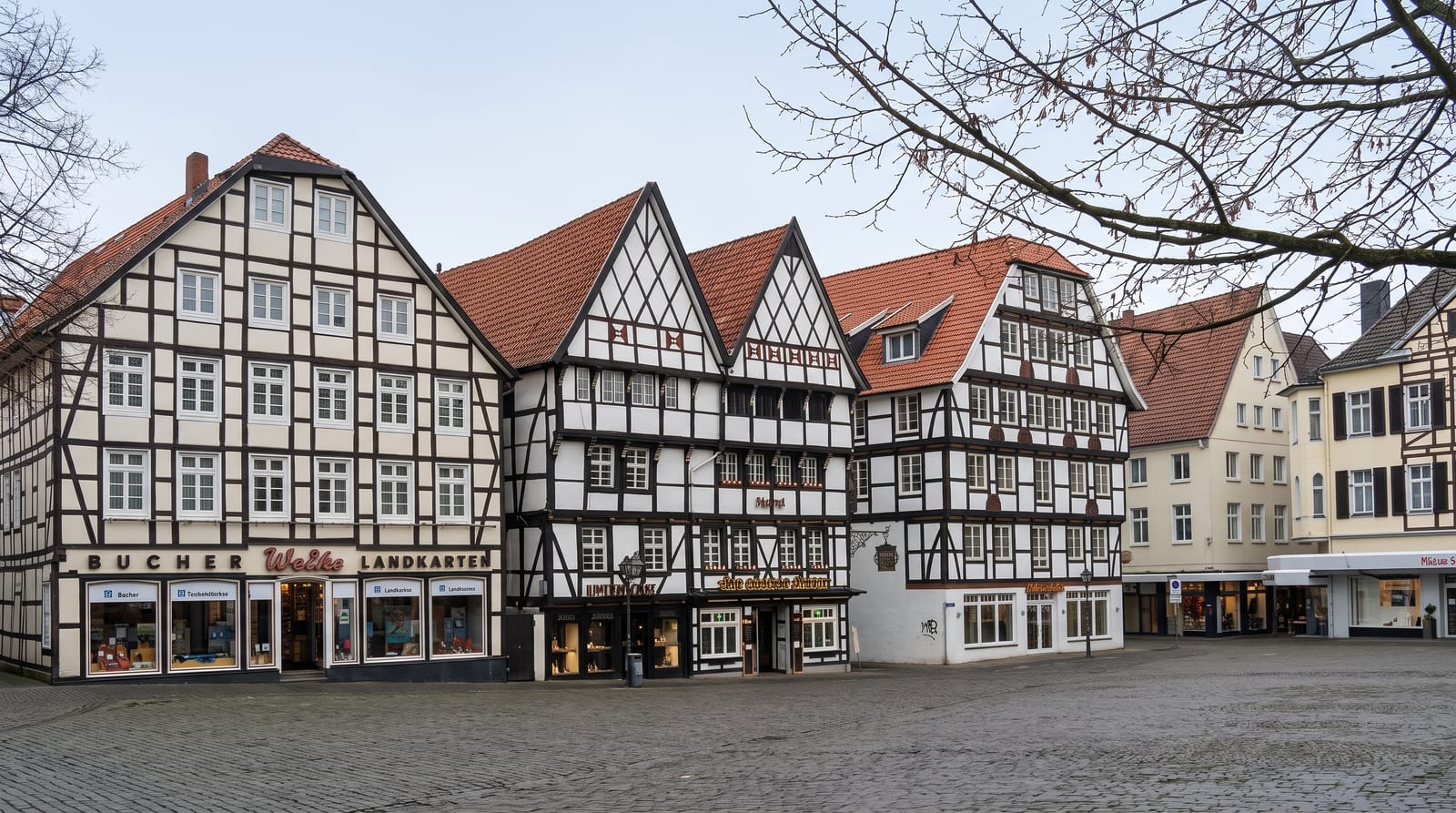
AI illustration
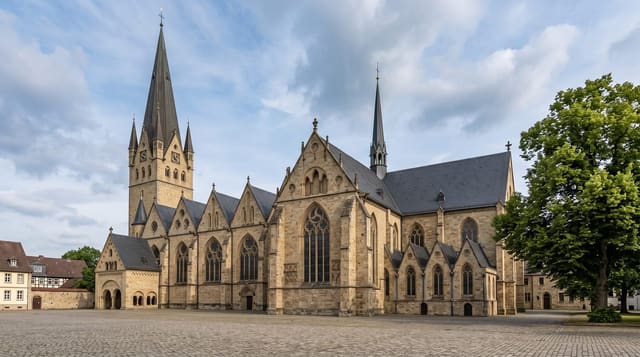
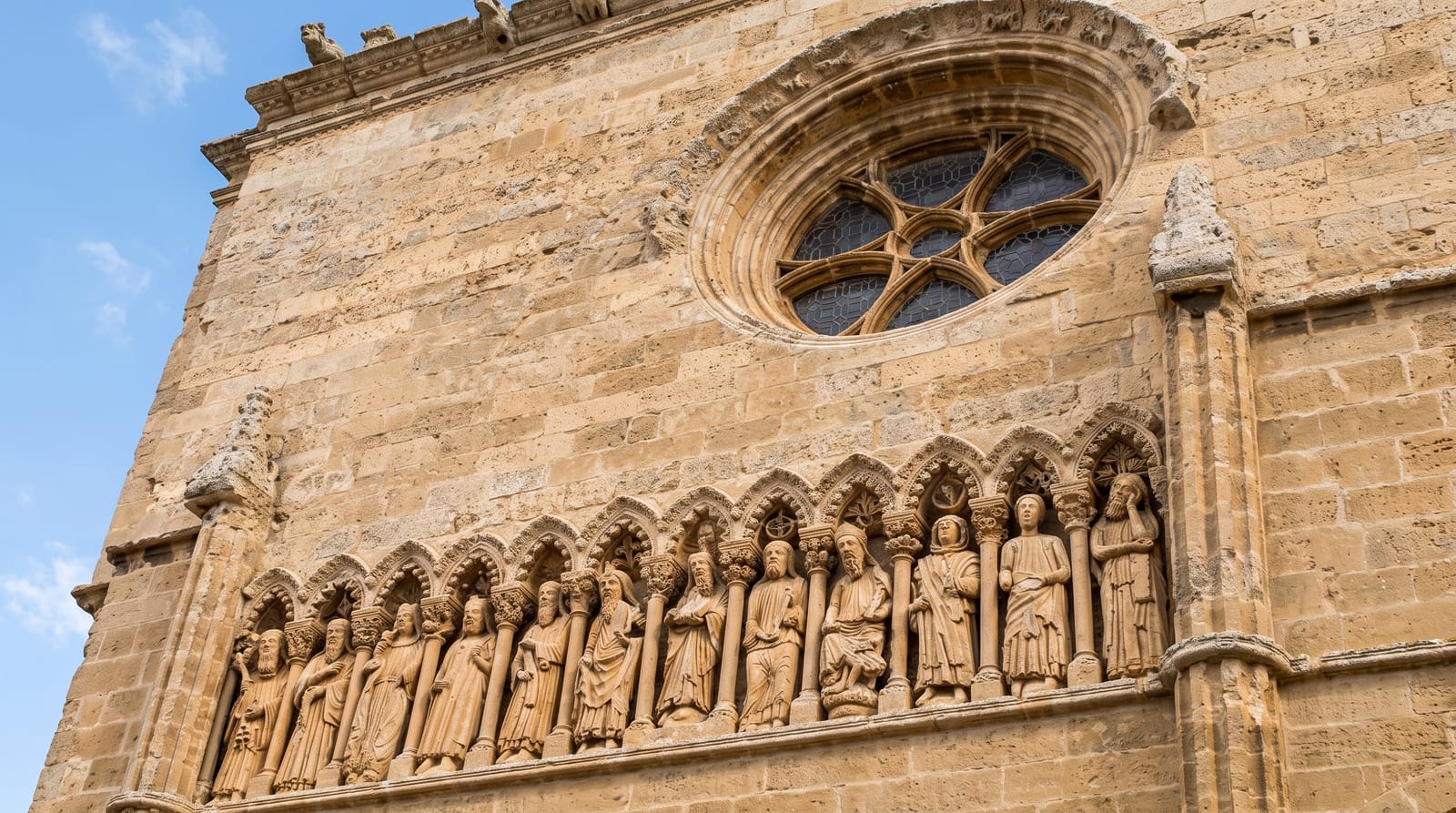
Soest was a major Hanseatic town whose law was adopted by cities as far away as Lübeck, and it is built almost entirely from a local greenish sandstone called Grünsandstein, quarried nearby, which gives the churches, walls and houses a distinctive olive tone found in few other places. St Patrokli's massive Romanesque west tower dominates the skyline, and St Maria zur Wiese has a modern window showing the Last Supper with a local menu of ham, beer and rye bread. The town keeps a long stretch of earth ramparts and moat. The Allerheiligenkirmes each November is one of the largest town fairs in Europe.
History
The fertile land around Soest was settled long before the town is first mentioned, in the Dagobertsche Schenkung of 836, and excavations have found signs of habitation more than 4000 years old; in the 11th and 12th centuries it grew into one of the largest towns of Westphalia, with some 10,000 people, and it was an important member of the Hanseatic League until 1609. Between 1444 and 1449, in the Soest Feud, it freed itself from the Archbishop of Cologne and allied with the Duke of Cleves, but the victory cost it much of its trade. The painter Peter Lely was born here in 1618, a small Huguenot community was founded in the 1690s, the Thirty Years' War and its aftermath left it with only 3,600 people by 1756, and in 1817 it became the seat of the new Soest district (Wikipedia, Soest, Germany).
What to look for
- The green sandstone - churches and walls in an olive-toned local stone.
- St Patrokli - a heavy Romanesque west tower over the old town.
- The Westphalian Last Supper - a window showing local food on the table.
- The earth ramparts - a long stretch of wall and moat around the town.
When to go
April to October; the Allerheiligenkirmes fills the town in early November and is one of Europe's biggest inner-city fairs. Churches close for services.
Before you go
The fair week takes over the whole centre. Churches have restricted hours. The town is compact and seen in a day.
Nearby
Dortmund lies west; Paderborn is east.
Key facts
Source: Wikidata, item Q6149, read on 18 October 2026.
What to pack for Soest
Chosen from what this place is for. Tap a kit for the full checklist.
- Comfortable walking shoes - Sightseeing means kilometres of pavement and cobbles daily. Find on Amazon
- A slim anti-theft daypack - Zips that close properly; keep it in front in crowds and on transit. Find on Amazon
- A refillable water bottle - Many cities have public fountains; save money and plastic. Find on Amazon
- A light layer + compact umbrella - For museum air-con and a sudden shower. Find on Amazon
Some links on this page are Amazon affiliate links - if you buy through them we may earn a small commission at no extra cost to you.
All packing kitsPlan your trip
Where to start if Soest is going on the list.
Booking links on this page are affiliate links - if you book through them we may earn a small commission at no extra cost to you. It never changes what we write about a place.
Opening times, ticket prices and seasonal closures change - check the official source before you go: official site.