Alistrati Cave
One of the largest and best-equipped show caves in Europe, with stalagmites up to fifteen metres and a small train to the entrance.
Updated 12 October 2026

AI illustration
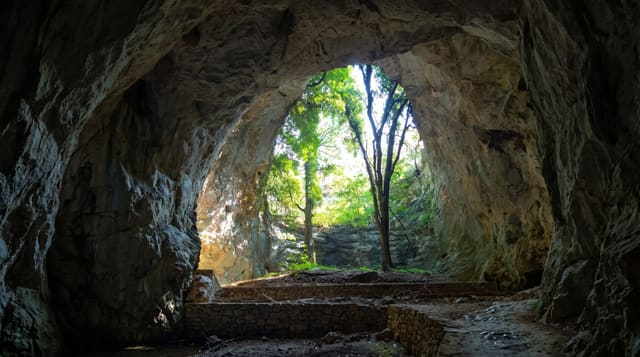
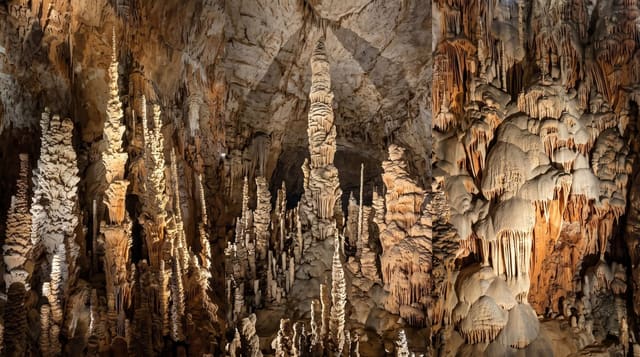
Discovered properly in 1975 and opened in 1998, the Alistrati cave has around three kilometres of surveyed galleries, of which roughly one kilometre is on the visitor route, and it is unusually spacious: chambers wide enough that the path runs level and step-free for most of its length, past columns, curtains, cave pearls and rare helictites growing sideways. Some stalagmites reach fifteen metres. The temperature holds at about seventeen degrees. Outside, the cave sits above the Aggitis gorge, and a small open train, the Alistrati express, runs visitors along the canyon rim with viewpoints; a suspension bridge and walking paths continue along the gorge. The site is one of the few Greek caves genuinely accessible for wheelchairs on the main route.
Highlights
- The great chambers - wide galleries with columns and giant stalagmites.
- The helictites - rare formations growing against gravity.
- The gorge train - an open train running along the Aggitis canyon rim.
- The suspension bridge - a crossing on the gorge walking route.
When to go
Year-round; the constant temperature suits any season, and the gorge outside is best in spring and autumn. Tours run hourly in summer and less often in winter.
Things to know
Visits are guided at a set pace, about forty-five minutes, and commentary is mainly in Greek with some English. The train and gorge activities are separately ticketed. In peak season groups can be large.
Nearby
The Aggitis cave lies on the same river to the north; Serres and Lake Kerkini are west.
Key facts
Source: Wikidata, item Q11041853, read on 18 October 2026.
What to pack for Alistrati Cave
Chosen from what this place is for. Tap a kit for the full checklist.
- Broken-in walking shoes or boots - Grip and ankle support matter more than looks; never hike in brand-new boots. Find on Amazon
- Head torch + spare batteries - Hands-free light is essential; caves are truly dark. Find on Amazon
- Layers + a waterproof shell - Mountain weather turns fast; a packable rain jacket saves the day. Find on Amazon
- Grippy closed shoes - Cave floors are wet, muddy and slick with formations. Find on Amazon
Some links on this page are Amazon affiliate links - if you buy through them we may earn a small commission at no extra cost to you.
All packing kitsPlan your trip
Where to start if Alistrati Cave is going on the list.
Booking links on this page are affiliate links - if you book through them we may earn a small commission at no extra cost to you. It never changes what we write about a place.
Opening times, ticket prices and seasonal closures change - check the official source before you go: official site.