Maragheh
A town with five medieval tomb towers and the site of a thirteenth-century observatory on the hill above.
Updated 19 October 2026
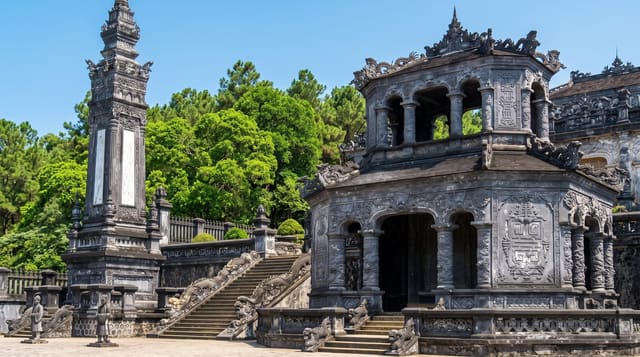
Maragheh was the first capital of the Ilkhanid Mongols in Iran, and it holds two things worth the detour. The first is a group of five brick tomb towers from the twelfth and thirteenth centuries, the Gonbad-e Sorkh, Gonbad-e Kabud and others, small polygonal or cylindrical buildings with brickwork and tile of high quality, standing among the modern streets. The second is on the hill above: the site of the observatory founded in 1259 by Nasir al-Din al-Tusi under Hulagu Khan, which was the most advanced in the world in its day, with instruments and a library, and produced the Zij-i Ilkhani star tables used for centuries. The foundations of the main tower and the instrument platforms have been excavated and are under a protective dome.
History
Maragheh has long been identified with Phraaspa, the winter capital of Atropatene, and the historian al-Baladhuri, who died in 892, says it was first called Akra-rudh. The Umayyad prince Marwan ibn Muhammad stayed here in 740, when it took the name Maragheh, "place where an animal rolls", and around 803 the governor Khuzayma ibn Khazim had a wall built round it (Wikipedia, Maragheh).
What's there
- Five medieval tomb towers - brick and tile buildings across the town.
- The observatory foundations - excavated platforms under a protective dome.
- The Gonbad-e Kabud - the blue tower, the finest of the group.
- The hill site - the observatory position above the town.
When to go
April to June and September to October. Half a day. The towers are locked and need a keyholder from the heritage office, which takes arranging. Winters are cold and snowy.
What to expect
Tomb towers are usually locked and access depends on finding staff. The observatory is foundations under a modern shelter with limited interpretation. The town itself is plain. There is little English signage anywhere.
Nearby
Lake Urmia lies west; Tabriz is north.
What to pack for Maragheh
Chosen from what this place is for. Tap a kit for the full checklist.
- Spare batteries + cards - Cold and long shoots drain power; never run out at the good light. Find on Amazon
- Comfortable walking shoes - Sightseeing means kilometres of pavement and cobbles daily. Find on Amazon
- A compact tripod - Essential for night skies, aurora, waterfalls and low light. Find on Amazon
- A slim anti-theft daypack - Zips that close properly; keep it in front in crowds and on transit. Find on Amazon
Some links on this page are Amazon affiliate links - if you buy through them we may earn a small commission at no extra cost to you.
All packing kitsPlan your trip
Where to start if Maragheh is going on the list.
Booking links on this page are affiliate links - if you book through them we may earn a small commission at no extra cost to you. It never changes what we write about a place.
Opening times, ticket prices and seasonal closures change - check the official source before you go: official site.