The Tomb of Khai Dinh
A blackened concrete tomb terraced into a hillside outside Hue, plain from the outside and covered inside with glass and porcelain mosaic.
Updated 18 October 2026
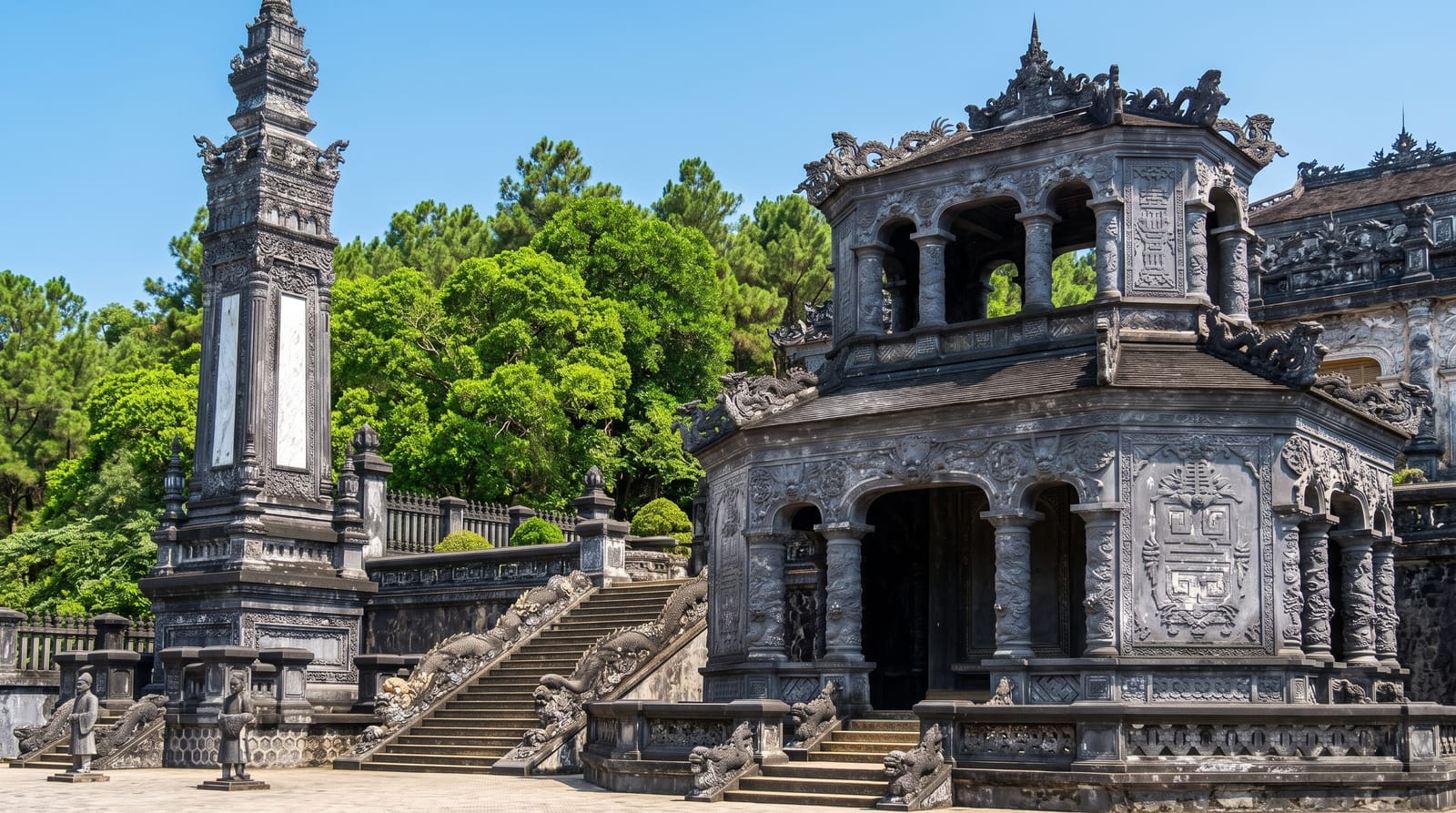
AI illustration
UNESCO World Heritage
Built between 1920 and 1931, this is the last of the imperial tombs and the odd one out. It abandons timber and garden for reinforced concrete stacked in terraces up a steep slope, with dragon balustrades running beside long flights of steps and a courtyard of stone attendants halfway up. Weather has streaked the exterior black, which suits it. The surprise is inside the Thien Dinh palace at the top, where every surface of the main chamber is covered in mosaic made from broken porcelain and glass, worked into dragons, flowers and fruit beneath a painted ceiling, with a gilded bronze statue of the emperor seated above the grave.
History
Khải Định became emperor in 1916 after the French exiled his predecessor, worked closely with the colonial government and was unpopular for it, and like several Nguyễn emperors he prepared his tomb in his lifetime, the last of the dynasty to do so; a visit to France probably shaped its European touches. He is said to have raised taxes by thirty per cent to pay for it, though historians note that the French, who controlled the finances, raised taxes for many reasons. Work began on 4 September 1920 and was not finished when he died in 1925; the tomb on Châu Chữ mountain was completed in 1931, after eleven years, and in 1993 it became part of the Complex of Huế Monuments World Heritage Site (Wikipedia, Tomb of Khải Định).
The main sights
- The stairways - steep flights of steps with dragon balustrades climbing the hillside terraces.
- The honour courtyard - stone mandarins, horses and elephants on a tight terrace, smaller than at the older tombs.
- Thien Dinh chamber - walls and ceiling covered in porcelain and glass mosaic.
- The bronze statue - a gilded figure of the emperor beneath a canopy, with the grave underneath.
When to go
February to April is the dry season and the only reliable window in a city with long rains. Go early, because the climb is exhausting in the afternoon and the mosaic chamber is small enough that a single group fills it. An hour is enough for the tomb itself. Combine it with Tu Duc, which sits on the same road out of the city.
Practical notes
The climb is a real one, several long flights with no shade and no handrail in places. From outside the tomb looks grey and grim, and visitors who skip the interior wonder what the fuss is about. The chamber is cramped, dim and often full, which makes photography awkward. Tickets are charged per tomb and this one is not cheap.
Nearby
The tomb of Tu Duc and the Perfume River valley lie to the north.
Key facts
Source: Wikidata, item Q7818621, read on 18 October 2026.
What to pack for The Tomb of Khai Dinh
Chosen from what this place is for. Tap a kit for the full checklist.
- Comfortable walking shoes - Sightseeing means kilometres of pavement and cobbles daily. Find on Amazon
- A slim anti-theft daypack - Zips that close properly; keep it in front in crowds and on transit. Find on Amazon
- A refillable water bottle - Many cities have public fountains; save money and plastic. Find on Amazon
- A light layer + compact umbrella - For museum air-con and a sudden shower. Find on Amazon
Some links on this page are Amazon affiliate links - if you buy through them we may earn a small commission at no extra cost to you.
All packing kitsPlan your trip
Where to start if The Tomb of Khai Dinh is going on the list.
Booking links on this page are affiliate links - if you book through them we may earn a small commission at no extra cost to you. It never changes what we write about a place.
Opening times, ticket prices and seasonal closures change - check the official source before you go: official site.