The Tomb of Askia
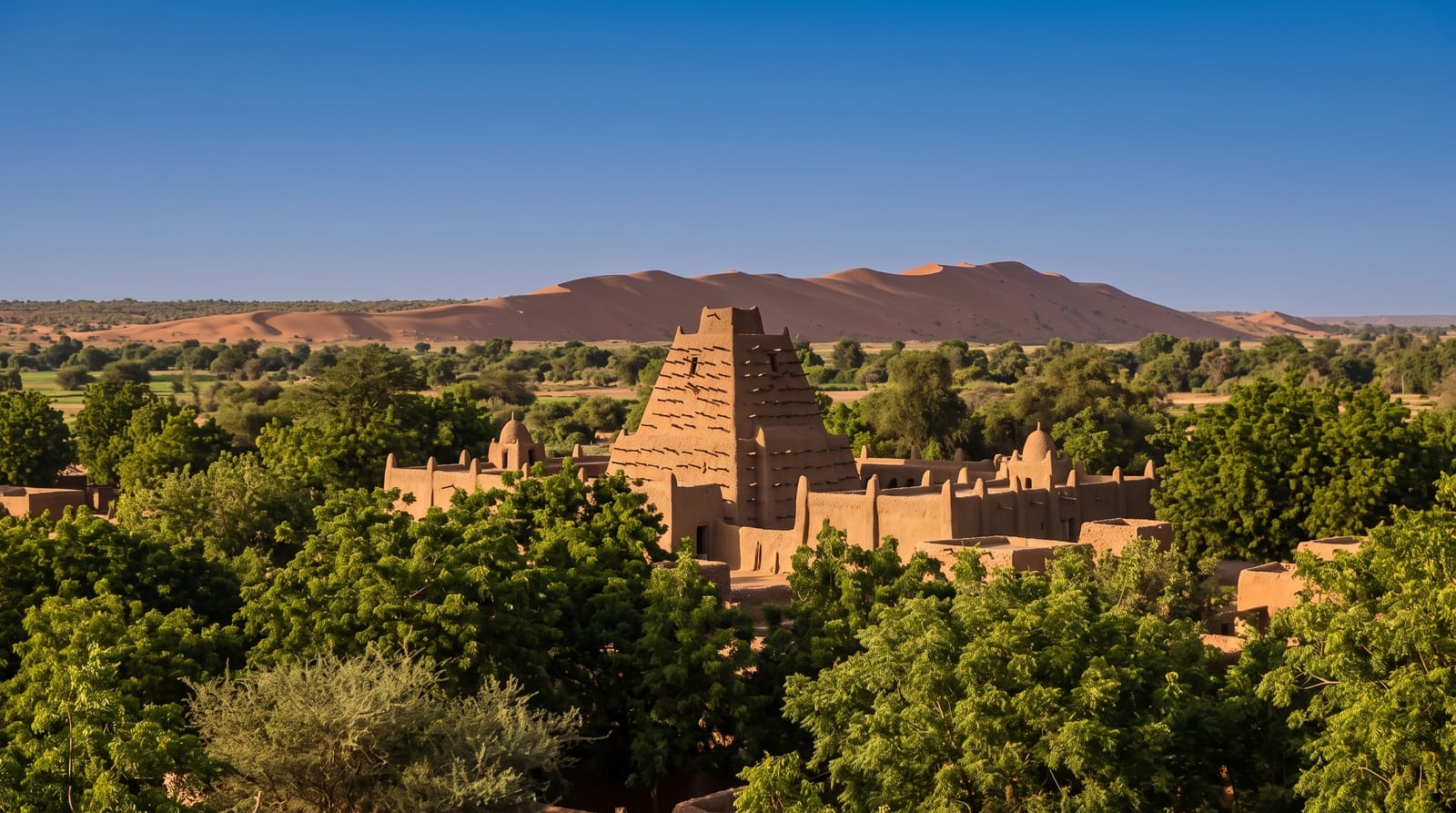
A pyramid of earth on the Niger - the striking Tomb of Askia in Gao, a UNESCO World Heritage pyramidal mud monument built by a great emperor of the Songhai, a masterpiece of Sahel earthen architecture and a symbol of a mighty African empire.
Updated 18 October 2026
AI illustration
UNESCO World Heritage
The Tomb of Askia, in the historic river city of Gao on the Niger in eastern Mali, is one of the great monuments of the Sahel and a UNESCO World Heritage site. Built at the end of the fifteenth century by Askia Muhammad, the powerful emperor who made the Songhai one of the largest empires in African history, this striking pyramidal tower of earth rises some seventeen metres, bristling with the protruding wooden beams typical of Sudano-Sahelian architecture. Together with its two mosques and cemetery, it is a masterpiece of mud-brick building and a powerful reminder of the wealth and reach of the medieval West African empires that once flourished along the great river.
History
Askia Mohammed I, the first emperor of the Askia line, who enlarged the Songhai Empire, returned from his pilgrimage to Mecca in 1497-98 bringing, it is said, all the mud and wood for his tomb from Mecca in a caravan of thousands of camels. The tomb, built at the end of the 15th century and 17 metres high, was laid out like a house with rooms and passages and sealed at his death; only he lies inside, while other Askias are buried in the courtyard. It has been replastered regularly throughout its history, the mosques beside it were enlarged in the 1960s and mid-1970s, a wall was built around the site in 1999 and electricity arrived in the early 2000s, and it is a World Heritage Site (Wikipedia, Tomb of Askia).
The main sights
- The earthen pyramid - the striking pyramidal mud tomb tower.
- The wooden beams - the protruding timbers of Sahel architecture.
- The mosques - the two prayer halls of the complex.
- The river setting - the historic city of Gao on the Niger.
When to go
November to February, the cool dry season, is the most comfortable time to visit Gao and the tomb, avoiding the fierce desert-edge heat; the mild winter suits exploring the monument and riverside city. The earthen pyramid glows warmly in the low morning and evening light.
Things to know
Gao lies far up the Niger in eastern Mali and takes real effort to reach, and the tomb is a single striking monument rather than a large complex. As a UNESCO World Heritage masterpiece of earthen architecture built by a great Songhai emperor, a powerful symbol of medieval West African empire, though, the Tomb of Askia is a genuinely remarkable and evocative sight.
Nearby
The Niger river and the historic city of Gao surround the monument.
Key facts
Source: Wikidata, item Q503823, read on 18 October 2026.
What to pack for The Tomb of Askia
Chosen from what this place is for. Tap a kit for the full checklist.
- Loose, light, long clothing - Covering up beats bare skin in the desert - and locals dress this way for a reason. Find on Amazon
- Comfortable walking shoes - Sightseeing means kilometres of pavement and cobbles daily. Find on Amazon
- Modest clothing - Shoulders and knees covered - the single most common requirement. Find on Amazon
- A wide-brim hat + sunglasses - Shade for your face and eyes where there is none overhead. Find on Amazon
Some links on this page are Amazon affiliate links - if you buy through them we may earn a small commission at no extra cost to you.
All packing kitsPlan your trip
Where to start if The Tomb of Askia is going on the list.
Booking links on this page are affiliate links - if you book through them we may earn a small commission at no extra cost to you. It never changes what we write about a place.
Opening times, ticket prices and seasonal closures change - check the official source before you go: official site.