Segou
The Niger's gracious river town - balanzan trees and banco architecture, bogolan cloth workshops and the memory of the Bambara kingdom.
Updated 21 October 2026
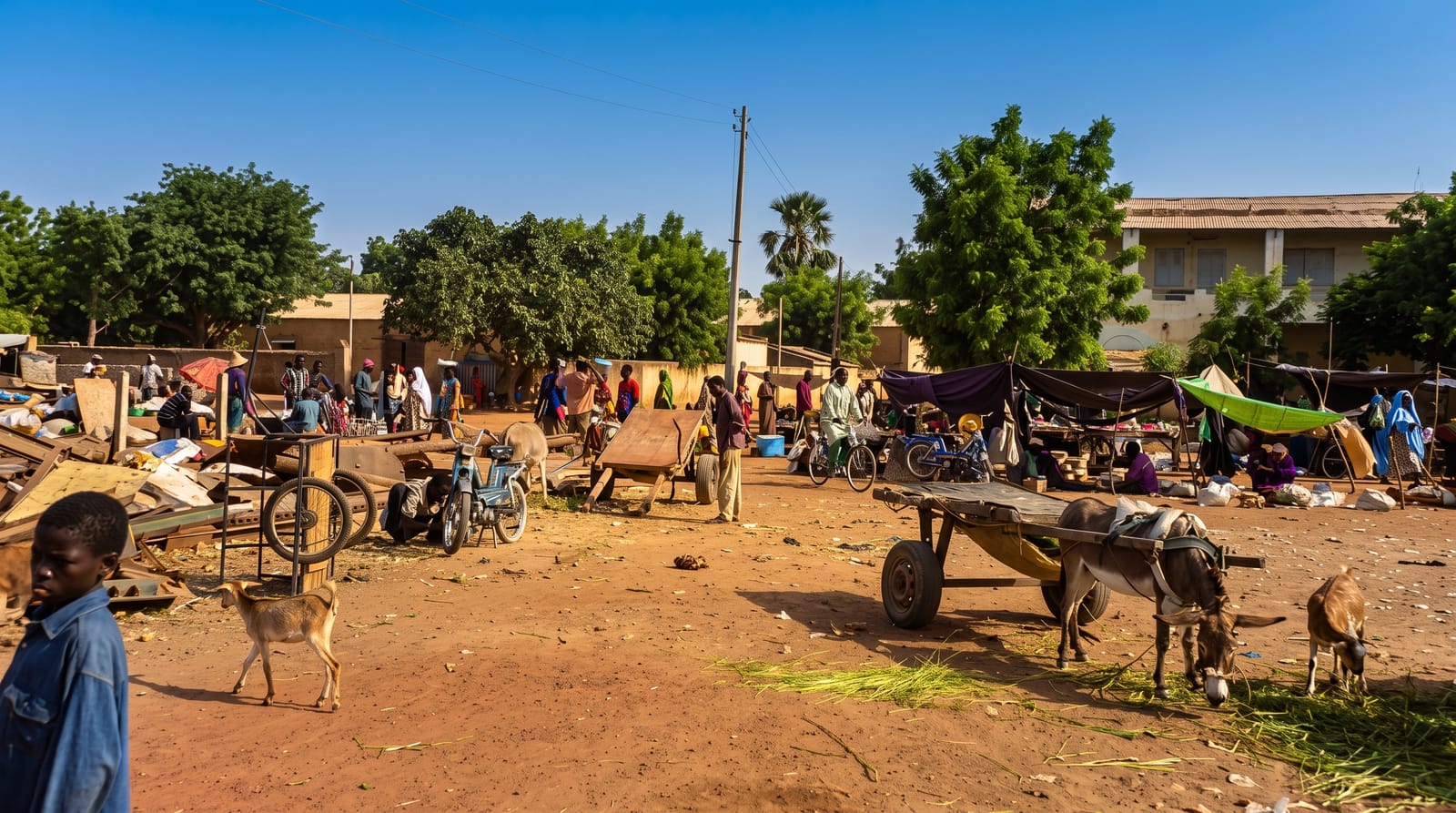
AI illustration
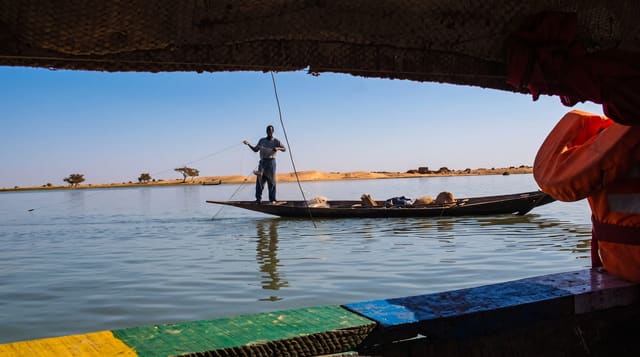
Segou spreads along the Niger under its famous balanzan trees - the town of a thousand of them, tradition counts - with a riverfront of banco (earthen) administration buildings from the colonial era, pirogues loading at the bank, and a cultural confidence rooted in its past as capital of the Bambara kingdom, whose old seat at Sekoro keeps its vestiges nearby. The living draw is craft: Segou anchors Mali's bogolan tradition, the mud-dyed cloth whose geometric blacks and earth tones come off workshop tables here, alongside potters across the river and the weaving cooperatives. The Niger does the evenings - sunset pirogue runs past garden islands and fishing camps.
History
Around 1650 Kaladian Coulibaly founded a kingdom with Ségou-Koro as its capital, and in 1766 Ngolo Diarra moved the capital to Ségou-Sikoro, close to the present town. Mungo Park, passing through in 1797, wrote of the extensive city, the numerous canoes on the river and the cultivated countryside around it (Wikipedia, Ségou).
The main sights
- The riverfront - banco buildings and pirogue commerce under the balanzans.
- The bogolan workshops - mud-cloth masters at the dye tables.
- Sekoro's vestiges - the old Bambara capital's earthen memory.
- The sunset pirogues - the Niger's garden islands at golden hour.
When to go
November to February is the cool, dry visiting season; river levels suit pirogue outings then too. Arrangements run through trusted local operators who know the picture.
Practical notes
In town, the pleasures are craft, river and welcome rather than monuments - pace accordingly. Photograph people by permission; buy the cloth from the hands that made it.
Nearby
The river villages, the pottery bank at Kalabougou and the Bamako road.
Key facts
Source: Wikidata, item Q333476, read on 18 October 2026.
What to pack for Segou
Chosen from what this place is for. Tap a kit for the full checklist.
- Travel rod + reel - A packable multi-piece rod fits in a case and covers most holiday fishing. Find on Amazon
- Quick-dry clothing - Board shorts or synthetics that shrug off spray and dry fast. Find on Amazon
- Comfortable walking shoes - Sightseeing means kilometres of pavement and cobbles daily. Find on Amazon
- A small tackle selection - Hooks, weights, line and a few lures or flies suited to local waters. Find on Amazon
Some links on this page are Amazon affiliate links - if you buy through them we may earn a small commission at no extra cost to you.
All packing kitsPlan your trip
Where to start if Segou is going on the list.
Booking links on this page are affiliate links - if you book through them we may earn a small commission at no extra cost to you. It never changes what we write about a place.
Opening times, ticket prices and seasonal closures change - check the official source before you go: official site.