Purana Qila
A sixteenth-century fort whose excavations have reached layers going back to around 1000 BC.
Updated 21 October 2026
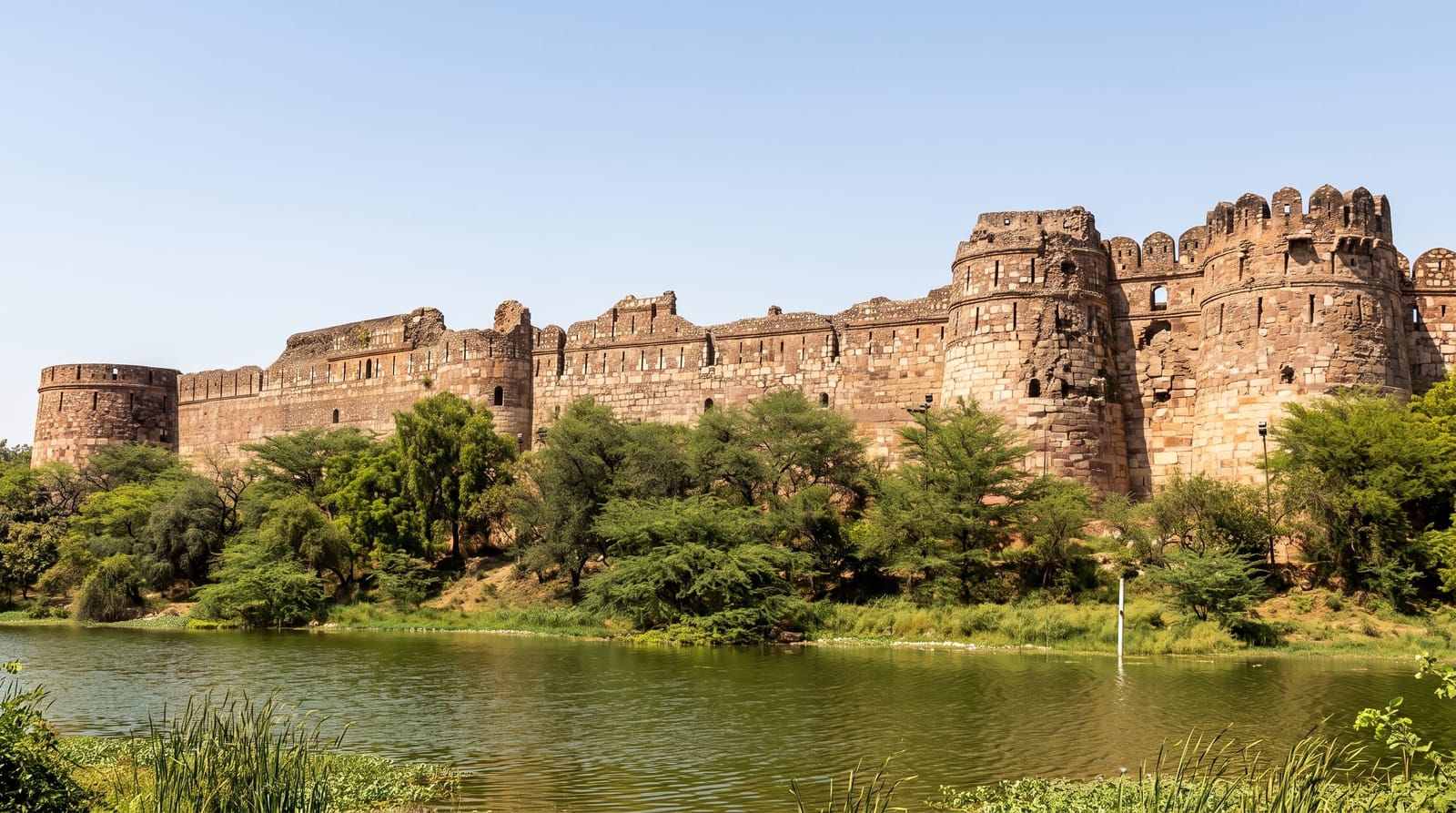
AI illustration
The walls and gates standing today were built by Sher Shah Suri and Humayun in the 1530s and 1540s, but the mound they sit on has been dug repeatedly since the 1950s and has produced painted grey ware and other material indicating occupation going back to around 1000 BC, which is why the site is associated with Indraprastha of the Mahabharata. Inside stand the Qila-i-Kuhna mosque, finely worked in coloured stone, and the octagonal Sher Mandal, a tower Humayun used as a library and from whose steps he fell to his death in 1556. A lake outside offers boating.
History
Excavations in 1954-55 and 1969-72 under B. B. Lal found Painted Grey Ware showing habitation from around 1000 BC, and Alexander Cunningham identified the site with Indraprastha. The fort began as the walls of Dinpanah, the new city Humayun was building, and Sher Shah Suri, who defeated Humayun, strengthened it; on 7 October 1556 Hem Chandra Vikramaditya was crowned here, a month before his defeat at Panipat, and in the 1920s Lutyens aligned the central vista of New Delhi with the fort (Wikipedia, Purana Qila).
What to look for
- The gates and walls - massive sixteenth-century fortifications.
- Qila-i-Kuhna mosque - the finely inlaid Sur-period prayer hall.
- Sher Mandal - the octagonal tower where Humayun fell.
- The excavation trench - layers reaching back over two millennia.
When to go
October to March; Delhi summers are severe and the fort has limited shade. Evenings bring a sound and light show. The grounds are quiet on weekday mornings.
Things to know
The interior is largely open lawn with a few buildings, so it can feel sparse. The excavation trench is fenced and hard to read without interpretation. Summer heat is punishing.
Nearby
Humayun's Tomb lies south; India Gate is west.
Key facts
Source: Wikidata, item Q1151529, read on 18 October 2026.
What to pack for Purana Qila
Chosen from what this place is for. Tap a kit for the full checklist.
- Comfortable walking shoes - Sightseeing means kilometres of pavement and cobbles daily. Find on Amazon
- Modest clothing - Shoulders and knees covered - the single most common requirement. Find on Amazon
- A slim anti-theft daypack - Zips that close properly; keep it in front in crowds and on transit. Find on Amazon
- A scarf or shawl - To cover the head or shoulders on entry; women especially at mosques. Find on Amazon
Some links on this page are Amazon affiliate links - if you buy through them we may earn a small commission at no extra cost to you.
All packing kitsPlan your trip
Where to start if Purana Qila is going on the list.
Booking links on this page are affiliate links - if you book through them we may earn a small commission at no extra cost to you. It never changes what we write about a place.
Opening times, ticket prices and seasonal closures change - check the official source before you go: official site.