Karla and Bhaja Caves
Buddhist rock halls from the second century BC, one with wooden roof ribs still in place after two thousand years.
Updated 14 October 2026
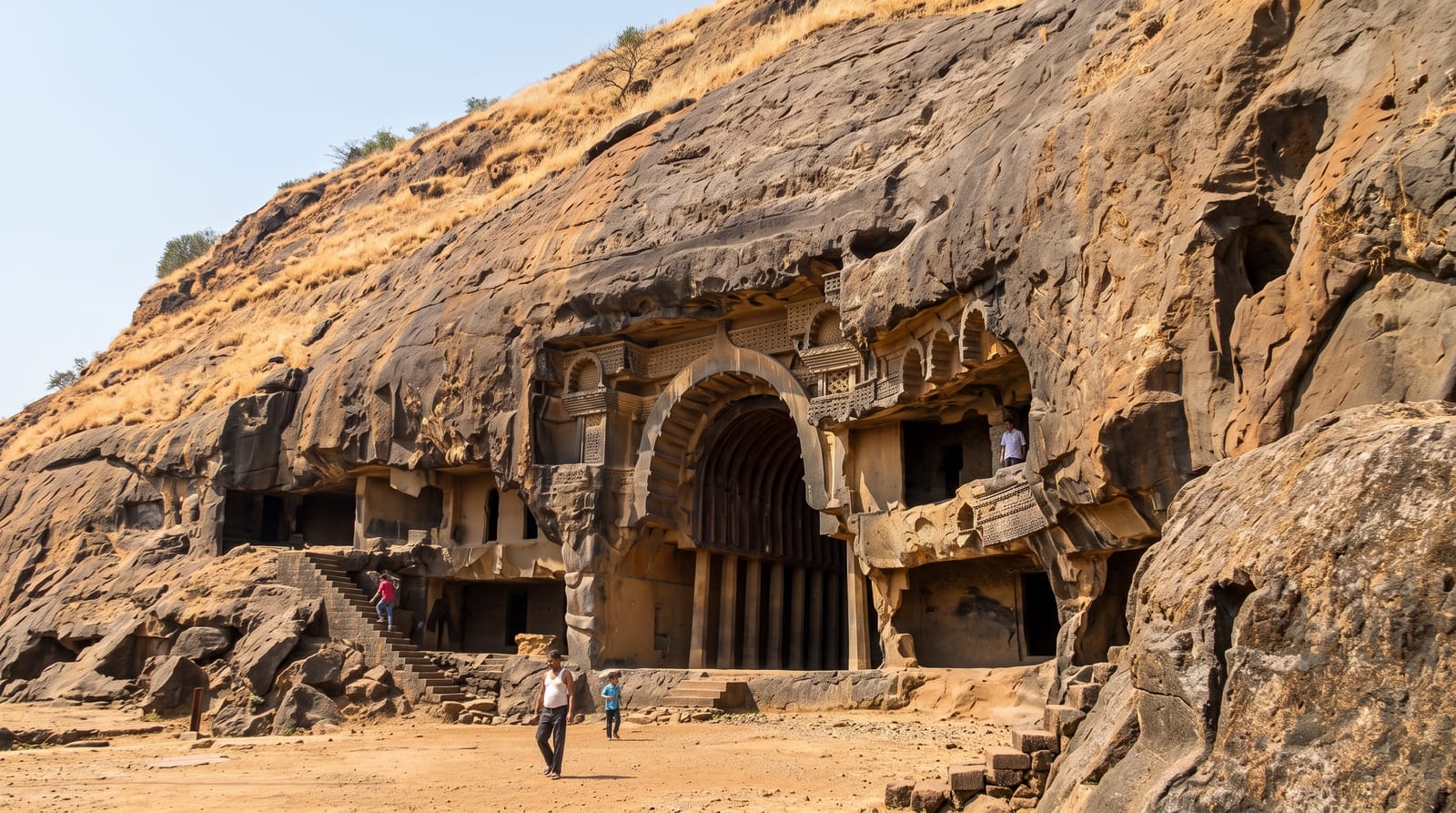
AI illustration
Karla holds the largest early chaitya hall in India, cut in the first century AD or thereabouts, some forty-five metres deep with an apsidal end, thirty-seven octagonal pillars carrying carved elephants and paired figures, a stone stupa at the far end, and a horseshoe window above the entrance; teak ribs fixed into its vaulted ceiling survive from the original construction, which is exceptional. Bhaja, a few kilometres away and older, is plainer and quieter, with a chaitya hall, monastic cells, a group of fourteen stupas and a waterfall in the monsoon. Both were cut beside the trade route over the ghats.
What to look for
- The Karla chaitya - a forty-five metre hall with original teak ceiling ribs.
- The carved pillars - elephants and paired figures on the capitals.
- Bhaja's stupa group - fourteen stupas in a cut recess.
- The monsoon waterfall - water falling beside the Bhaja caves in the rains.
When to go
June to February; the monsoon greens the hillsides and runs the Bhaja waterfall, which is when the setting is best, though steps are slippery. Summer is hot on the climb.
What to expect
Both sites involve a climb of many steps. A working Hindu temple sits at the mouth of the Karla cave and the approach is lined with stalls. Photography inside is restricted at Karla.
Nearby
Lonavala lies west; Pune is southeast.
What to pack for Karla and Bhaja Caves
Chosen from what this place is for. Tap a kit for the full checklist.
- Head torch + spare batteries - Hands-free light is essential; caves are truly dark. Find on Amazon
- Strong insect repellent - DEET or picaridin; the jungle is where bites and disease risk are highest. Find on Amazon
- Comfortable walking shoes - Sightseeing means kilometres of pavement and cobbles daily. Find on Amazon
- Modest clothing - Shoulders and knees covered - the single most common requirement. Find on Amazon
Some links on this page are Amazon affiliate links - if you buy through them we may earn a small commission at no extra cost to you.
All packing kitsPlan your trip
Where to start if Karla and Bhaja Caves is going on the list.
Booking links on this page are affiliate links - if you book through them we may earn a small commission at no extra cost to you. It never changes what we write about a place.
Opening times, ticket prices and seasonal closures change - check the official source before you go: official site.