Gateway of India
A basalt arch built to greet a king, through which the last British troops left India in 1948.
Updated 19 October 2026
AI illustration
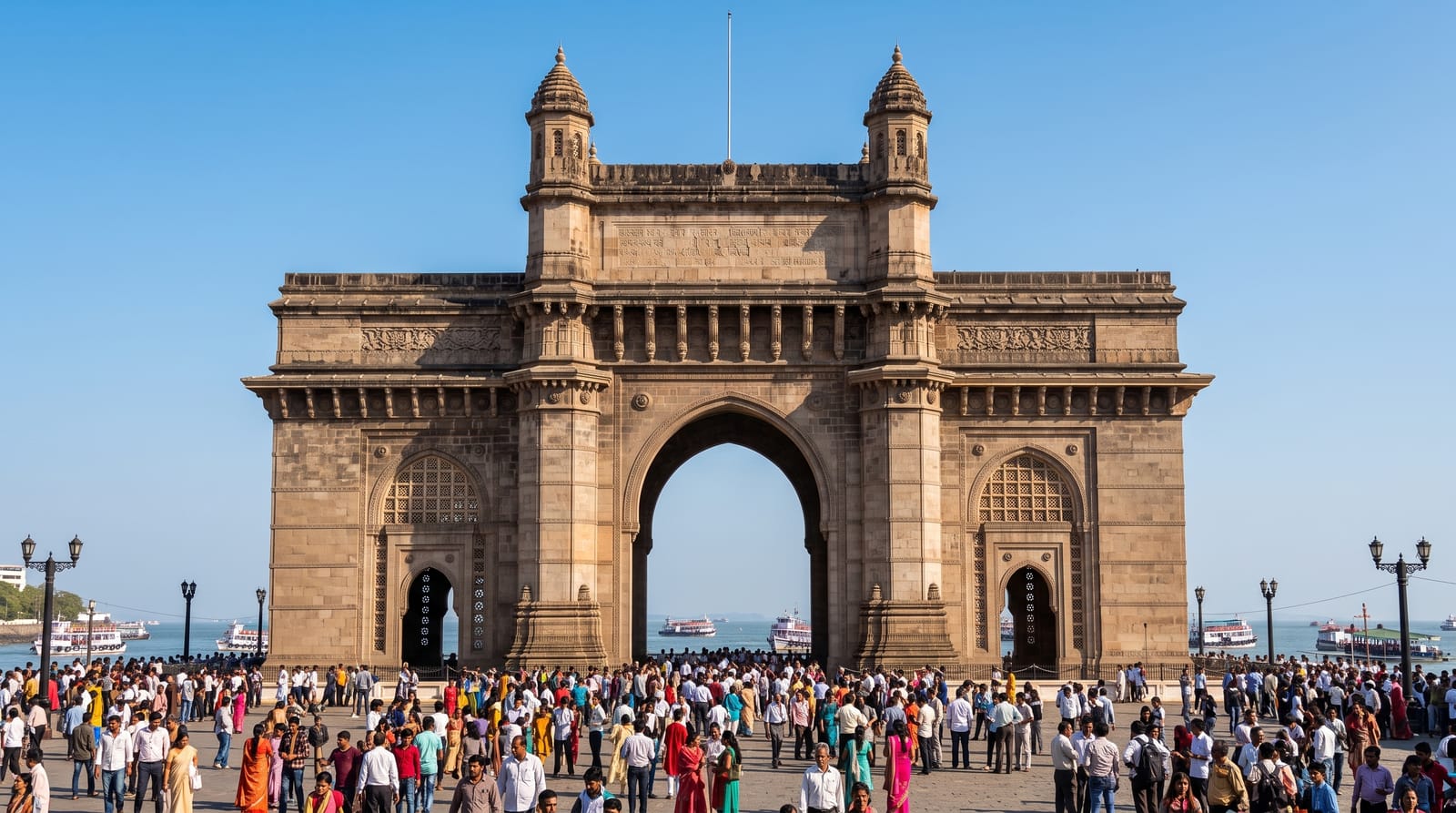
The Gateway was put up to commemorate the visit of George V and Queen Mary in 1911, though the arch itself was only completed in 1924, long after they had come and gone; they saw a temporary cardboard version. It stands twenty-six metres high in yellow basalt on the Colaba waterfront, in an Indo-Saracenic style mixing Gujarati and Islamic detail, facing the harbour. In February 1948 the last British troops in India marched through it to board ship, which gave the arch a second meaning it was never designed for. Boats to Elephanta Island leave from the jetty behind it.
History
The Gateway was built to commemorate the arrival of King George V and Queen Mary at Apollo Bunder on 2 December 1911, the first visit of a British monarch to India, though they saw only a cardboard model. The Governor of Bombay laid the foundation stone on 31 March 1913, George Wittet's design was approved in August 1914, the land was reclaimed between 1915 and 1919, and the arch was finished in 1924 and opened on 4 December 1924; after Indian independence, the last British troops to leave India passed through it (Wikipedia, Gateway of India).
Highlights
- The basalt arch - twenty-six metres of yellow stone on the waterfront.
- The harbour - boats, the Taj hotel opposite and ships in the bay.
- The Elephanta jetty - departures for the island caves behind the arch.
- The crowds - one of Mumbai's busiest public spaces at all hours.
When to go
November to February for dry mild weather; the monsoon from June to September brings heavy rain and rough water that suspends the Elephanta boats. Early morning is the only quiet time.
What to expect
Security screening is in place and queues form. The area is extremely crowded with hawkers and photographers. The sea here is dirty and the harbour view industrial.
Nearby
Elephanta Island is an hour by boat; Colaba Causeway lies behind.
Key facts
Source: Wikidata, item Q864862, read on 18 October 2026.
What to pack for Gateway of India
Chosen from what this place is for. Tap a kit for the full checklist.
- Head torch + spare batteries - Hands-free light is essential; caves are truly dark. Find on Amazon
- Strong insect repellent - DEET or picaridin; the jungle is where bites and disease risk are highest. Find on Amazon
- Comfortable walking shoes - Sightseeing means kilometres of pavement and cobbles daily. Find on Amazon
- Grippy closed shoes - Cave floors are wet, muddy and slick with formations. Find on Amazon
Some links on this page are Amazon affiliate links - if you buy through them we may earn a small commission at no extra cost to you.
All packing kitsPlan your trip
Where to start if Gateway of India is going on the list.
Booking links on this page are affiliate links - if you book through them we may earn a small commission at no extra cost to you. It never changes what we write about a place.
Opening times, ticket prices and seasonal closures change - check the official source before you go: official site.