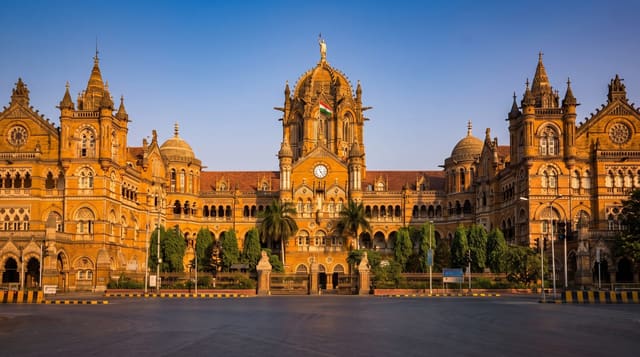
Chhatrapati Shivaji Maharaj Vastu Sangrahalaya
Mumbai's main museum, a domed Indo-Saracenic building holding sculpture, miniature painting, Himalayan art and an old natural history wing.
Updated 19 October 2026
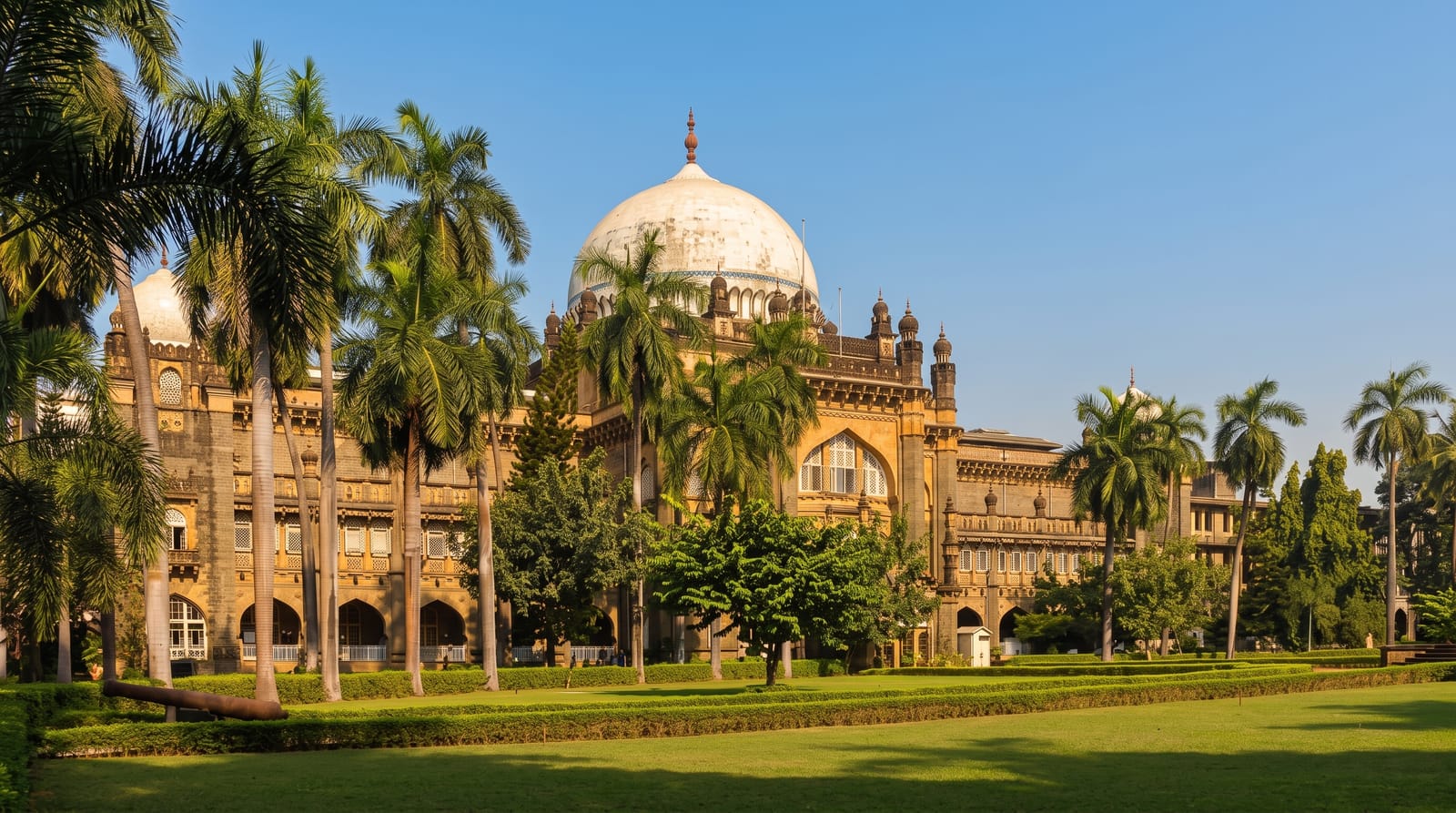
AI illustration
Mumbai's principal museum, still widely called by its old initials, occupies a domed Indo-Saracenic building of 1915 in the Kala Ghoda district, set back behind palms and a lawn. The collection is broad rather than deep in any one area: Indus Valley finds, Gandharan and Gupta sculpture, a strong run of Mughal, Deccani and Rajput miniatures, Nepalese and Tibetan bronzes and thangkas, Chinese and Japanese porcelain from private bequests, arms, and a natural history wing of old-fashioned dioramas. Air conditioning, decent labelling and a manageable size make it one of the easier large museums in India to spend a couple of hours in without wearing yourself out.
History
In 1904 leading citizens of Bombay decided to found a museum to commemorate the visit of the Prince of Wales, later George V, who laid the foundation stone on 11 November 1905. The architect George Wittet, later designer of the Gateway of India, won the commission in 1909, and the Indo-Saracenic building was completed in 1915, but it served as a children's welfare centre and a hospital before being handed to the museum committee in 1920, and the museum opened on 10 January 1922 (Wikipedia, Chhatrapati Shivaji Maharaj Vastu Sangrahalaya).
What to look for
- The miniature painting galleries - Mughal, Deccani and Rajput works hung in dim, climate-controlled rooms.
- Indian sculpture - stone and bronze figures arranged around the central rotunda under the dome.
- Himalayan and Chinese collections - thangkas, bronzes and porcelain from donated private holdings.
- The building itself - domed Indo-Saracenic architecture with a garden forecourt, worth a slow lap outside.
When to go
November to February is Mumbai's dry, tolerable season, and the museum is a sensible way to spend the hottest part of any day year-round. It shuts on some public holidays. Weekday mornings are quiet; weekends bring families, and the Kala Ghoda streets outside fill up during the arts festival in early February.
Before you go
Camera and audio-guide fees stack on top of the ticket, and the foreign-visitor rate is several times the local one. Galleries close for rehanging with no notice. The natural history dioramas are visibly aged and thinly explained. Traffic and parking around Kala Ghoda are grim, so walk from the station rather than taking a taxi.
Nearby
The Gateway of India, Colaba Causeway and the Kala Ghoda galleries are all within fifteen minutes on foot.
Key facts
Source: Wikidata, item Q1071500, read on 18 October 2026.
What to pack for Chhatrapati Shivaji Maharaj Vastu Sangrahalaya
Chosen from what this place is for. Tap a kit for the full checklist.
- Comfortable walking shoes - Sightseeing means kilometres of pavement and cobbles daily. Find on Amazon
- A slim anti-theft daypack - Zips that close properly; keep it in front in crowds and on transit. Find on Amazon
- A refillable water bottle - Many cities have public fountains; save money and plastic. Find on Amazon
- A light layer + compact umbrella - For museum air-con and a sudden shower. Find on Amazon
Some links on this page are Amazon affiliate links - if you buy through them we may earn a small commission at no extra cost to you.
All packing kitsPlan your trip
Where to start if Chhatrapati Shivaji Maharaj Vastu Sangrahalaya is going on the list.
Booking links on this page are affiliate links - if you book through them we may earn a small commission at no extra cost to you. It never changes what we write about a place.
Opening times, ticket prices and seasonal closures change - check the official source before you go: official site.