Chhatrapati Shivaji Terminus
Mumbai's Victorian Gothic railway terminus of 1888, still a working commuter station under its carved stone dome.
Updated 18 October 2026
AI illustration
UNESCO World Heritage
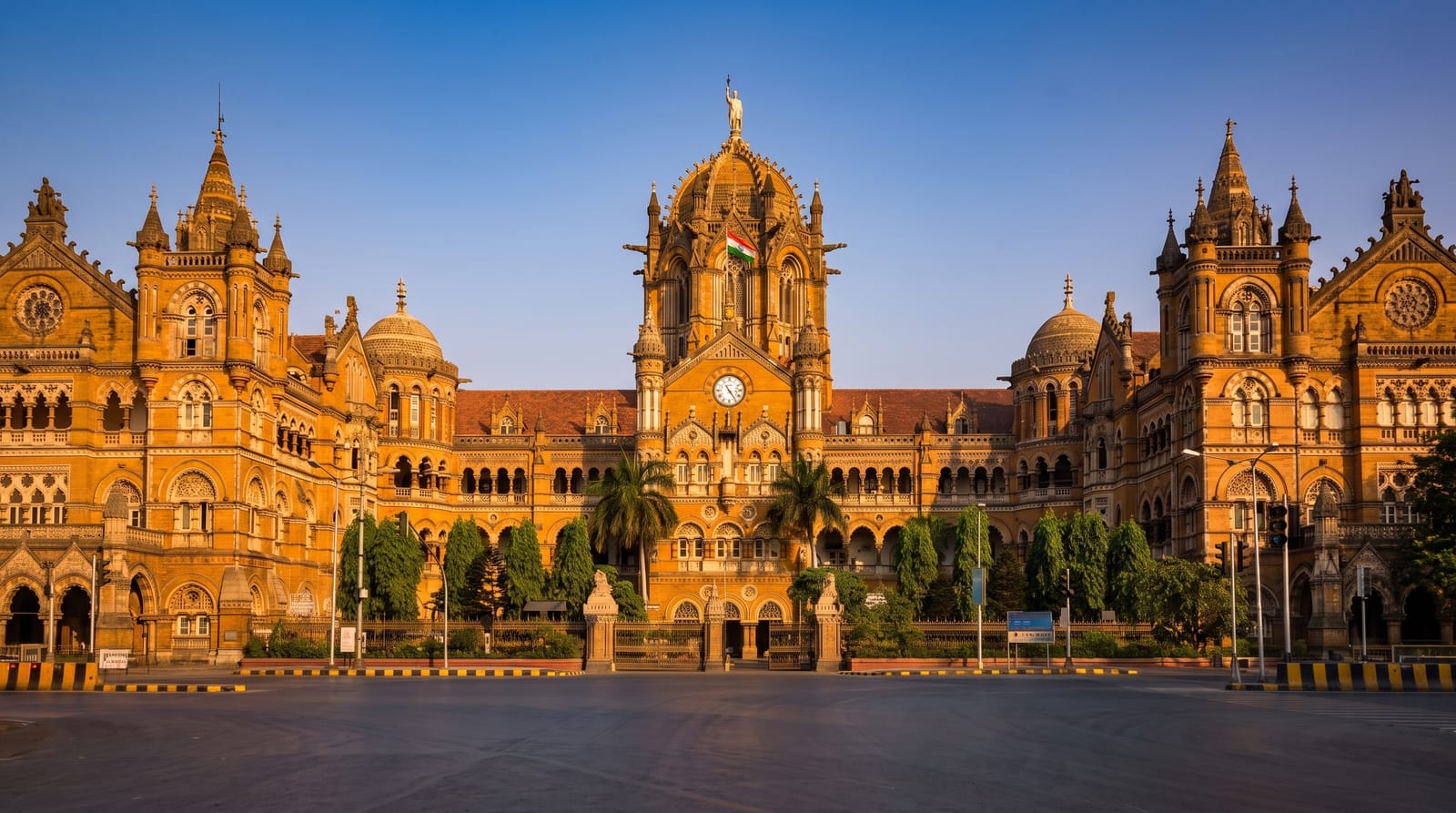
Bombay's main terminus opened in 1888 to a design by Frederick William Stevens, Victorian Gothic in its ribs and gables but grafted onto Indian detail: pointed arches over stone screens, local animals worked into the capitals, and a central dome carrying a figure of Progress. It is not a preserved building. Suburban trains still work the platforms behind the facade, and hundreds of services and a large share of the city's commuters pass through every day, so the stone stairs are worn smooth in the middle. The best views are from the traffic island opposite, where the whole west front lines up under the dome, and again after dark when the building is floodlit.
History
The station was built as the headquarters of the Great Indian Peninsula Railway to replace the Bori Bunder terminus, used since 1853, and named Victoria Terminus for Queen Victoria's Golden Jubilee. Frederick William Stevens of the Bombay Public Works Department, who won the commission with the help of a watercolour by the draughtsman Axel Haig, designed it in an exuberant Indo-Gothic style; work began in 1878 and took ten years, the longest of any building of its era in Bombay, and the station opened to the public on 20 May 1888. A marble statue of the queen under the clock was taken down in the 1950s and later disappeared, and the figure of Progress on the dome is often mistaken for her; in 1996 the station was renamed after Shivaji, founder of the Maratha Empire (Wikipedia, Chhatrapati Shivaji Terminus).
What to look for
- The west front and dome - the main facade with its turrets, gables and the crowning figure above.
- The stone carving - capitals and spandrels worked with peacocks, monkeys and local plants.
- The booking hall - ribbed vaulting, tiled floors and stained glass over the ticket windows.
- The commuter platforms - the working suburban side, at its most extreme in the evening peak.
When to go
November to February is the dry, cooler season, and the light on the west front is best in the late afternoon. Floodlighting after dark is the other good window. Avoid the morning and evening commuter peaks if you want to look at anything indoors, or come deliberately during them if the crowd itself is what interests you.
What to expect
This is a functioning station, not a monument with a visitor route, and staff move you along inside. Photography on the platforms is restricted and challenged in practice. The traffic island opposite is the only clear vantage and getting to it means crossing a lot of moving vehicles. Soot and repeated repainting have dulled much of the stonework.
Nearby
The Victorian and Art Deco buildings around the Oval Maidan carry a separate World Heritage listing and are a short walk south.
Key facts
Source: Wikidata, item Q235884, read on 18 October 2026.
What to pack for Chhatrapati Shivaji Terminus
Chosen from what this place is for. Tap a kit for the full checklist.
- Comfortable walking shoes - Sightseeing means kilometres of pavement and cobbles daily. Find on Amazon
- A slim anti-theft daypack - Zips that close properly; keep it in front in crowds and on transit. Find on Amazon
- A refillable water bottle - Many cities have public fountains; save money and plastic. Find on Amazon
- A light layer + compact umbrella - For museum air-con and a sudden shower. Find on Amazon
Some links on this page are Amazon affiliate links - if you buy through them we may earn a small commission at no extra cost to you.
All packing kitsPlan your trip
Where to start if Chhatrapati Shivaji Terminus is going on the list.
Booking links on this page are affiliate links - if you book through them we may earn a small commission at no extra cost to you. It never changes what we write about a place.
Opening times, ticket prices and seasonal closures change - check the official source before you go: official site.


