Kizil Caves
The earliest major Buddhist cave complex in China, painted in a style closer to India than to the east.
Updated 19 October 2026
AI illustration
UNESCO World Heritage
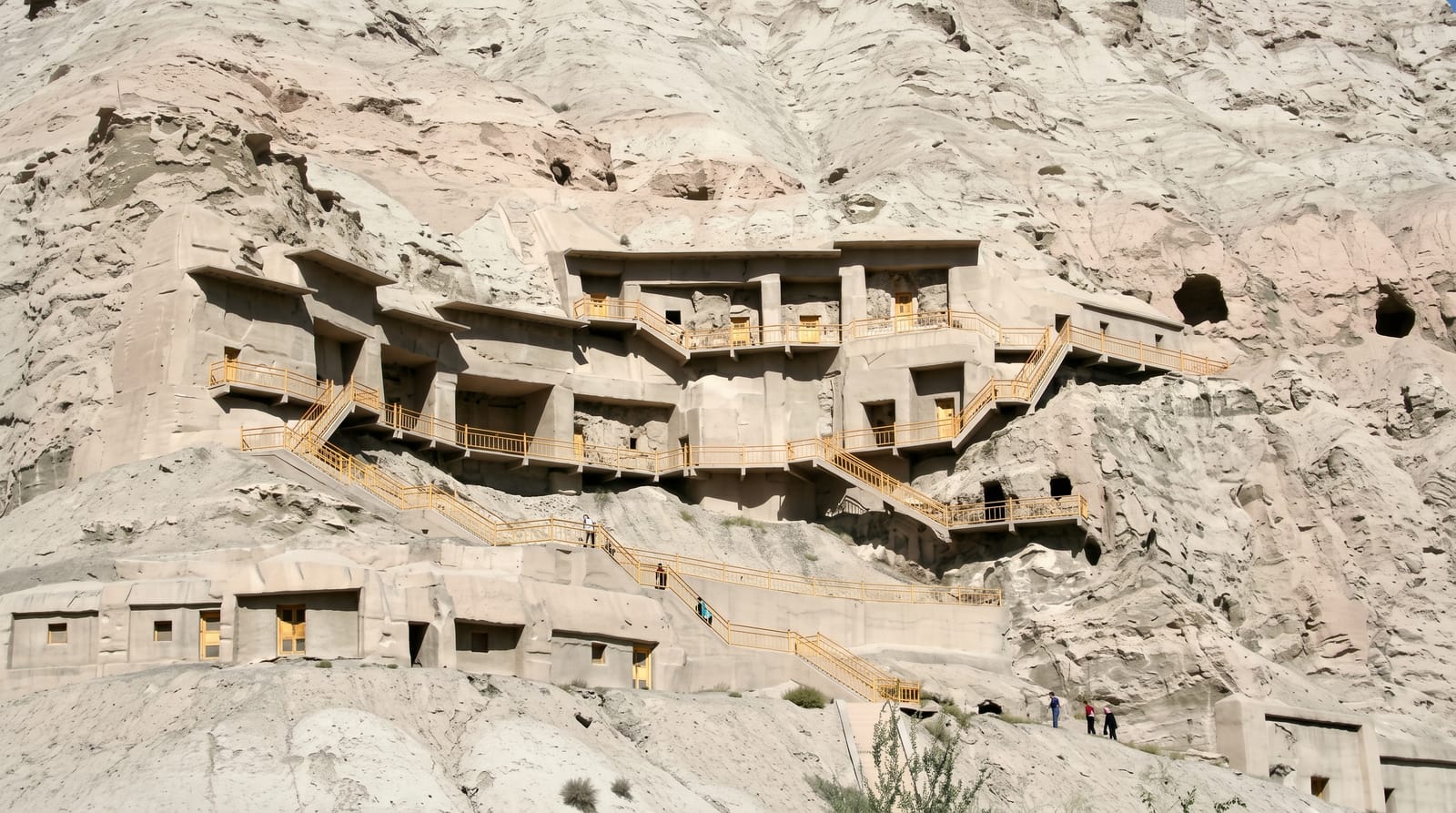
The Kizil caves were cut into a cliff above the Muzat river from around the third century, making them the earliest large Buddhist cave complex in what is now China, some two centuries before Dunhuang's main phase. They belonged to the kingdom of Kucha, and the painting reflects that position on the routes from India and Central Asia: figures with Indian and Persian features, lapis blue grounds, and a distinctive diamond-lattice composition of narrative scenes across barrel-vaulted ceilings. Around two hundred and thirty caves survive, of which a handful are open. Many murals were removed by foreign expeditions in the early twentieth century.
What's there
- The vaulted painted ceilings - diamond-lattice narrative panels in lapis blue.
- The Kuchean style - figures closer to Indian and Persian models.
- The cliff complex - over two hundred caves cut above the river.
- The removal marks - walls where sections were cut away for export.
When to go
April to May and September to October; the Tarim basin summer is extremely hot with no shade at the cliff. Only a small rotating set of caves is open on any given day.
What to expect
Photography inside is prohibited. Only a few caves are open and premium caves cost significantly more. Many of the finest murals are in museums in Berlin and elsewhere.
Nearby
The Tianshan Mysterious Grand Canyon lies north; Kuqa is southeast.
Key facts
Source: Wikidata, item Q1234019, read on 18 October 2026.
What to pack for Kizil Caves
Chosen from what this place is for. Tap a kit for the full checklist.
- Head torch + spare batteries - Hands-free light is essential; caves are truly dark. Find on Amazon
- Comfortable walking shoes - Sightseeing means kilometres of pavement and cobbles daily. Find on Amazon
- Shelter suited to the place - Tent, tarp or hut booking - match it to the terrain and rules. Find on Amazon
- Grippy closed shoes - Cave floors are wet, muddy and slick with formations. Find on Amazon
Some links on this page are Amazon affiliate links - if you buy through them we may earn a small commission at no extra cost to you.
All packing kitsPlan your trip
Where to start if Kizil Caves is going on the list.
Booking links on this page are affiliate links - if you book through them we may earn a small commission at no extra cost to you. It never changes what we write about a place.
Opening times, ticket prices and seasonal closures change - check the official source before you go: official site.

