Jiaohe Ruins
A city carved down into a river island rather than built up, standing roofless in the desert for centuries.
Updated 18 October 2026
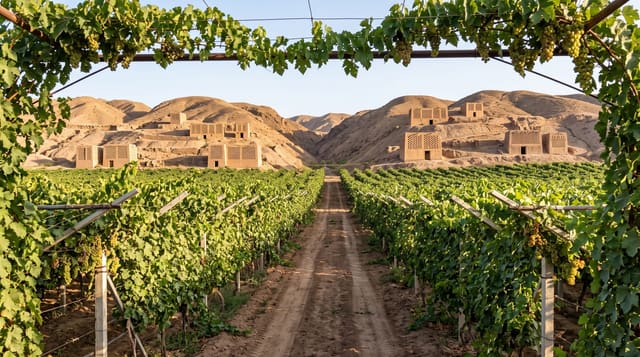
AI illustration
UNESCO World Heritage
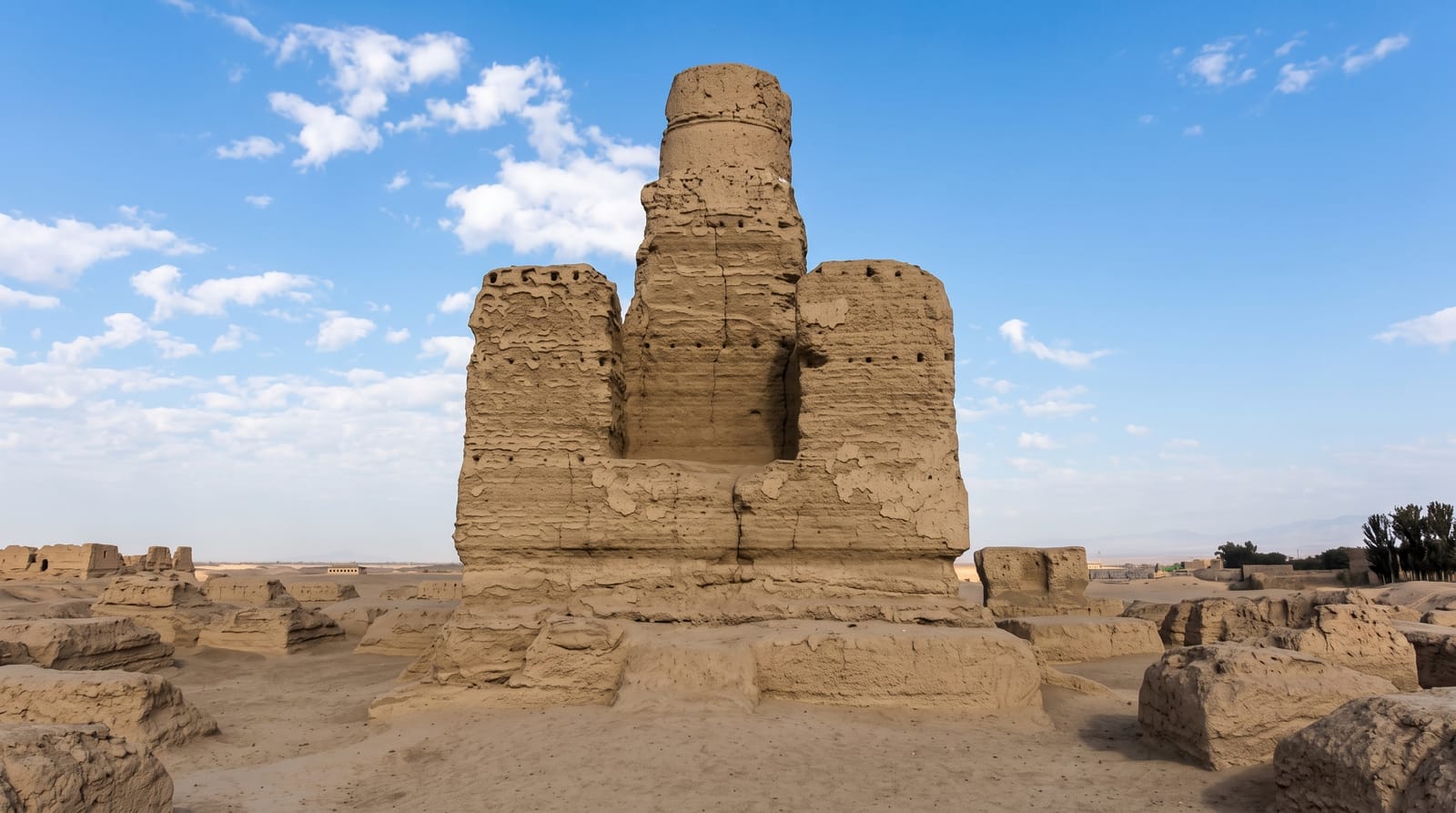
Jiaohe stands on a leaf-shaped plateau between two river channels, thirty metres above them with natural cliffs on every side, and its builders worked downward: rather than laying walls, they cut streets, courtyards, rooms and even a monastery out of the loess itself, so much of the city is subtractive architecture. It was occupied from around the second century BC, served as a regional capital under Tang administration, and was abandoned after the fourteenth century. The dry climate preserved it, and it is now among the best-preserved earthen cities anywhere, part of the UNESCO Silk Roads listing, walked on marked paths.
History
From 108 BC to AD 450 Jiaohe was the capital of the Anterior Jushi kingdom on the Silk Road. Under Chinese rule it became Jiao prefecture and, from 640, the seat of Jiaohe County, and from 640 to 658 it was also the seat of the Protector General of the Western Regions, the highest Chinese military post in the west; from the early 9th century it belonged to the Uyghur Khaganate. Built on an islet 1,650 metres long between two river channels, with cliffs over 30 metres high instead of walls, it had eastern and western residential districts, a northern quarter of temples and stupas and, by Tang records, 7,000 inhabitants. It was finally abandoned after being laid waste in war - by the Mongols in the 13th century according to English-language sources (Wikipedia, Jiaohe ruins), in the 14th century according to Chinese ones (Chinese Wikipedia, Jiaohe ruins). Aurel Stein visited the ruins; they were partly excavated in the 1950s, have been protected since 1961, have been conserved by Japanese and Xinjiang teams since 1992, and became part of the Silk Roads World Heritage Site in 2014.
The main sights
- The carved streets - avenues cut down into the loess plateau.
- The monastery - the Buddhist complex at the centre of the city.
- The stupa field - rows of earthen stupas in the northern quarter.
- The cliff setting - the island plateau between two river channels.
When to go
April to May and September to October; Turpan summers exceed forty degrees with no shade on the site. Early morning and late afternoon give both bearable heat and better light.
Practical notes
There is no shade at all and heat is the main hazard. Structures are eroded earth and need interpretation to read. Paths are fixed and much of the site is roped off for preservation.
Nearby
Gaochang lies east; the Flaming Mountains are northeast.
Key facts
Source: Wikidata, item Q1330939, read on 18 October 2026.
What to pack for Jiaohe Ruins
Chosen from what this place is for. Tap a kit for the full checklist.
- Loose, light, long clothing - Covering up beats bare skin in the desert - and locals dress this way for a reason. Find on Amazon
- Comfortable walking shoes - Sightseeing means kilometres of pavement and cobbles daily. Find on Amazon
- Modest clothing - Shoulders and knees covered - the single most common requirement. Find on Amazon
- A wide-brim hat + sunglasses - Shade for your face and eyes where there is none overhead. Find on Amazon
Some links on this page are Amazon affiliate links - if you buy through them we may earn a small commission at no extra cost to you.
All packing kitsPlan your trip
Where to start if Jiaohe Ruins is going on the list.
Booking links on this page are affiliate links - if you book through them we may earn a small commission at no extra cost to you. It never changes what we write about a place.
Opening times, ticket prices and seasonal closures change - check the official source before you go: official site.