Apamea
A Hellenistic and Roman city with a colonnaded street nearly two kilometres long.
Updated 4 September 2026
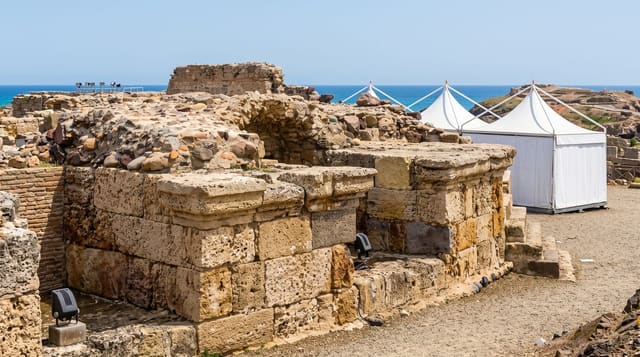
Apamea was one of the great cities of Hellenistic Syria, founded around 300 BC by Seleucus I and named for his wife, and its centrepiece survives: the cardo, a colonnaded street running close to two kilometres with hundreds of columns re-erected along it, many carved with the twisted fluting that is Apamea's signature. The city stood above the Orontes valley and held half a million people at its height. Looting in the 2010s damaged the site badly and much of what was below ground was lost.
What to look for
- The great colonnade - nearly two kilometres of re-erected columns.
- The twisted fluting - the spiral-carved shafts particular to Apamea.
- The cardo paving - the Roman street surface underfoot.
- The Orontes view - the valley the city commanded.
When to go
March to May and October to November are mild. Summer on the open site is very hot. Spring puts grass and flowers between the columns.
Practical notes
The site suffered heavy looting in the 2010s and the ground is pitted with dig holes; the museum in the nearby khan has been closed for years. Access arrangements change and must be checked locally. There are no facilities.
Nearby
Qalaat al-Mudiq castle is beside the site, and Hama is southeast.
What to pack for Apamea
Chosen from what this place is for. Tap a kit for the full checklist.
- Comfortable walking shoes - Sightseeing means kilometres of pavement and cobbles daily. Find on Amazon
- A slim anti-theft daypack - Zips that close properly; keep it in front in crowds and on transit. Find on Amazon
- A refillable water bottle - Many cities have public fountains; save money and plastic. Find on Amazon
- A light layer + compact umbrella - For museum air-con and a sudden shower. Find on Amazon
Some links on this page are Amazon affiliate links - if you buy through them we may earn a small commission at no extra cost to you.
All packing kitsPlan your trip
Where to start if Apamea is going on the list.
Booking links on this page are affiliate links - if you book through them we may earn a small commission at no extra cost to you. It never changes what we write about a place.
Opening times, ticket prices and seasonal closures change - check the official source before you go: official site.