Bezeklik Thousand Buddha Caves
Buddhist cave temples in a desert gorge whose murals were cut from the walls and taken abroad.
Updated 14 October 2026
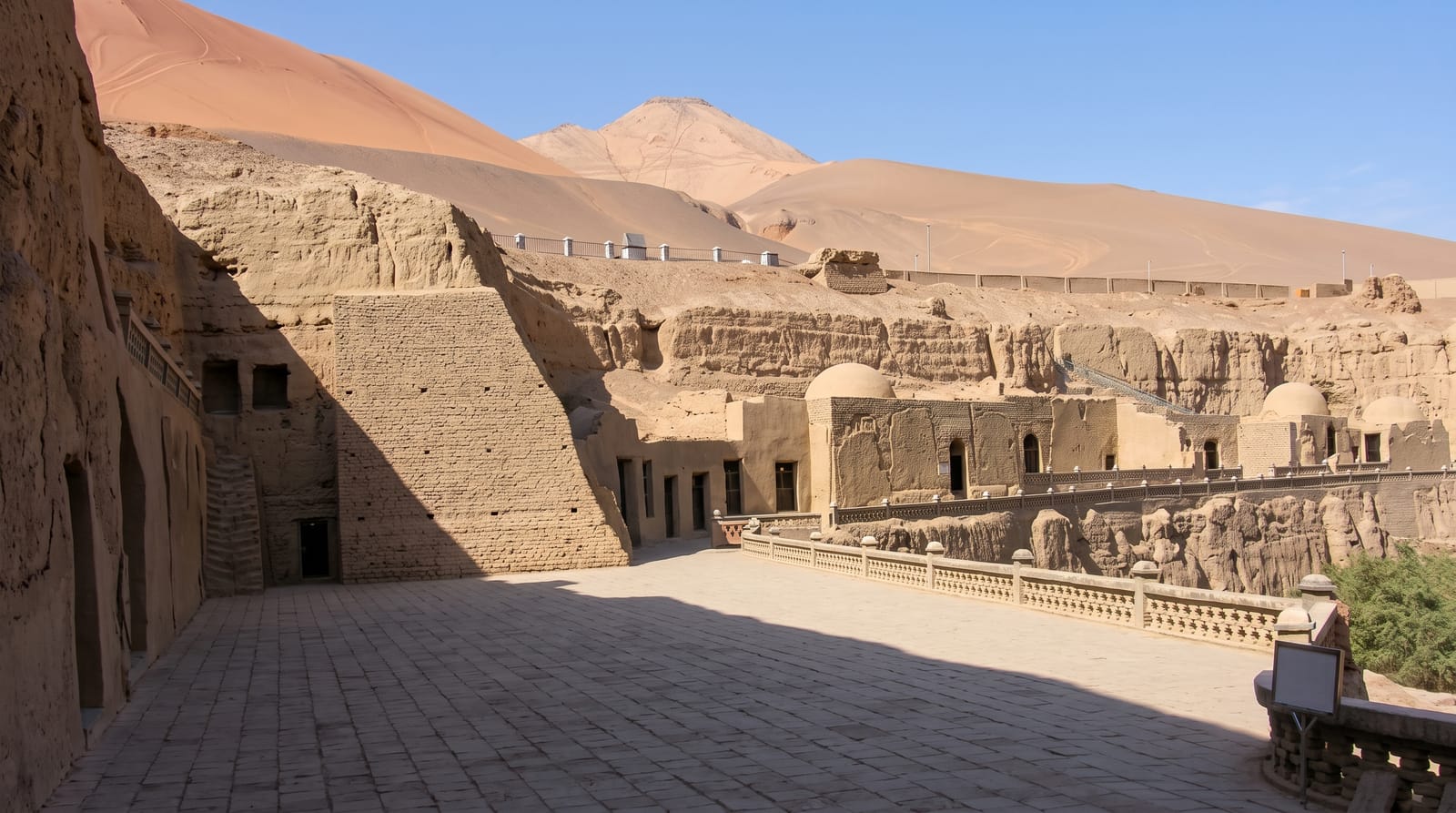
AI illustration
Bezeklik holds some seventy cave temples cut into a cliff above the Murtuk river in a gorge through the Flaming Mountains, decorated between roughly the fifth and fourteenth centuries and representing a meeting of Indian, Persian, Chinese and Uyghur artistic traditions. In the early twentieth century German expeditions led by Albert von Le Coq sawed large sections of mural from the walls and shipped them to Berlin, where many were destroyed in bombing during the Second World War; other fragments went to museums across Europe and Asia. What remains on site is therefore partial, with cut marks visible where paintings were removed.
The main sights
- The cliff caves - around seventy chambers cut above the river gorge.
- The surviving murals - fragments of painting in several open caves.
- The removal scars - cut edges where sections were sawn from the walls.
- The gorge setting - green river valley through the red Flaming Mountains.
When to go
April to May and September to October; summer heat in the Turpan basin is extreme. Mornings are cooler and the gorge light better. The site is quiet outside holidays.
What to expect
Much of the best painting is not here but in museums abroad or lost. Photography inside caves is prohibited. Only a few caves are open at any time and the visit is short.
Nearby
The Flaming Mountains surround it; Gaochang lies south.
Key facts
Source: Wikidata, item Q980774, read on 18 October 2026.
What to pack for Bezeklik Thousand Buddha Caves
Chosen from what this place is for. Tap a kit for the full checklist.
- Head torch + spare batteries - Hands-free light is essential; caves are truly dark. Find on Amazon
- Loose, light, long clothing - Covering up beats bare skin in the desert - and locals dress this way for a reason. Find on Amazon
- Comfortable walking shoes - Sightseeing means kilometres of pavement and cobbles daily. Find on Amazon
- Modest clothing - Shoulders and knees covered - the single most common requirement. Find on Amazon
Some links on this page are Amazon affiliate links - if you buy through them we may earn a small commission at no extra cost to you.
All packing kitsPlan your trip
Where to start if Bezeklik Thousand Buddha Caves is going on the list.
Booking links on this page are affiliate links - if you book through them we may earn a small commission at no extra cost to you. It never changes what we write about a place.
Opening times, ticket prices and seasonal closures change - check the official source before you go: official site.