Xumishan Grottoes
Buddhist caves cut into red sandstone hills, including a twenty-metre Maitreya sitting in the open air.
Updated 18 October 2026
AI illustration
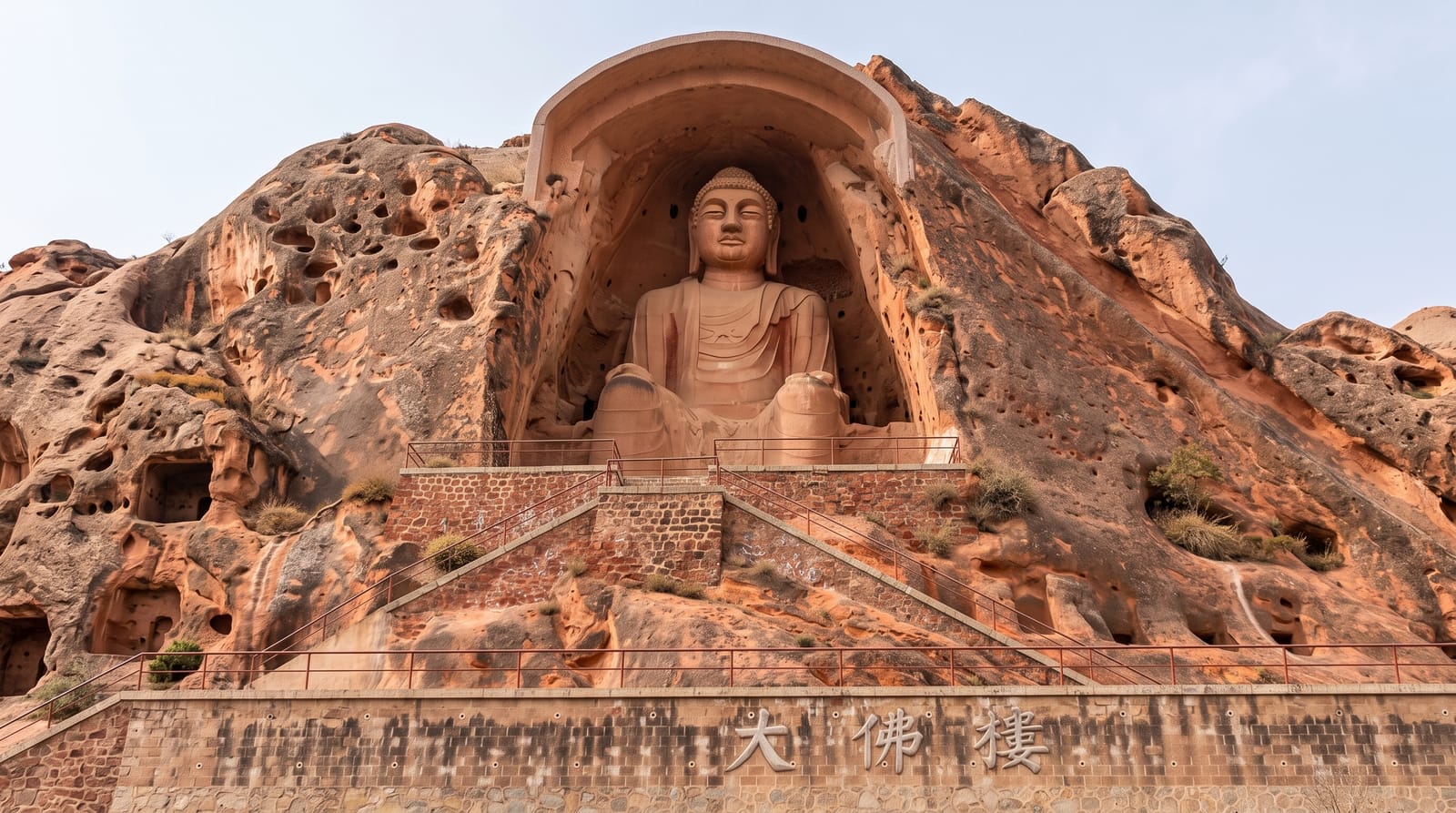
Xumishan takes its name from Sumeru, the mountain at the centre of the Buddhist universe, and around a hundred and thirty caves were cut into its red sandstone knolls between the Northern Wei and the Tang, on a route that carried Buddhism east. The best known figure is a seated Maitreya of about twenty metres from the Tang, originally sheltered by a wooden structure that has long gone, so it now sits exposed on the hillside, visible from a distance across the valley. Other caves hold Northern Wei and Sui sculpture in various states, reached by paths and stairs across several separate hills.
History
Before the caves were cut, the hill was known as Fengyishan. Work began under the Northern Wei and went on, with periodic rebuilding, through the following dynasties to the Tang; the site lay on the Silk Road, the route by which Buddhism spread east, and its decorative motifs draw on India and Central Asia (Wikipedia, Xumishan Grottoes).
What to look for
- The Tang Maitreya - a twenty-metre seated Buddha open to the sky.
- The Northern Wei caves - earlier sculpture in the smaller chambers.
- The red sandstone hills - the knolls the caves are cut into.
- The linking paths - stairs and bridges between the separate groups.
When to go
April to June and September to October; summer is hot and winter cold in southern Ningxia. Morning light falls best on the great Buddha. The site is quiet outside holidays.
Things to know
Many caves are damaged, weathered or closed. The site is spread across hills with a lot of climbing. Access from Guyuan needs a taxi and the area sees few foreign visitors.
Nearby
Guyuan lies southeast; Kongtong Mountain is south in Gansu.
Key facts
Source: Wikidata, item Q1716800, read on 18 October 2026.
What to pack for Xumishan Grottoes
Chosen from what this place is for. Tap a kit for the full checklist.
- Head torch + spare batteries - Hands-free light is essential; caves are truly dark. Find on Amazon
- Comfortable walking shoes - Sightseeing means kilometres of pavement and cobbles daily. Find on Amazon
- Grippy closed shoes - Cave floors are wet, muddy and slick with formations. Find on Amazon
- A slim anti-theft daypack - Zips that close properly; keep it in front in crowds and on transit. Find on Amazon
Some links on this page are Amazon affiliate links - if you buy through them we may earn a small commission at no extra cost to you.
All packing kitsPlan your trip
Where to start if Xumishan Grottoes is going on the list.
Booking links on this page are affiliate links - if you book through them we may earn a small commission at no extra cost to you. It never changes what we write about a place.
Opening times, ticket prices and seasonal closures change - check the official source before you go: official site.
