Western Xia Imperial Tombs
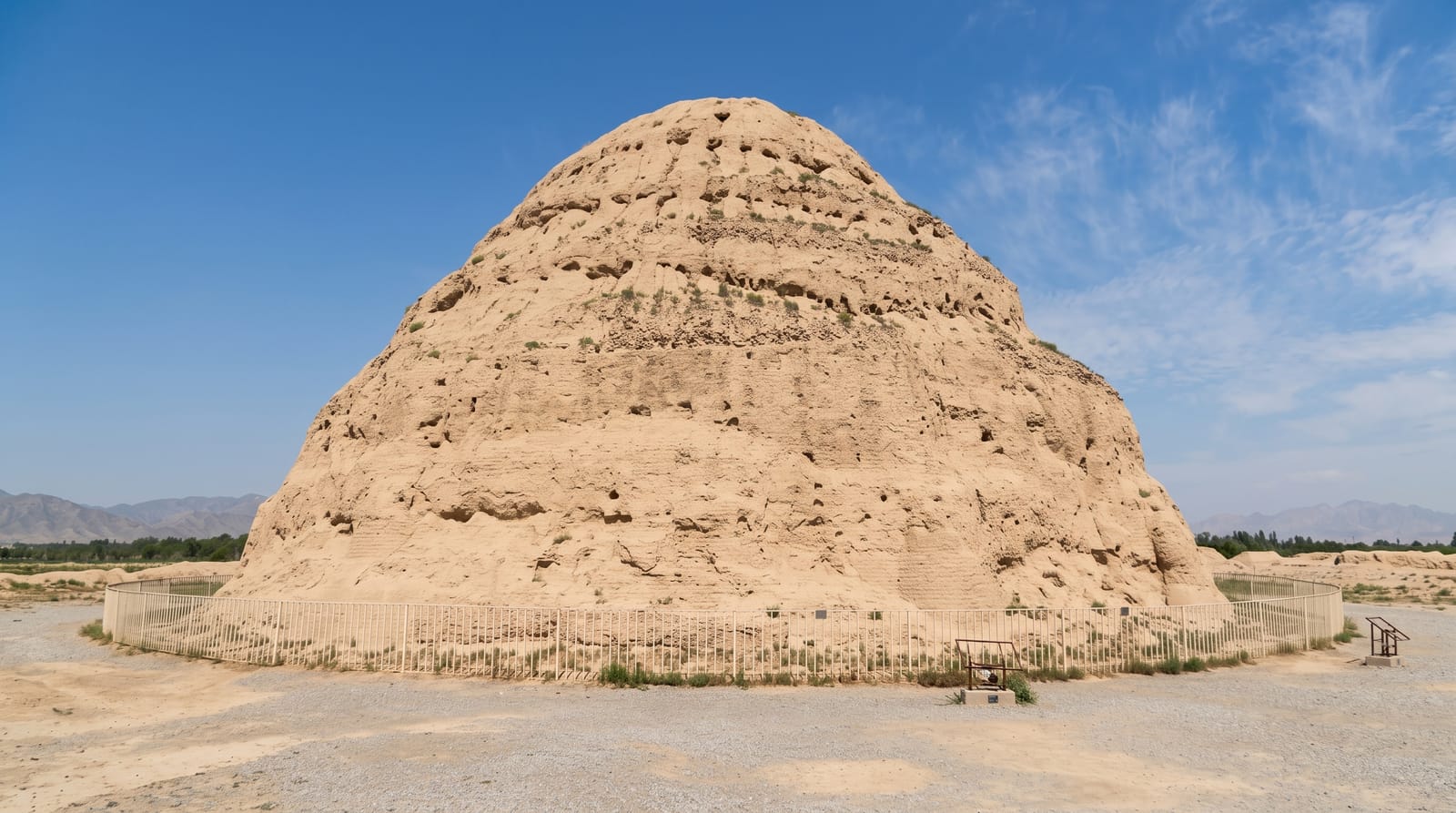
Eroded earth mounds of a vanished Tangut empire, standing alone on gravel below the Helan range.
Updated 21 October 2026
AI illustration
UNESCO World Heritage
The Western Xia was a state founded by the Tangut people that ruled this region from 1038 until the Mongol conquest in 1227, with its own script, Buddhist canon and court, and it was thoroughly destroyed, so its history had to be reconstructed largely from archaeology and documents found later. Nine imperial tombs and around two hundred and fifty subsidiary graves stand on the gravel plain below the Helan range, the mounds now weathered into stepped conical shapes of bare rammed earth several storeys high, isolated on flat ground with the mountains behind. A museum on site displays Tangut script, carvings and reconstructions.
History
The Western Xia, a state founded by the Tangut people, lasted from 1038 until the Mongols under Genghis Khan ended it in 1227, and its nine imperial mausoleums and about 250 tombs of relatives and officials lie at the foot of the Helan Mountains, about 40 km west of its capital Xingqing, today's Yinchuan. Only mausoleum No. 3, attributed to the first emperor Li Yuanhao, has been fully excavated - a pavilion-tower design joining tomb, temple and Buddhist features. The site escaped the early 20th-century explorers Pyotr Kozlov, Aurel Stein and Sven Hedin, and was recorded from the air by Wulf-Dieter Graf zu Castell in a book of 1938; in 2019 the museum was moved outside the protected area, and in 2025 UNESCO inscribed the tombs as the Xixia Imperial Tombs (Wikipedia, Western Xia mausoleums).
What to look for
- The eroded mounds - stepped earth tomb cores standing on open gravel.
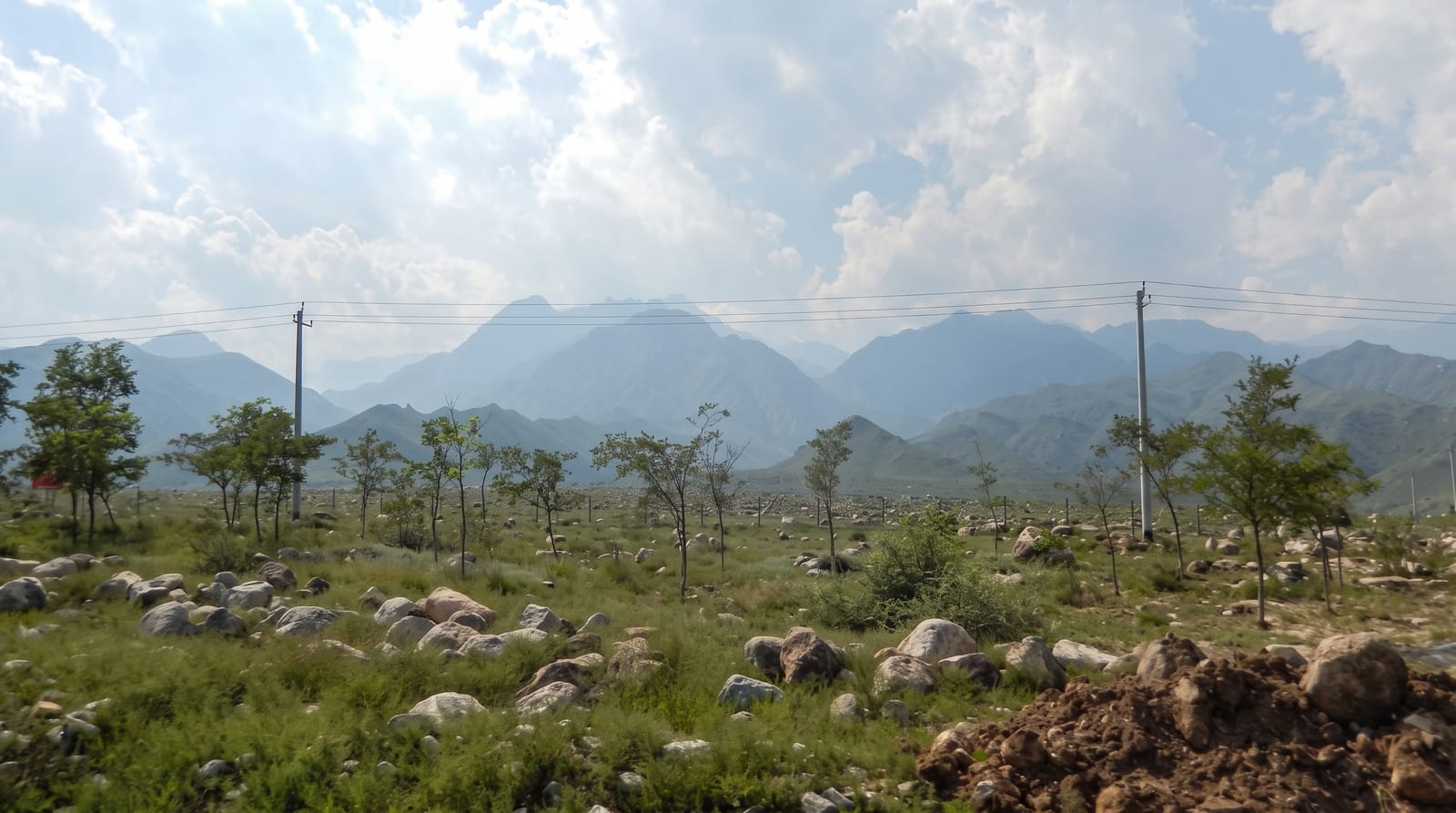
- The mountain backdrop - the Helan range immediately west.
- The museum - Tangut script, sculpture and reconstruction of the state.
- The scale - nine imperial tombs across a wide plain.
When to go
April to June and September to October; summer is hot with no shade and winter cold with wind off the mountains. Low sun on the mounds gives the strongest photographs.
Good to know
The tombs are eroded earth cores, not buildings, and the site is bare with no shade. Shuttle transport between mounds is compulsory. Interpretation is largely Chinese.
Nearby
Helankou rock art lies north; Yinchuan is east.
Key facts
Source: Wikidata, item Q1069411, read on 18 October 2026.
What to pack for Western Xia Imperial Tombs
Chosen from what this place is for. Tap a kit for the full checklist.
- Comfortable walking shoes - Sightseeing means kilometres of pavement and cobbles daily. Find on Amazon
- Modest clothing - Shoulders and knees covered - the single most common requirement. Find on Amazon
- A slim anti-theft daypack - Zips that close properly; keep it in front in crowds and on transit. Find on Amazon
- A scarf or shawl - To cover the head or shoulders on entry; women especially at mosques. Find on Amazon
Some links on this page are Amazon affiliate links - if you buy through them we may earn a small commission at no extra cost to you.
All packing kitsPlan your trip
Where to start if Western Xia Imperial Tombs is going on the list.
Booking links on this page are affiliate links - if you book through them we may earn a small commission at no extra cost to you. It never changes what we write about a place.
Opening times, ticket prices and seasonal closures change - check the official source before you go: official site.