Kanger Valley National Park
Dense forest over a limestone belt, with deep caves holding blind fish and a hill myna as state bird.
Updated 4 September 2026
AI illustration
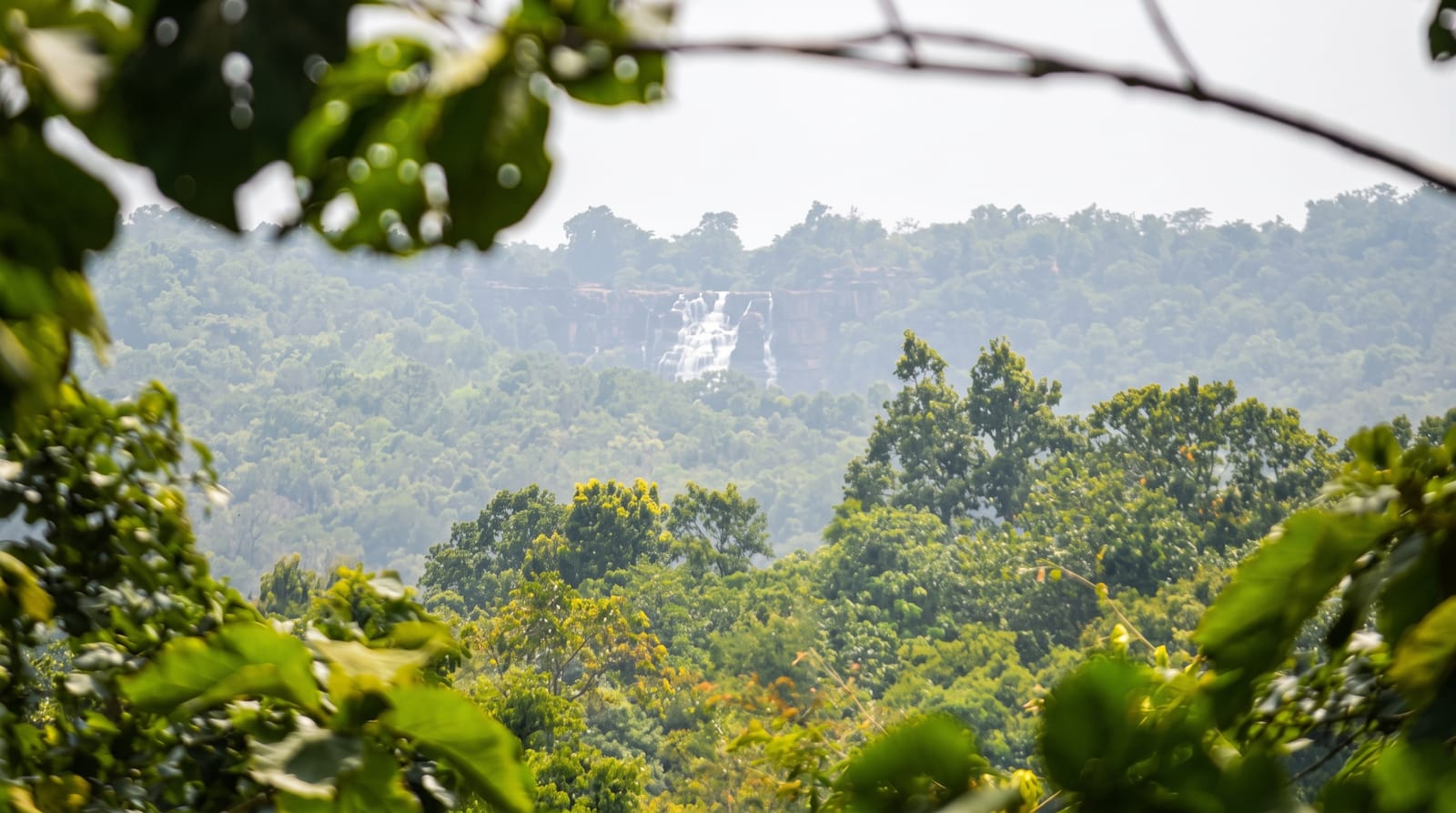
Kanger Valley covers around two hundred square kilometres of sal, teak and bamboo forest along the Kanger river, and its distinguishing feature is underground: a limestone belt riddled with caves, of which Kutumsar, Kailash and Dandak are open. Kutumsar runs several hundred metres deep with chambers of formations and a blind cave fish that has lost its eyes and pigment, and it is entered by ladder with guides carrying lamps. Above ground the forest holds the Bastar hill myna, adopted as the state bird, along with leopard, sloth bear, mouse deer and a long list of birds and butterflies.
The landscape
- Kutumsar cave - a deep limestone cave with blind fish and formations.
- The other caves - Kailash and Dandak, opened seasonally.
- The hill myna - the Bastar myna, Chhattisgarh's state bird.
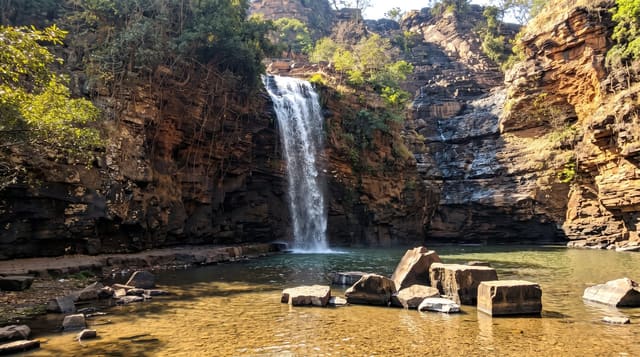
- Tirathgarh falls - the tiered waterfall inside the park.
When to go
November to February; the caves close in the monsoon when they flood, usually from June to October. The forest is greenest just after the rains. Summer is hot.
Practical notes
Caves close entirely during and after the monsoon and reopen on park decision, so timing must be checked. Entry is by ladder in the dark with limited lighting, unsuitable for anyone claustrophobic. The district is remote.
Nearby
Jagdalpur lies northeast; Chitrakote falls are north.
Key facts
Source: Wikidata, item Q1723746, read on 18 October 2026.
What to pack for Kanger Valley National Park
Chosen from what this place is for. Tap a kit for the full checklist.
- Broken-in walking shoes or boots - Grip and ankle support matter more than looks; never hike in brand-new boots. Find on Amazon
- Head torch + spare batteries - Hands-free light is essential; caves are truly dark. Find on Amazon
- Binoculars - The single best wildlife tool - even a compact pair transforms a sighting. Find on Amazon
- Strong insect repellent - DEET or picaridin; the jungle is where bites and disease risk are highest. Find on Amazon
Some links on this page are Amazon affiliate links - if you buy through them we may earn a small commission at no extra cost to you.
All packing kitsPlan your trip
Where to start if Kanger Valley National Park is going on the list.
Booking links on this page are affiliate links - if you book through them we may earn a small commission at no extra cost to you. It never changes what we write about a place.
Opening times, ticket prices and seasonal closures change - check the official source before you go: official site.