Chitrakote Falls
India's widest waterfall, a horseshoe on the Indravati that spans three hundred metres in full monsoon flow.
Updated 14 September 2026
AI illustration
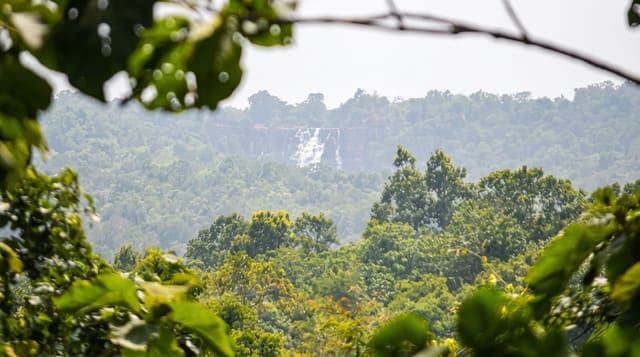
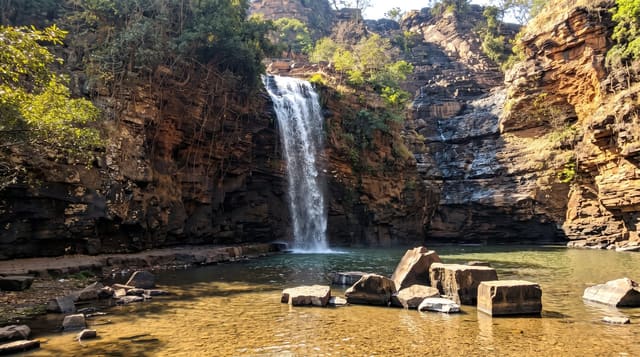
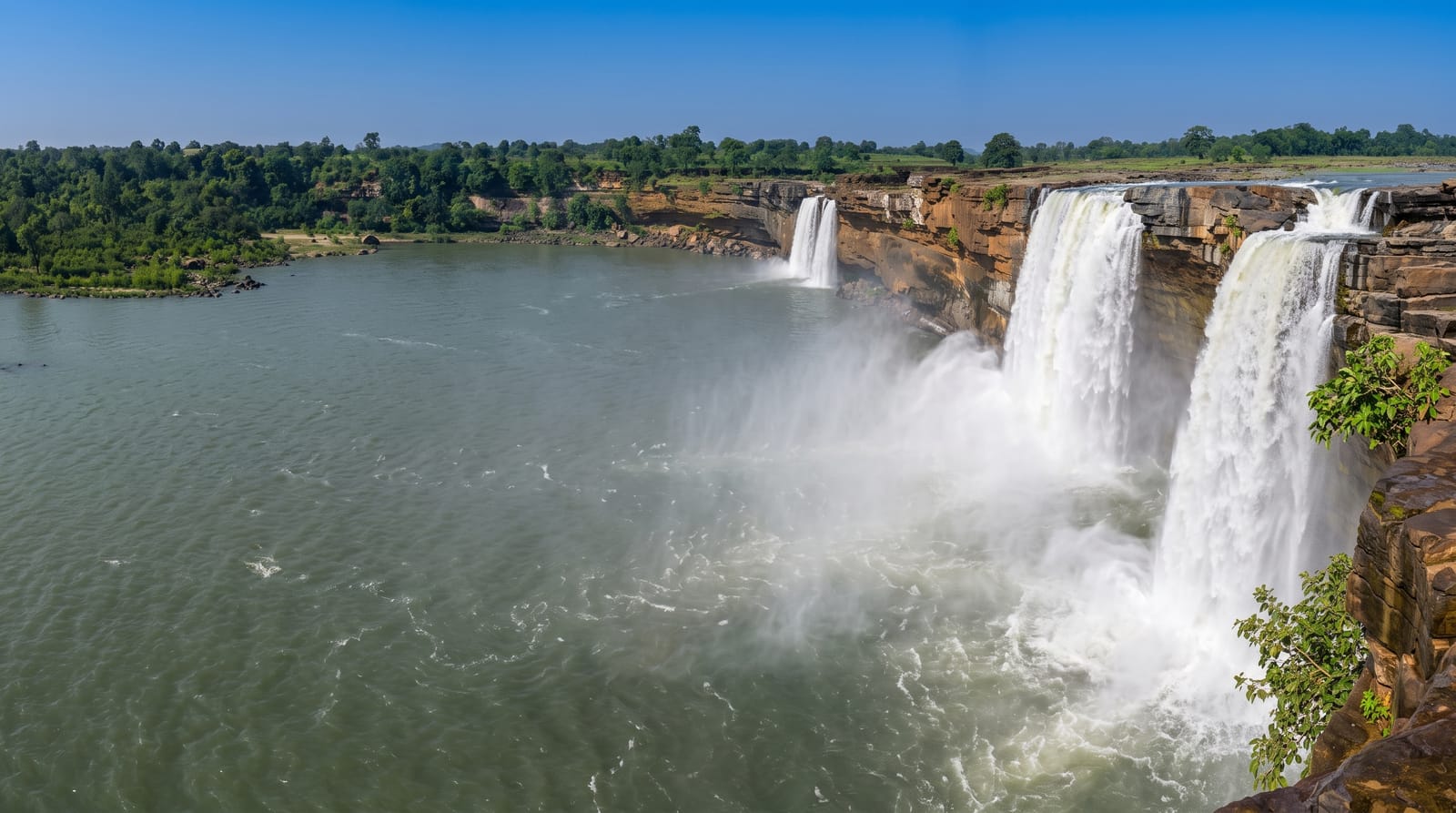
The Indravati drops about thirty metres over a curved rock lip at Chitrakote, and in the monsoon the fall spreads across roughly three hundred metres of that curve, which makes it the widest waterfall in India and the reason it is routinely called the Niagara of India, a comparison the scale does not quite support but the shape does. In the dry season the flow narrows into two or three separate channels and the rock is exposed. Small boats take visitors close to the base when water permits, and steps descend to the plunge pool. The falls are lit at night.
Highlights
- The horseshoe - a curved rock lip spanning some three hundred metres.
- The monsoon flow - the full curve running brown and loud in the rains.
- The boat approach - small craft going close to the base in safe conditions.
- The night lighting - the falls illuminated after dark.
When to go
July to October for maximum volume, though access can be restricted in flood; November to February gives clearer water and comfortable weather with a much reduced flow. Summer is nearly dry.
Things to know
The falls vary enormously by season and can be a trickle in April and May. Boats are suspended in high water. Bastar is remote with limited accommodation.
Nearby
Tirathgarh falls lie south; Jagdalpur is east.
What to pack for Chitrakote Falls
Chosen from what this place is for. Tap a kit for the full checklist.
- Broken-in walking shoes or boots - Grip and ankle support matter more than looks; never hike in brand-new boots. Find on Amazon
- Strong insect repellent - DEET or picaridin; the jungle is where bites and disease risk are highest. Find on Amazon
- Layers + a waterproof shell - Mountain weather turns fast; a packable rain jacket saves the day. Find on Amazon
- Long, light, quick-dry clothing - Covers skin from insects and sun without cooking you in the humidity. Find on Amazon
Some links on this page are Amazon affiliate links - if you buy through them we may earn a small commission at no extra cost to you.
All packing kitsPlan your trip
Where to start if Chitrakote Falls is going on the list.
Booking links on this page are affiliate links - if you book through them we may earn a small commission at no extra cost to you. It never changes what we write about a place.
Opening times, ticket prices and seasonal closures change - check the official source before you go: official site.