Bastar Dussehra
A seventy-five day festival built around a chariot pulled by villagers, with no connection to the Ramayana.
Updated 4 September 2026
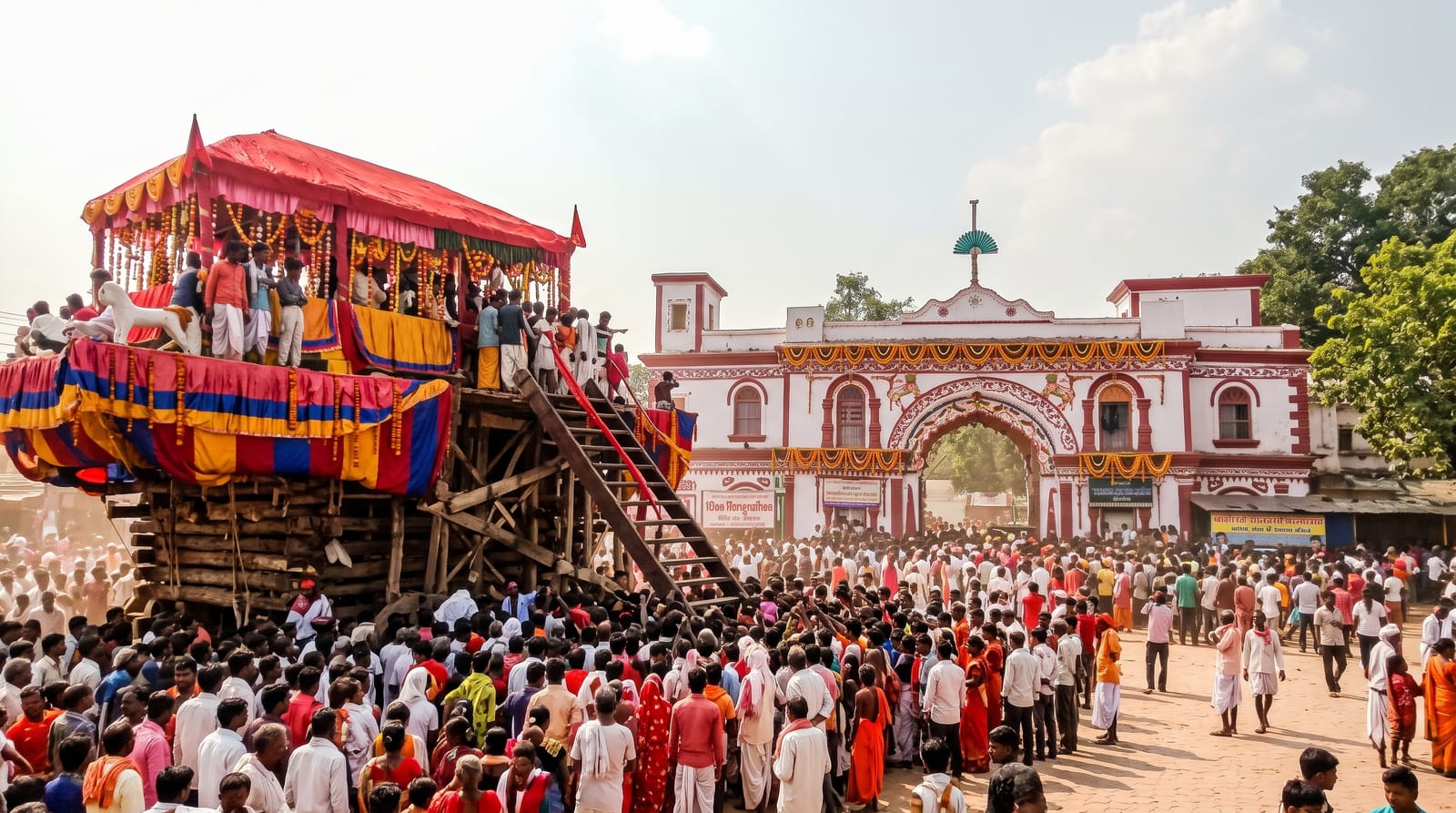
AI illustration
Dussehra elsewhere in India marks Rama's victory over Ravana; Bastar's does not. It centres on Danteshwari, the regional goddess, and runs for around seventy-five days from late July, making it among the longest festivals in the world. Its central object is a massive wooden chariot, built fresh each year by hereditary carpenter families from particular villages using timber cut by right, and pulled through Jagdalpur by hundreds of people from designated communities. Rituals include a girl held in a swing of thorns, a period of ceremonial isolation, and the gathering of village deities from across Bastar in their palanquins.
The main sights
- The wooden chariot - built new each year and pulled by hundreds.
- The village deities - gods carried in from across Bastar in palanquins.
- The ritual sequence - seventy-five days of distinct ceremonies.
- The craft - hereditary carpenters building the chariot by right.
When to go
Late July to October, with the main chariot processions in the Dussehra period, usually late September or October. Jagdalpur accommodation is limited and fills during the main days.
Good to know
This is a living religious event, not a show; some rituals are closed to outsiders and photography is restricted at points. Crowds around the chariot are dense and unmanaged. Bastar is remote with limited facilities.
Nearby
Chitrakote falls lie west; Kanger Valley is south.
What to pack for Bastar Dussehra
Chosen from what this place is for. Tap a kit for the full checklist.
- Comfortable walking shoes - Sightseeing means kilometres of pavement and cobbles daily. Find on Amazon
- A slim anti-theft daypack - Zips that close properly; keep it in front in crowds and on transit. Find on Amazon
- A refillable water bottle - Many cities have public fountains; save money and plastic. Find on Amazon
- A light layer + compact umbrella - For museum air-con and a sudden shower. Find on Amazon
Some links on this page are Amazon affiliate links - if you buy through them we may earn a small commission at no extra cost to you.
All packing kitsPlan your trip
Where to start if Bastar Dussehra is going on the list.
Booking links on this page are affiliate links - if you book through them we may earn a small commission at no extra cost to you. It never changes what we write about a place.
Opening times, ticket prices and seasonal closures change - check the official source before you go: official site.