Hazarduari Palace
A palace of a thousand doors, of which around a hundred are false, built to confuse anyone escaping through it.
Updated 19 October 2026

AI illustration
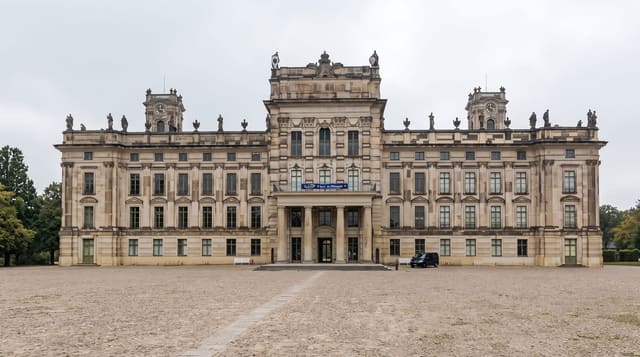
Murshidabad was the capital of Bengal under the Nawabs before the East India Company took control after Plassey in 1757, and Hazarduari was built in 1837 in Italianate style by a British architect for Nawab Nazim Humayun Jah. Its name means a thousand doors, and the count is close: around nine hundred are real and roughly a hundred are false, built into the walls so that anyone fleeing or intruding would be caught trying one that opened onto nothing. The building is now a museum holding the Nawabs' arms, portraits, palanquins, a large collection of paintings, and a mirror said to be positioned so the Nawab could see the door behind him.
History
The palace, once known as the Bara Kothi, was built in the 19th century in Neoclassical style to designs by Colonel Duncan McLeod, within the Kila Nizamat at Murshidabad. Its name means "the one with a thousand doors", a hundred of them false, made so that any thief would be confused trying to escape; with the Nizamat Imambara it has been a Monument of National Importance since 1977 (Wikipedia, Hazarduari Palace).
What you'll find
- The false doors - roughly a hundred doors that open onto nothing.
- The armoury - the Nawabs' weapons including Siraj-ud-Daulah's material.
- The durbar hall - the audience room with its chandelier.
- The Imambara - the large ceremonial building opposite the palace.
When to go
October to March; Bengal summers are severe. The museum closes on Fridays. Muharram brings ceremonies at the Imambara opposite.
Practical notes
Photography inside is prohibited entirely and bags are deposited. Murshidabad is a long trip from Kolkata with limited accommodation. Several other monuments in the town are ruined and unlabelled.
Nearby
Katra Masjid and the Nawabs' tombs lie nearby; Kolkata is south.
Key facts
Source: Wikidata, item Q5687746, read on 18 October 2026.
What to pack for Hazarduari Palace
Chosen from what this place is for. Tap a kit for the full checklist.
- Comfortable walking shoes - Sightseeing means kilometres of pavement and cobbles daily. Find on Amazon
- A slim anti-theft daypack - Zips that close properly; keep it in front in crowds and on transit. Find on Amazon
- A refillable water bottle - Many cities have public fountains; save money and plastic. Find on Amazon
- A light layer + compact umbrella - For museum air-con and a sudden shower. Find on Amazon
Some links on this page are Amazon affiliate links - if you buy through them we may earn a small commission at no extra cost to you.
All packing kitsPlan your trip
Where to start if Hazarduari Palace is going on the list.
Booking links on this page are affiliate links - if you book through them we may earn a small commission at no extra cost to you. It never changes what we write about a place.
Opening times, ticket prices and seasonal closures change - check the official source before you go: official site.