The Howrah Bridge
A riveted steel cantilever bridge over the Hooghly, carrying an enormous daily load of vehicles and foot traffic without piers in the water.
Updated 19 October 2026
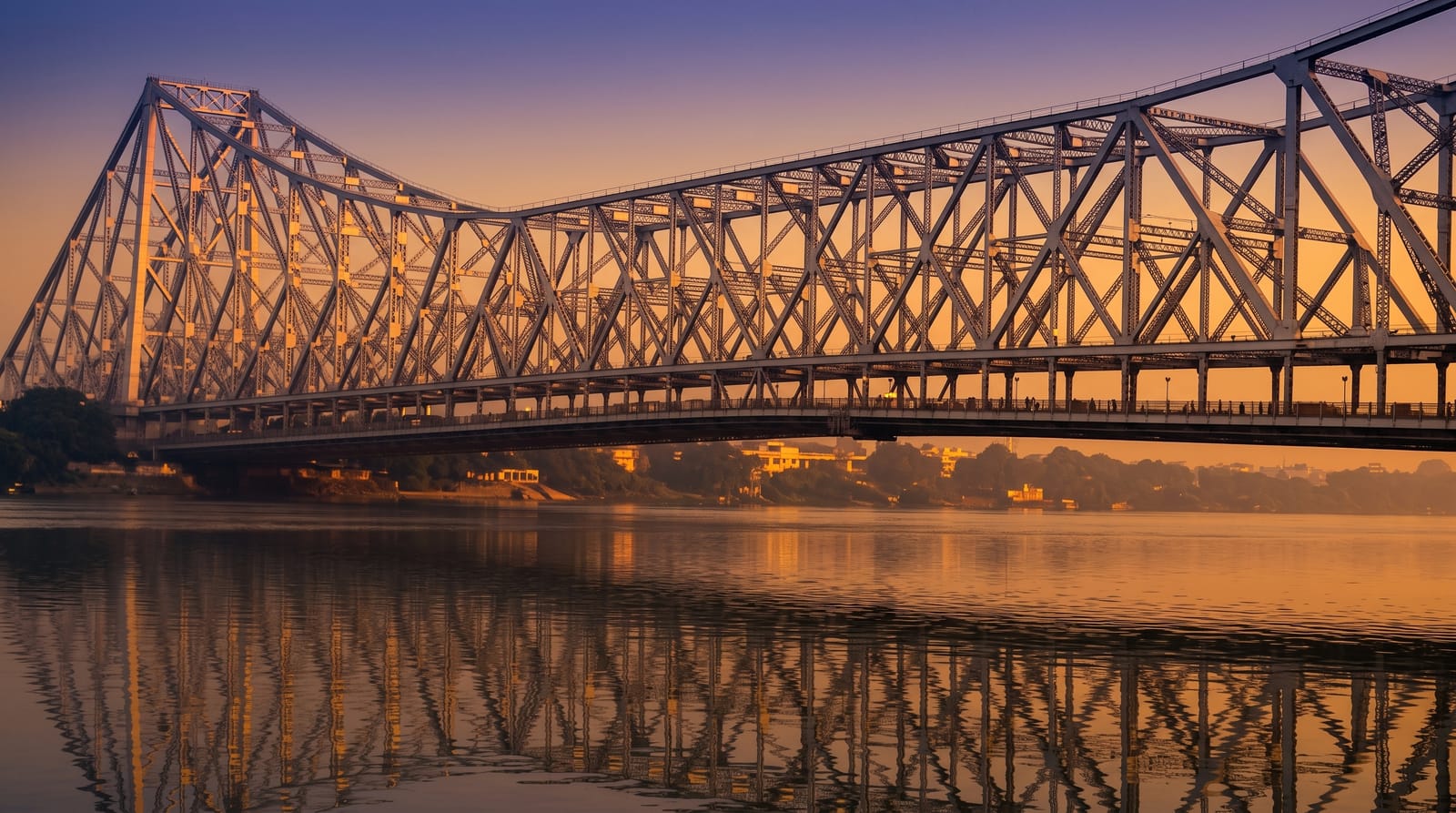
AI illustration
The Howrah bridge is a steel cantilever thrown across the Hooghly in 1943, officially Rabindra Setu, and it carries what is regularly described as one of the heaviest traffic loads of any bridge anywhere: lanes of buses and trucks down the middle, and two footways that stay packed from before dawn with porters, commuters coming off the Howrah trains and men carrying loads on their heads. It was riveted rather than bolted, and the whole span hangs from two towers with nothing standing in the river itself. Underneath on the Kolkata side is Mullick Ghat, where the wholesale flower market spreads over the steps and the embankment in the early morning.
History
In 1862 the government asked George Turnbull, chief engineer of the East Indian Railway Company, to study a bridge over the Hooghly, and he warned of deep mud and the obstruction to shipping. The present bridge was commissioned in 1943, replacing a pontoon bridge on the same spot and so first called the New Howrah Bridge, and on 14 June 1965 it was renamed Rabindra Setu after Rabindranath Tagore (Wikipedia, Howrah Bridge).
What's there
- The span from the ferry - the full profile of the cantilever from the middle of the river.
- The footway crush - the pedestrian lanes at the morning peak, porters and commuters end to end.
- Mullick Ghat flower market - marigold garlands and cut flowers heaped on the steps below at dawn.
- The river traffic - country boats, barges and the ferries crossing constantly underneath.
When to go
November to February is cool and relatively clear; the pre-monsoon months are hot and hazy. Come at first light, when the flower market below is at full tilt and the footways fill with people off the early trains. Late afternoon from the water is the better light for the structure itself, and the ferry crossing costs almost nothing.
Things to know
Photography from the bridge is officially restricted and guards do stop people, so shoot from the ferry or the ghats instead. The footways are a solid crush with no room to stand still, the noise and exhaust are heavy, and there is nowhere pleasant to linger at either end. The riverbank underneath is muddy and littered.
Nearby
The flower market and the ghats are directly below, and the potters' lanes of Kumartuli are upriver.
Key facts
Source: Wikidata, item Q739641, read on 18 October 2026.
What to pack for The Howrah Bridge
Chosen from what this place is for. Tap a kit for the full checklist.
- Strong insect repellent - DEET or picaridin; the jungle is where bites and disease risk are highest. Find on Amazon
- Comfortable walking shoes - Sightseeing means kilometres of pavement and cobbles daily. Find on Amazon
- Long, light, quick-dry clothing - Covers skin from insects and sun without cooking you in the humidity. Find on Amazon
- A slim anti-theft daypack - Zips that close properly; keep it in front in crowds and on transit. Find on Amazon
Some links on this page are Amazon affiliate links - if you buy through them we may earn a small commission at no extra cost to you.
All packing kitsPlan your trip
Where to start if The Howrah Bridge is going on the list.
Booking links on this page are affiliate links - if you book through them we may earn a small commission at no extra cost to you. It never changes what we write about a place.
Opening times, ticket prices and seasonal closures change - check the official source before you go: official site.


