Rio-Antirrio Bridge
A 2.9-kilometre cable-stayed crossing of the Gulf of Corinth, built on piers that rest on the seabed rather than in it.
Updated 19 October 2026
AI illustration
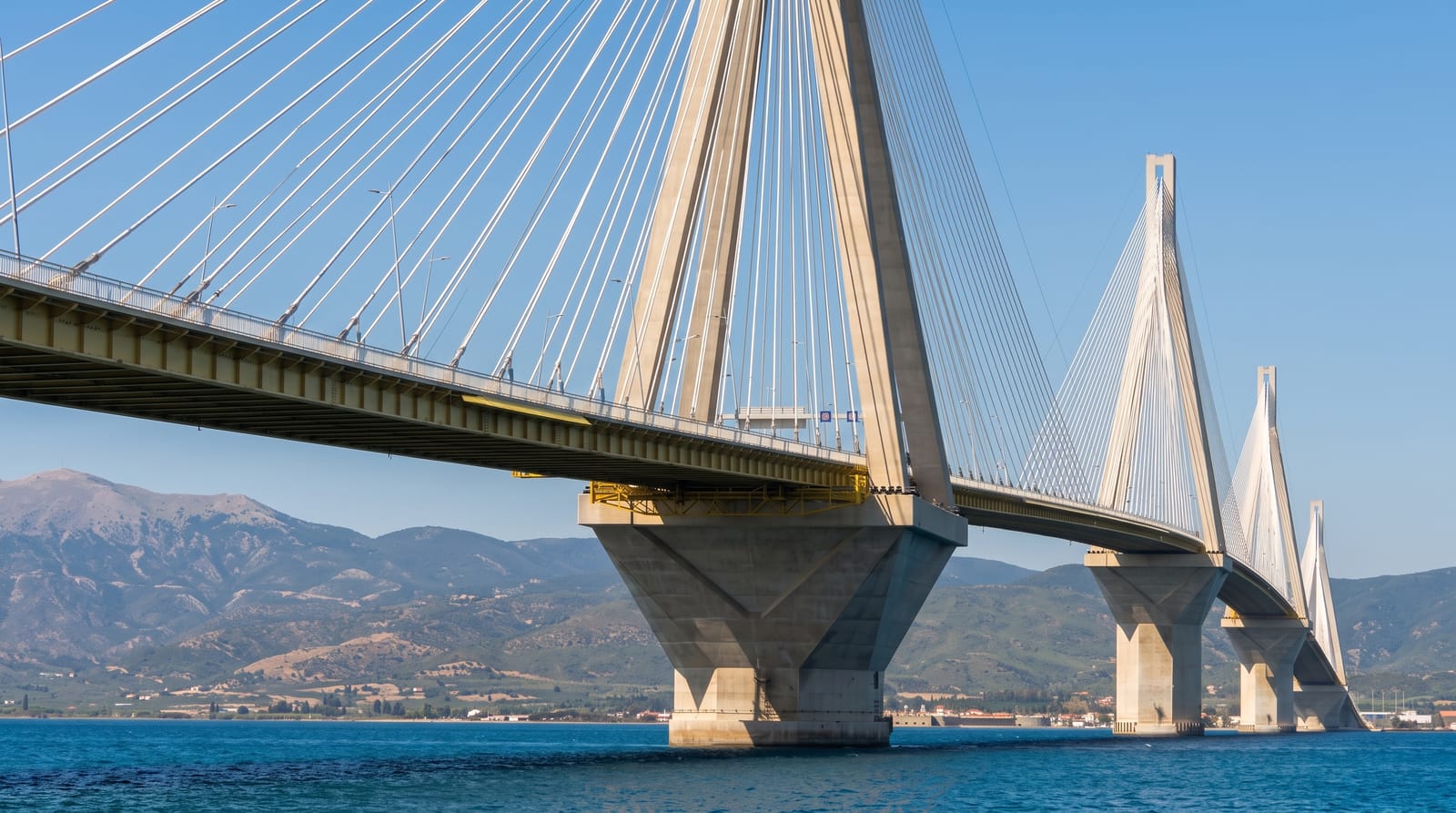
Opened in 2004, the Charilaos Trikoupis Bridge links the Peloponnese to mainland Greece across the narrows where the Gulf of Corinth meets the Gulf of Patras. The engineering answers an unusually hostile site: water up to 65 metres deep, deep soft sediments, seismic activity and two tectonic plates drifting apart. The four pylons therefore stand on gravel beds laid on the seabed, not driven into it, so the whole structure can move in an earthquake; the deck is suspended from cables and can slide, and the design tolerates significant displacement. It is one of the world's longest multi-span cable-stayed bridges at 2,880 metres. From either shore, and especially at night when it is lit, the sequence of four diamond pylons over the strait is the sight; the older ferry still crosses beneath it.
History
The 19th-century prime minister Charilaos Trikoupis first proposed a bridge here, but Greece could not afford it. The bridge was planned in the mid-1990s and built by a French-Greek consortium led by Vinci with the lead architect Berdj Mikaelian; dredging began in July 1998, the pylons were built from 2000 and finished in 2003, and the decks followed, at a total cost of about €630 million, finished ahead of schedule and within budget (Wikipedia, Rio-Antirrio Bridge).
The main sights
- The four pylons - diamond towers carrying the cable fans.
- The night lighting - the bridge illuminated over dark water.
- The strait - shipping passing between the two gulfs beneath the deck.
- The old ferry - the crossing that still operates alongside the bridge.
When to go
Any time; dusk gives the best photographs from the Rio shore. There is no visitor centre, so this is a drive-past or a shoreline stop.
Before you go
The toll for crossing is among the higher road tolls in Greece. Stopping on the bridge is not permitted, and pedestrians use a narrow walkway. Viewing means finding a spot on either shore, where the beaches are ordinary.
Nearby
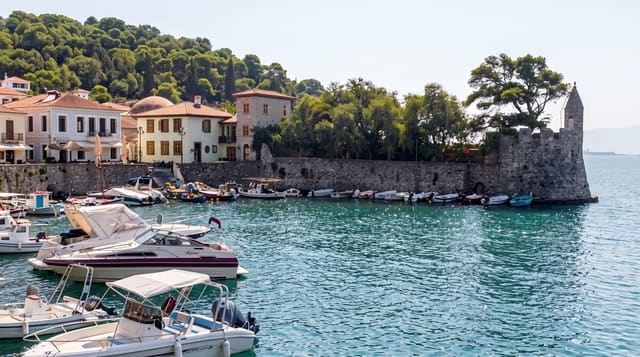
Patras and its port are minutes south-west; Nafpaktos with its Venetian harbour lies north-east along the northern shore.
Key facts
Source: Wikidata, item Q48353, read on 18 October 2026.
What to pack for Rio-Antirrio Bridge
Chosen from what this place is for. Tap a kit for the full checklist.
- Reef-safe sunscreen - High SPF that will not bleach the coral you are swimming over. Find on Amazon
- Comfortable walking shoes - Sightseeing means kilometres of pavement and cobbles daily. Find on Amazon
- Quick-dry towel - A microfibre towel packs small and dries in minutes. Find on Amazon
- A slim anti-theft daypack - Zips that close properly; keep it in front in crowds and on transit. Find on Amazon
Some links on this page are Amazon affiliate links - if you buy through them we may earn a small commission at no extra cost to you.
All packing kitsPlan your trip
Where to start if Rio-Antirrio Bridge is going on the list.
Booking links on this page are affiliate links - if you book through them we may earn a small commission at no extra cost to you. It never changes what we write about a place.
Opening times, ticket prices and seasonal closures change - check the official source before you go: official site.