Dakshineswar Kali Temple
A riverside Kali temple built in 1855 by a widow from a low caste, and where Ramakrishna served as priest.
Updated 19 October 2026

AI illustration
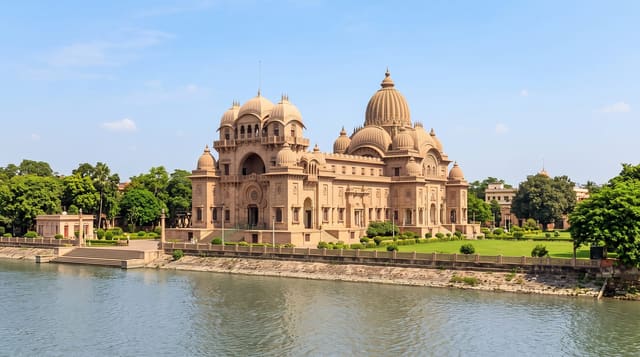
Rani Rashmoni, a widow from a caste that orthodox opinion held could not build or endow a temple, funded Dakshineswar and completed it in 1855, finding a priest willing to serve after others refused; that priest's brother was Ramakrishna, who then spent about thirty years here as its priest and became one of the most influential religious figures of nineteenth-century India, with Vivekananda among his disciples. The temple stands on the Hooghly with a nine-spired main shrine in Bengali navaratna style on a raised platform, twelve identical Shiva temples along the riverfront, and Ramakrishna's room preserved as he used it.
History
In 1847 Rani Rashmoni, a philanthropic zamindar, was preparing a long pilgrimage to Kashi when, the story goes, the goddess appeared to her in a dream and told her to build a temple on the Ganges instead. She bought a 20-acre plot from an Englishman, Jake Hastie, the temple was built between 1847 and 1855, and the image of Kali was installed on 31 May 1855, with Ramkumar Chattopadhyay as head priest, assisted by his younger brother Gadadhar, later known as Ramakrishna (Wikipedia, Dakshineswar Kali Temple).
What you'll find
- The nine-spired temple - the navaratna shrine on its raised platform.
- The twelve Shiva temples - identical shrines lining the river frontage.
- Ramakrishna's room - the priest's quarters kept as he left them.
- The Hooghly ghat - the river steps in front of the complex.
When to go
October to March; Kali Puja in autumn and Tuesdays and Saturdays bring the largest crowds. The temple closes in the middle of the day. Kolkata summers are hot and humid.
Practical notes
Phones and cameras are prohibited inside the main complex and must be deposited. Queues for darshan are long on auspicious days. Touts around the entrance are persistent.
Nearby
Belur Math lies across the river; Kolkata centre is south.
Key facts
Source: Wikidata, item Q1157765, read on 18 October 2026.
What to pack for Dakshineswar Kali Temple
Chosen from what this place is for. Tap a kit for the full checklist.
- Strong insect repellent - DEET or picaridin; the jungle is where bites and disease risk are highest. Find on Amazon
- Comfortable walking shoes - Sightseeing means kilometres of pavement and cobbles daily. Find on Amazon
- Modest clothing - Shoulders and knees covered - the single most common requirement. Find on Amazon
- Long, light, quick-dry clothing - Covers skin from insects and sun without cooking you in the humidity. Find on Amazon
Some links on this page are Amazon affiliate links - if you buy through them we may earn a small commission at no extra cost to you.
All packing kitsPlan your trip
Where to start if Dakshineswar Kali Temple is going on the list.
Booking links on this page are affiliate links - if you book through them we may earn a small commission at no extra cost to you. It never changes what we write about a place.
Opening times, ticket prices and seasonal closures change - check the official source before you go: official site.