Great Himalayan National Park
A UNESCO wilderness of four river catchments with no roads, holding snow leopard, tahr and blue sheep.
Updated 14 October 2026
AI illustration
UNESCO World Heritage
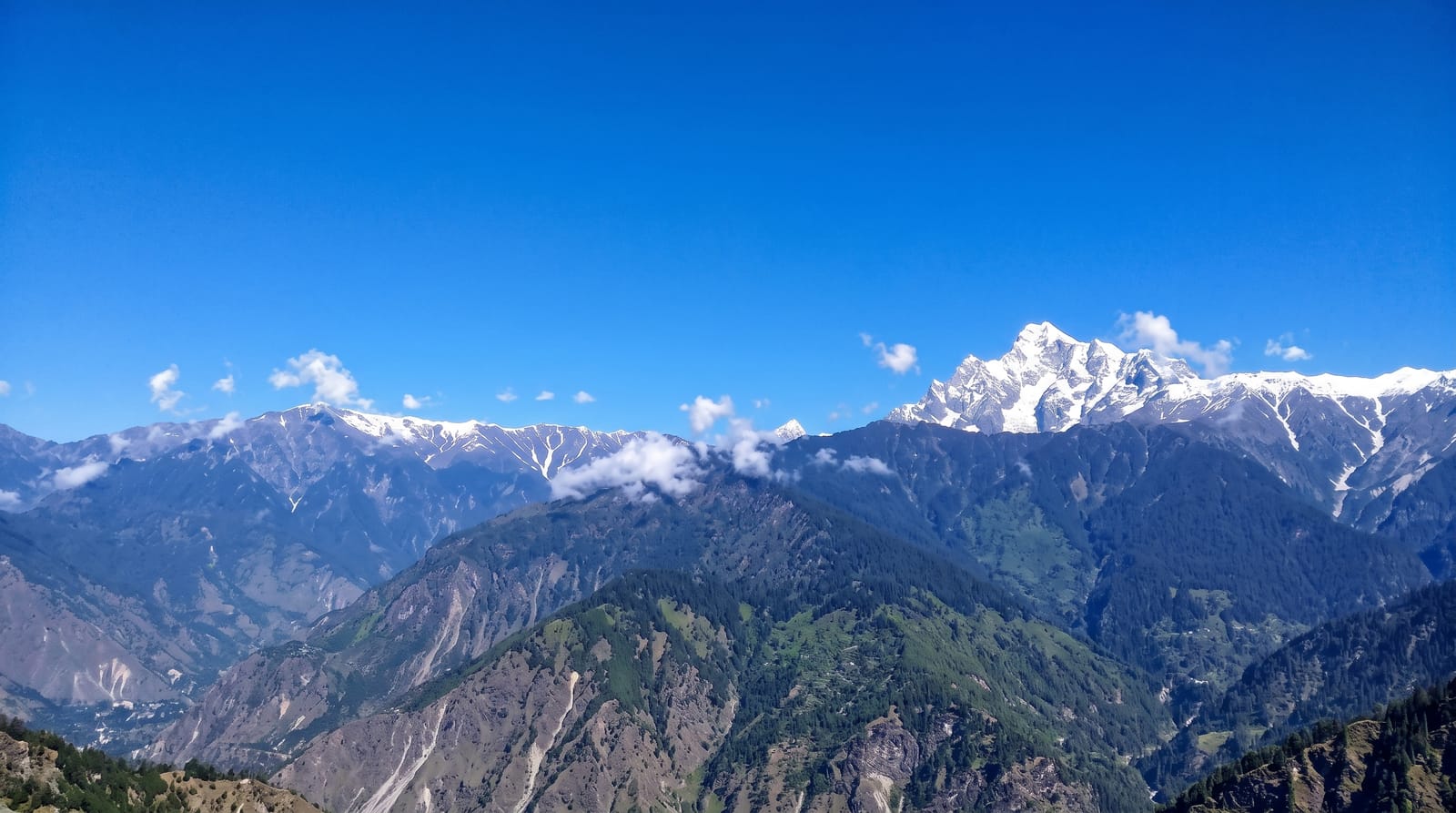
The park covers around a thousand square kilometres of the upper Tirthan, Sainj, Jiwa and Parvati catchments, rising from about 1,500 metres to over six thousand, and it was inscribed by UNESCO in 2014 for its biodiversity. There are no roads inside: entry is on foot from villages at the edge, with permits and local guides, on multi-day treks up river valleys through forest into alpine meadow. Snow leopard, Himalayan brown bear, musk deer, Himalayan tahr, blue sheep and the western tragopan live here, though sightings of the larger predators are effectively never made by visitors. Villagers were resettled and given roles as guides and porters.
The landscape
- The trailless catchments - four river valleys with no roads inside.
- The alpine meadows - high grassland above the forest zone.
- The tragopan and monal - Himalayan pheasants in the forest belt.
- The village guides - former residents working as guides and porters.
When to go
April to June and September to November; the monsoon brings leeches and landslides, and winter closes the high routes with snow. Permits and guides must be arranged at the entry villages.
What to expect
Access is only by multi-day trekking with camping; there are no lodges inside. Snow leopards are essentially never seen. Permits, guides and porters are compulsory and add cost.
Nearby
Tirthan valley lies at the entrance; Kullu is west.
Key facts
Source: Wikidata, item Q1544213, read on 18 October 2026.
What to pack for Great Himalayan National Park
Chosen from what this place is for. Tap a kit for the full checklist.
- Broken-in walking shoes or boots - Grip and ankle support matter more than looks; never hike in brand-new boots. Find on Amazon
- Binoculars - The single best wildlife tool - even a compact pair transforms a sighting. Find on Amazon
- Warm base layers - Merino or synthetic against the skin - never cotton, which chills when damp. Find on Amazon
- Strong insect repellent - DEET or picaridin; the jungle is where bites and disease risk are highest. Find on Amazon
Some links on this page are Amazon affiliate links - if you buy through them we may earn a small commission at no extra cost to you.
All packing kitsPlan your trip
Where to start if Great Himalayan National Park is going on the list.
Booking links on this page are affiliate links - if you book through them we may earn a small commission at no extra cost to you. It never changes what we write about a place.
Opening times, ticket prices and seasonal closures change - check the official source before you go: official site.