Malolotja Nature Reserve
Highland wilderness on Eswatini's north-western border - grassland ridges, the country's highest waterfall, bald ibis colonies on the cliffs, and real hiking.
Updated 18 October 2026
AI illustration
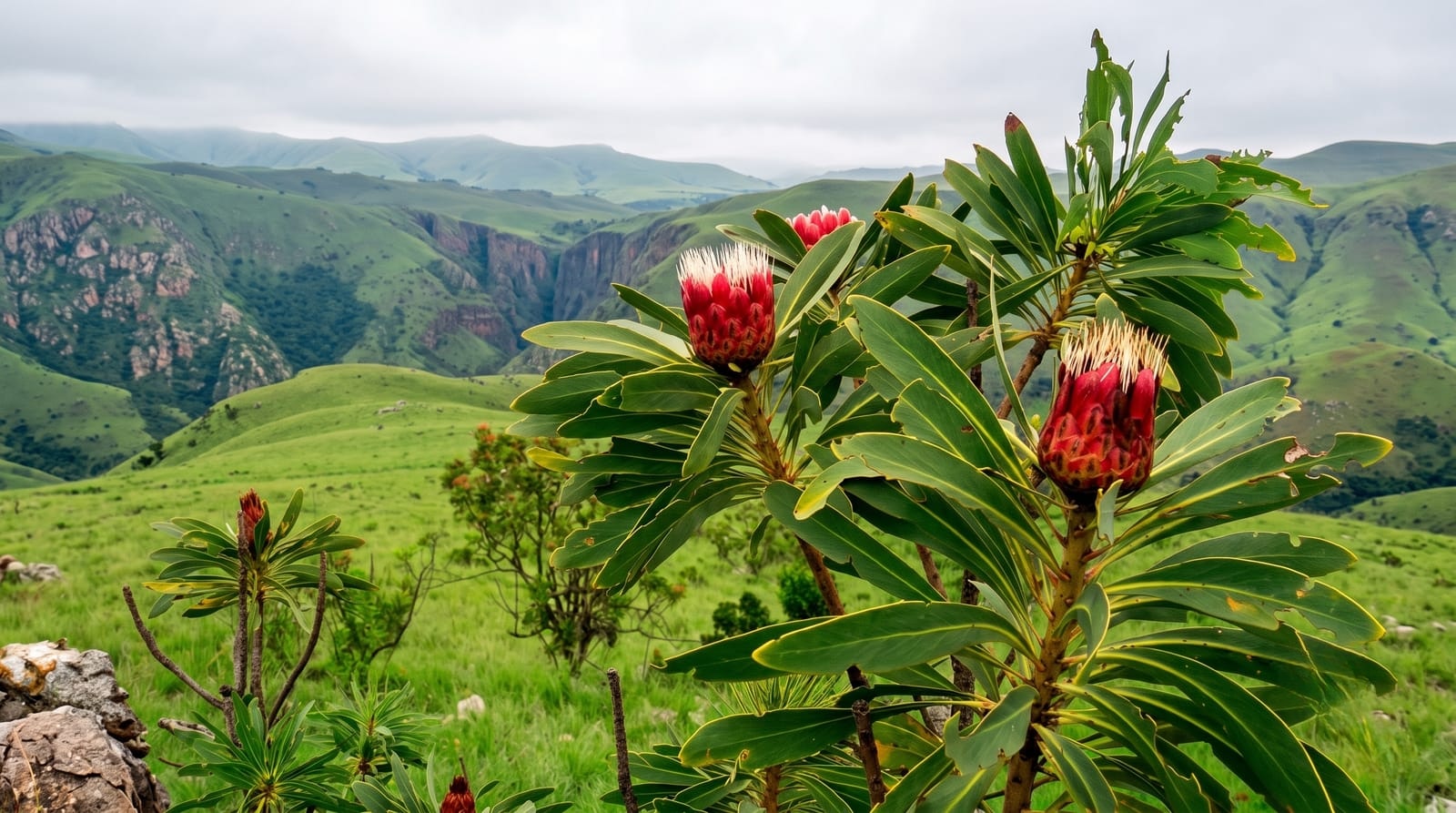
Malolotja protects the wildest corner of Eswatini: high grassland ridges along the border with South Africa, cut by gorges where the Malolotja River drops about ninety metres in the country's tallest waterfall. This is hiking country rather than game-drive country - trails from afternoon loops to multi-day wilderness routes cross ridgelines where zebra, blesbok and wildebeest graze, and southern bald ibises nest in a colony on the cliffs near the falls. A canopy tour zip-lines the Sihlotswane Gorge for those wanting adrenaline with their scenery, and winter mornings frost the grass gold.
History
The Swaziland National Trust Commission singled out the area as important in the early 1970s. Most of it was then sheep grazing land, much of it privately owned, but it had little agricultural potential, and its residents were resettled on good farmland next to the reserve. The park now adjoins South Africa's Songimvelo Game Reserve, and together they form the Songimvelo-Malolotja Transboundary Protected Area, part of the wider Lubombo Transfrontier Conservation Area (Wikipedia, Malolotja National Park).
What you'll find
- Malolotja Falls - the 90-metre drop into the gorge, reached on foot.
- The highland trails - ridge walks from hours to wilderness days.
- Zebra and blesbok - herds on the open grassland.
- The canopy tour - ziplines strung across Sihlotswane Gorge.
When to go
April to September gives dry trails, clear ridges and cold, bright mornings; summer greens the grassland but builds afternoon thunderstorms that clear hikers off the high ground. Spring burns bring wildflowers.
Good to know
Trails are real hikes with steep gorge sections - the falls route earns its views, and distances mislead on the open ridges; carry more water than the cool air suggests. Game is present but dispersed: this rewards walkers, not those expecting vehicle-side wildlife. Accommodation is simple cabins and campsites - book rather than assume.
Nearby
Ngwenya Mine at the reserve's edge, Mbabane and the Ezulwini Valley beyond.
Key facts
Source: Wikidata, item Q6744480, read on 18 October 2026.
What to pack for Malolotja Nature Reserve
Chosen from what this place is for. Tap a kit for the full checklist.
- Broken-in walking shoes or boots - Grip and ankle support matter more than looks; never hike in brand-new boots. Find on Amazon
- Binoculars - The single best wildlife tool - even a compact pair transforms a sighting. Find on Amazon
- Shelter suited to the place - Tent, tarp or hut booking - match it to the terrain and rules. Find on Amazon
- Layers + a waterproof shell - Mountain weather turns fast; a packable rain jacket saves the day. Find on Amazon
Some links on this page are Amazon affiliate links - if you buy through them we may earn a small commission at no extra cost to you.
All packing kitsPlan your trip
Where to start if Malolotja Nature Reserve is going on the list.
Booking links on this page are affiliate links - if you book through them we may earn a small commission at no extra cost to you. It never changes what we write about a place.
Opening times, ticket prices and seasonal closures change - check the official source before you go: official site.