Spiti Valley
A high desert valley in the trans-Himalaya of Himachal Pradesh, bare rock walls above a braided river and clifftop monasteries.
Updated 19 October 2026

AI illustration
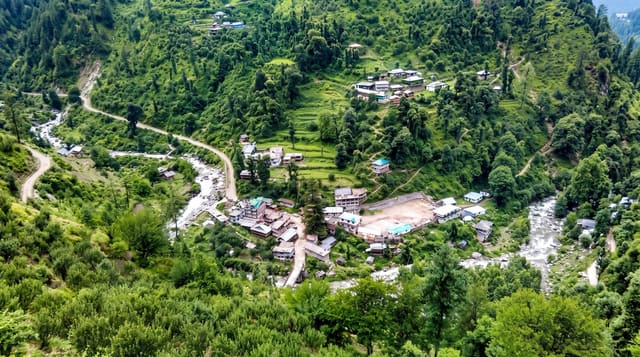
Spiti is a high desert valley in the trans-Himalaya of Himachal Pradesh, running at three thousand five hundred metres and above between bare rock walls with almost no tree cover, its floor a braided grey river and a string of villages on irrigated terraces. Whitewashed monasteries stand on ridges and cliff edges at Key, Dhankar and Tabo, some of them very old, and the settlements of Kibber, Komic and Langza sit among the highest places reachable by road in the country. The scale is the point: rock strata folded and tilted, fossil beds in the hillsides, and light that is brutally clear. Snow leopard tracking trips run out of Kibber in deep winter.
History
The name comes from Piti, "the middle land", for a valley ringed by mountains between Ladakh, Tibet, Bushahr and Kullu, and its rock art suggests people lived here nearly 3,000 years ago. Spiti was probably part of the Tibetan kingdom of Zhang Zhung until the mid-7th century; in the 10th century it passed to Detsukgon, youngest son of Kyide Nyimagon of Ngari Khorsum, the Tabo monastery was built in 996 CE, its history was long linked with Ladakh, and under the Treaty of Amritsar in 1846 it came with Lahaul under direct British administration (Wikipedia, Spiti).
Highlights
- Key Monastery - the tiered white monastery stacked on a ridge above the river.
- Dhankar and Tabo - old monastery settlements on the cliff edge and on the valley floor.
- The high villages - Kibber, Komic and Langza on the plateau above Kaza.
- The valley walls - folded and tilted rock strata with fossil beds in the slopes.
When to go
June to September is the main season, when the Kunzum La road from Manali is open and the villages are running normally. The Shimla and Kinnaur approach stays open most of the year but is long and prone to landslides. Winter from January to March is bitterly cold with limited access, and is the only period for snow leopard trips. Take several days to gain height.
What to expect
Altitude is the main difficulty; arriving over the Manali pass in a single day puts most people flat with headaches. Roads are rough, frequently blocked by slides or river crossings, and journeys take far longer than the distances suggest. Accommodation is homestays and simple guesthouses with cold nights and unreliable power. There is no quick version of Spiti, and a rushed three day trip mostly delivers exhaustion.
Nearby
Kinnaur's orchards lie south along the river and Manali is over the pass to the west.
Key facts
Source: Wikidata, item Q2682249, read on 18 October 2026.
What to pack for Spiti Valley
Chosen from what this place is for. Tap a kit for the full checklist.
- Broken-in walking shoes or boots - Grip and ankle support matter more than looks; never hike in brand-new boots. Find on Amazon
- Warm base layers - Merino or synthetic against the skin - never cotton, which chills when damp. Find on Amazon
- Loose, light, long clothing - Covering up beats bare skin in the desert - and locals dress this way for a reason. Find on Amazon
- Layers for big temperature swings - Warm sun by day, near-freezing at night, even near the equator. Find on Amazon
Some links on this page are Amazon affiliate links - if you buy through them we may earn a small commission at no extra cost to you.
All packing kitsPlan your trip
Where to start if Spiti Valley is going on the list.
Booking links on this page are affiliate links - if you book through them we may earn a small commission at no extra cost to you. It never changes what we write about a place.
Opening times, ticket prices and seasonal closures change - check the official source before you go: official site.