Chandni Chowk
The main street of Shah Jahan's city, once a canal with moonlight on it, now the densest market in Delhi.
Updated 19 October 2026
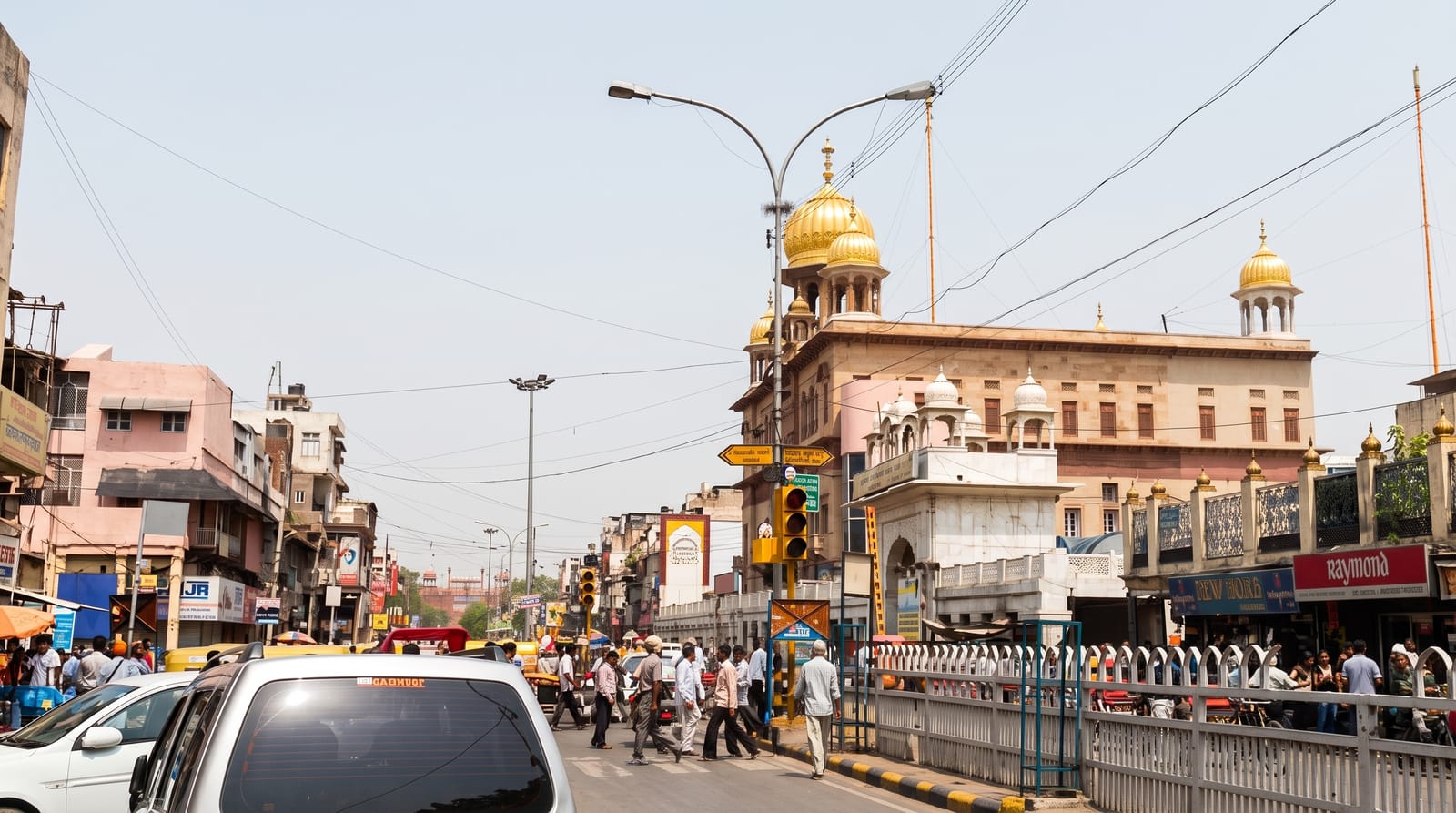
AI illustration
Laid out in the 1650s as the ceremonial avenue of Shahjahanabad running west from the Red Fort, Chandni Chowk had a canal down its centre that reflected the moon, which is where the name comes from. The canal is long gone and the street is now a market of extraordinary density, with specialised lanes running off it: Dariba Kalan for silver, Kinari Bazaar for wedding trim, Nai Sarak for books, Khari Baoli for spices, said to be the largest spice market in Asia. Paranthe Wali Gali fries stuffed breads in ghee, and the street holds a Jain temple, a gurudwara, a church and the Sunehri Masjid within a few hundred metres.
History
Chandni Chowk and its three bazaars were laid out in 1650 by Princess Jahanara Begum, Shah Jahan's favourite daughter, when he founded the new capital of Shahjahanabad around the Red Fort. The bazaar, 40 yards wide and 1,520 yards long, had 1,560 shops arranged in a half-moon, with a pool at its centre fed by a channel from the Yamuna that shimmered in the moonlight, and it became famous for its silver trade; in the 1870s a clock tower replaced the pool, and the centre of the market is still called Ghantaghar (Wikipedia, Chandni Chowk).
What's there
- The specialised lanes - silver, trim, books and spices each in their own street.
- Khari Baoli - the spice market, pungent enough to make eyes water.
- Paranthe Wali Gali - the lane of stuffed fried breads.
- The religious mix - Jain, Sikh, Muslim and Christian buildings within a short walk.
When to go
October to March; mornings before about eleven are the least impossible, and Sundays are quieter as many wholesale shops close. Evenings are lively but extremely crowded.
What to expect
Crowds, noise and traffic are intense and the lanes are barely passable at peak. Pickpocketing is a real risk. Cycle rickshaw is the practical way through. It overwhelms many first-time visitors.
Nearby
The Red Fort stands at the east end; Jama Masjid lies south.
What to pack for Chandni Chowk
Chosen from what this place is for. Tap a kit for the full checklist.
- Comfortable walking shoes - Sightseeing means kilometres of pavement and cobbles daily. Find on Amazon
- Modest clothing - Shoulders and knees covered - the single most common requirement. Find on Amazon
- A slim anti-theft daypack - Zips that close properly; keep it in front in crowds and on transit. Find on Amazon
- A scarf or shawl - To cover the head or shoulders on entry; women especially at mosques. Find on Amazon
Some links on this page are Amazon affiliate links - if you buy through them we may earn a small commission at no extra cost to you.
All packing kitsPlan your trip
Where to start if Chandni Chowk is going on the list.
Booking links on this page are affiliate links - if you book through them we may earn a small commission at no extra cost to you. It never changes what we write about a place.
Opening times, ticket prices and seasonal closures change - check the official source before you go: official site.


