Bara Imambara
A vaulted hall fifty metres long with no beams or pillars holding it up, and a maze of passages above it.
Updated 19 October 2026
AI illustration
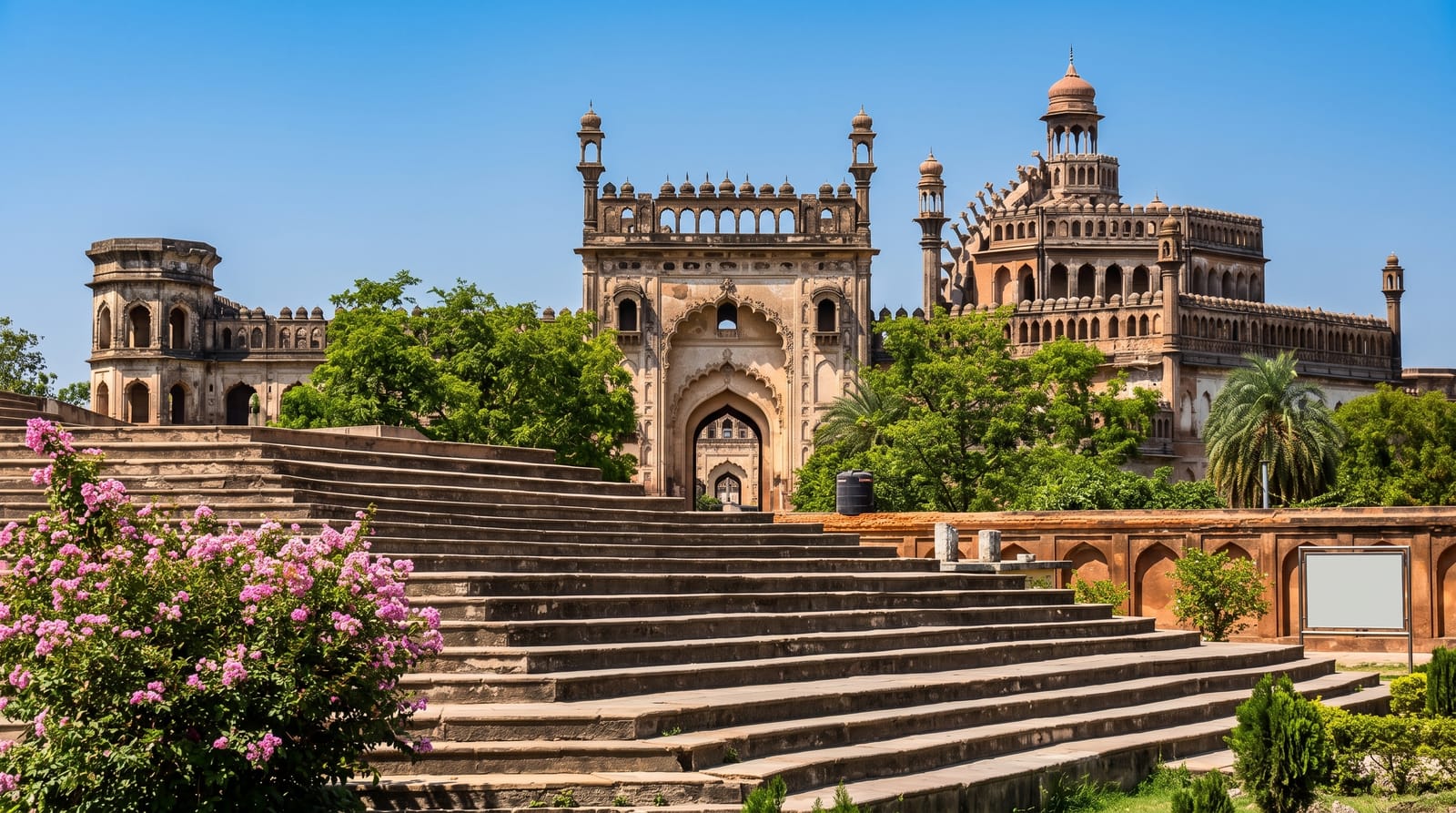
Asaf-ud-Daula began the Bara Imambara in 1780, a year of terrible famine, as a relief project, employing thousands over years, with a story that nobles worked at night demolishing what labourers built by day so that the work and the wages continued. Its central hall is about fifty metres long and fifteen high, roofed without a single beam or supporting pillar, held by an interlocking brick vault that is among the largest of its kind. Above it runs the Bhulbhulaiya, a warren of some four hundred and eighty-nine identical doorways and passages within the wall thickness, entered with a guide, opening onto balconies over the hall and the roof.
History
Building began in 1780, a year of devastating famine, and one of the aims of Asaf-ud-Daula, Nawab of Awadh, was to give the people of the region work for the almost ten years the famine lasted; the story goes that ordinary people built by day while nobles worked at night. The complex was completed in 1784 and is the second largest imambara in the world, after the Nizamat Imambara (Wikipedia, Bara Imambara).
The main sights
- The unsupported hall - a fifty-metre vault with no beams or pillars.
- The Bhulbhulaiya - a maze of near-identical passages inside the walls.
- The stepwell - the Shahi Baoli in the same complex.
- Rumi Darwaza - the great gateway beside the entrance.
When to go
October to March; Lucknow summers are very hot and the maze is airless. Guides are effectively required for the labyrinth and wait at the entrance. Mornings are less crowded.
Practical notes
The labyrinth is dark, narrow and hot, and unsuitable for anyone claustrophobic. Guides quote widely varying prices and should be agreed in advance. Shoes must be removed in the hall.
Nearby
Rumi Darwaza stands adjacent; Chota Imambara is nearby.
Key facts
Source: Wikidata, item Q3630998, read on 18 October 2026.
What to pack for Bara Imambara
Chosen from what this place is for. Tap a kit for the full checklist.
- Comfortable walking shoes - Sightseeing means kilometres of pavement and cobbles daily. Find on Amazon
- A slim anti-theft daypack - Zips that close properly; keep it in front in crowds and on transit. Find on Amazon
- A refillable water bottle - Many cities have public fountains; save money and plastic. Find on Amazon
- A light layer + compact umbrella - For museum air-con and a sudden shower. Find on Amazon
Some links on this page are Amazon affiliate links - if you buy through them we may earn a small commission at no extra cost to you.
All packing kitsPlan your trip
Where to start if Bara Imambara is going on the list.
Booking links on this page are affiliate links - if you book through them we may earn a small commission at no extra cost to you. It never changes what we write about a place.
Opening times, ticket prices and seasonal closures change - check the official source before you go: official site.