Shah-i-Zinda
An avenue of tiled mausoleums climbing a Samarkand hillside - the most concentrated display of Timurid ceramic art anywhere.
Updated 18 October 2026
AI illustration
UNESCO World Heritage
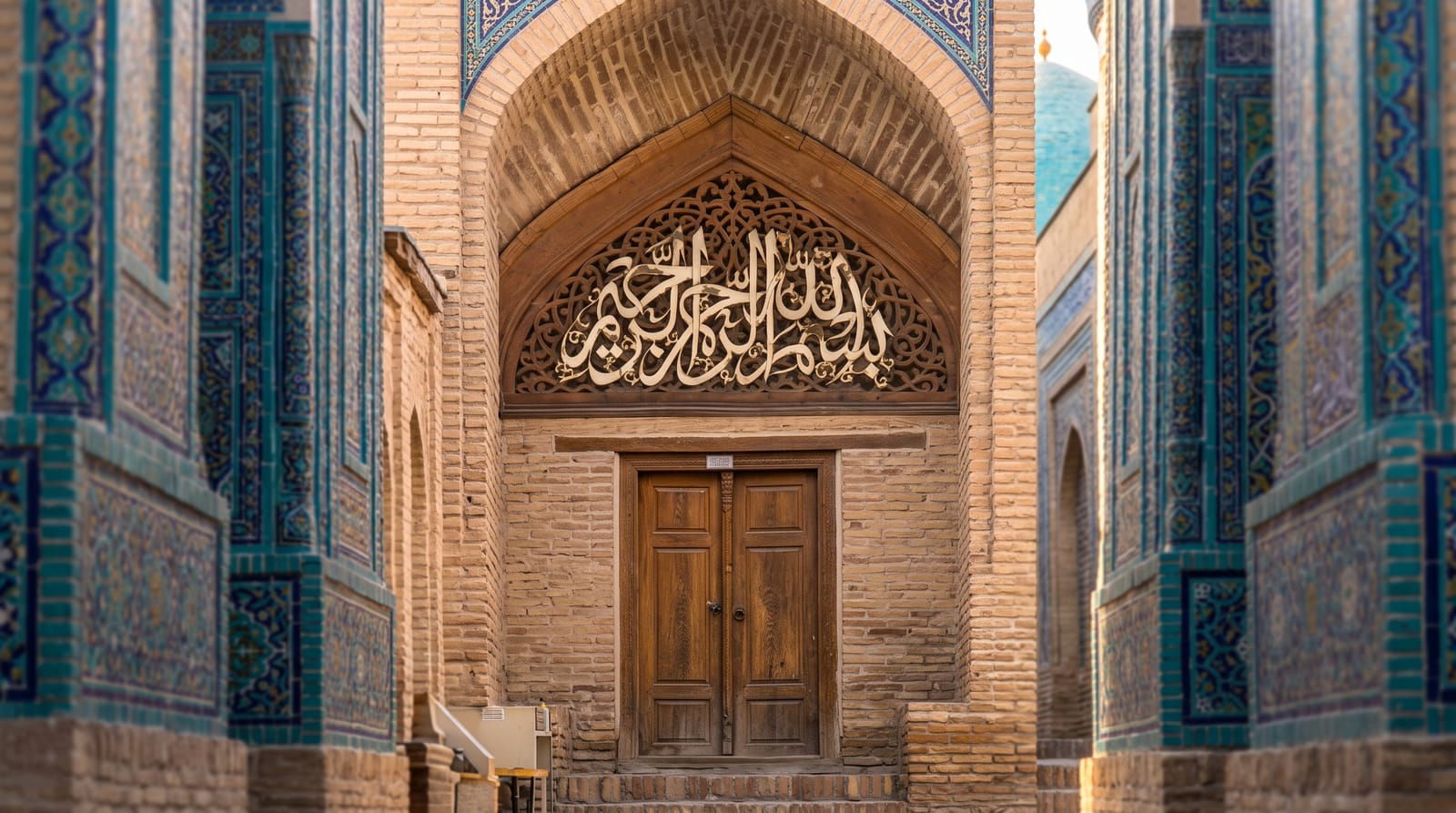
Shah-i-Zinda means the living king, and the necropolis grew over centuries around a shrine associated with a cousin of the Prophet. What visitors meet is a narrow stepped lane climbing a hillside, walled on both sides by mausoleums whose facades carry the finest tilework in Central Asia - deep blues, turquoise, white and gold in glazed mosaic and majolica, each portal different, many built for Timurid princesses and court figures. Because the lane is tight, the effect is overwhelming rather than spread out: you walk through a corridor of ceramic. Locals still climb it as a pilgrimage, counting the steps on the way up and down.
History
The name, the living king, comes from the legend that Qutham ibn Abbas, a cousin of the Prophet Muhammad who came to Samarkand with the Arab conquest in the 7th century to preach Islam, is buried here: beheaded at prayer, he is said to have picked up his head and walked into a deep well, the Garden of Paradise, where he lives still. The ensemble grew over eight centuries, from the 11th to the 19th, into more than twenty buildings in three groups joined by domed passages; of the 11th and 12th centuries mostly bases and headstones remain, and most of what stands dates from the 14th and 15th, the later rebuilding of the 16th to 19th centuries changing little (Wikipedia, Shah-i-Zinda).
What you'll find
- The tiled avenue - the stepped lane of facades, each one different.
- The Timurid mausoleums - tombs of princesses, generals and court astronomers.
- The pilgrimage steps - the counted stairway locals climb both ways.
- The hilltop view - Samarkand's domes from the top of the necropolis.
When to go
Spring and autumn bring comfortable temperatures and the best light on the tiles. Summer in Samarkand is fiercely hot; winter is cold but the site is quiet and the blues look extraordinary against snow. Early morning gives the lane without crowds and with softer light for photography.
Good to know
It is compact - an hour or two covers it - so pair it with the Registan and Gur-e-Amir rather than treating it as a standalone. Modest dress is expected and the site is an active pilgrimage destination, so keep cameras away from people at prayer. Restoration over the years has been heavy in places, and purists debate how much is original; the effect remains stunning regardless.
Nearby
The Registan, Gur-e-Amir, Bibi-Khanym mosque and the Afrosiyob museum.
Key facts
Source: Wikidata, item Q671935, read on 18 October 2026.
What to pack for Shah-i-Zinda
Chosen from what this place is for. Tap a kit for the full checklist.
- Warm base layers - Merino or synthetic against the skin - never cotton, which chills when damp. Find on Amazon
- Comfortable walking shoes - Sightseeing means kilometres of pavement and cobbles daily. Find on Amazon
- Modest clothing - Shoulders and knees covered - the single most common requirement. Find on Amazon
- An insulated + windproof jacket - A down or synthetic layer under a hard shell handles most cold. Find on Amazon
Some links on this page are Amazon affiliate links - if you buy through them we may earn a small commission at no extra cost to you.
All packing kitsPlan your trip
Where to start if Shah-i-Zinda is going on the list.
Booking links on this page are affiliate links - if you book through them we may earn a small commission at no extra cost to you. It never changes what we write about a place.
Opening times, ticket prices and seasonal closures change - check the official source before you go: official site.