Haeinsa Temple
A mountain temple that houses the Tripitaka Koreana, the world's most complete Buddhist canon carved on tens of thousands of wooden blocks, a UNESCO treasure.
Updated 19 October 2026
AI illustration
UNESCO World Heritage
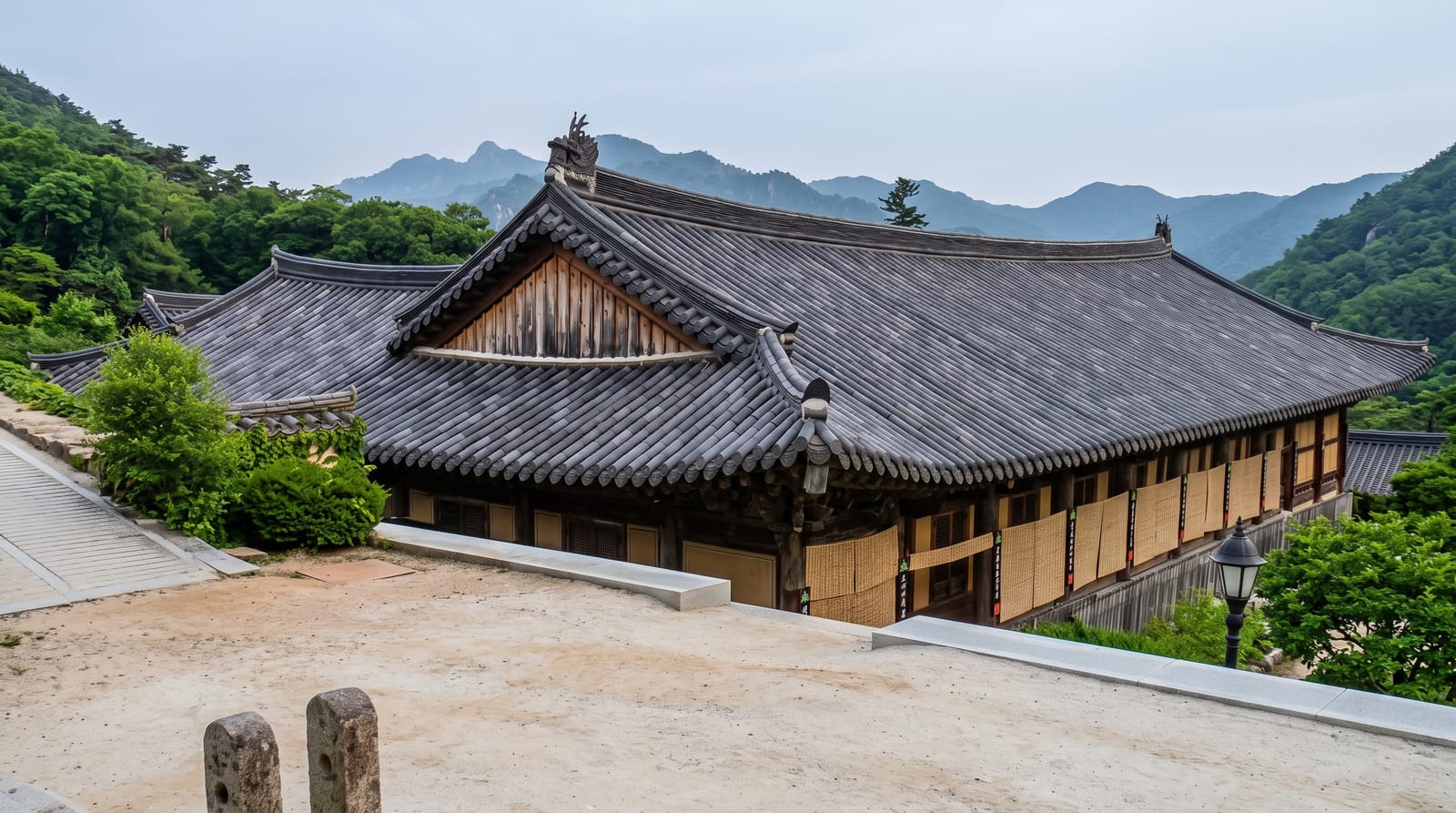
Haeinsa, set on the forested slopes of Mount Gaya, is one of Korea's greatest temples, and its fame rests on an extraordinary object: the Tripitaka Koreana, the most complete surviving collection of Buddhist scriptures, carved in the thirteenth century onto more than eighty thousand wooden printing blocks. That the blocks have survived without warping or rot for some eight centuries is due to the remarkable buildings that hold them, the Janggyeong Panjeon depositories, designed with such careful ventilation, drainage and control of humidity that they preserve the wood naturally, and it is these halls and their contents that are inscribed by UNESCO. The blocks are stored behind latticed windows and glimpsed rather than handled, but the depositories, the working temple around them with its halls and courtyards, and the mountain setting make Haeinsa a place of great atmosphere and one of the head temples of Korean Buddhism.
History
The temple was built in 802: legend says that two monks of royal Daegaya descent, Suneung and Ijeong, back from Tang China, cured the wife of King Aejang of Silla, who ordered it built in thanks, while an account by Choe Chi-won of 900 says a queen dowager who had converted to Buddhism helped pay for it. It was renovated in the 10th century and in 1488, 1622 and 1644, has kept the Tripitaka Koreana, the Buddhist canon carved on 81,350 wooden blocks, since 1398, and was lost to fire in 1817 and rebuilt in 1818. In 1995 the Janggyeong Panjeon, the depositories built to keep the blocks, became a World Heritage Site (Wikipedia, Haeinsa).
Highlights
- The Janggyeong Panjeon - the ingeniously ventilated wooden halls preserving the blocks.
- The Tripitaka Koreana - the tens of thousands of woodblocks, seen through the lattices.
- The temple halls - the working monastery's shrines and courtyards on the mountainside.
- Gayasan - the forested mountain setting and its trails.
When to go
Spring and autumn are the most beautiful, with blossom or brilliant maple colour on the mountain; it is a working temple open year-round. A temple stay allows a deeper, quieter experience. Early in the day is calmest, before day visitors arrive.
Before you go
The famous woodblocks themselves are protected inside the depositories and can only be glimpsed through the latticed windows, not viewed close up, which surprises some visitors; the marvel is as much the preserving buildings as the blocks. It is well out of the cities, on a mountainside reached by a walk up from the car park, so allow travel time. As an active monastery, quiet and respectful behaviour is expected.
Nearby
The trails of Gayasan National Park climb from the temple; Daegu and the historic city of Gyeongju are within reach.
Key facts
Source: Wikidata, item Q489795, read on 18 October 2026.
What to pack for Haeinsa Temple
Chosen from what this place is for. Tap a kit for the full checklist.
- Strong insect repellent - DEET or picaridin; the jungle is where bites and disease risk are highest. Find on Amazon
- Comfortable walking shoes - Sightseeing means kilometres of pavement and cobbles daily. Find on Amazon
- Modest clothing - Shoulders and knees covered - the single most common requirement. Find on Amazon
- Long, light, quick-dry clothing - Covers skin from insects and sun without cooking you in the humidity. Find on Amazon
Some links on this page are Amazon affiliate links - if you buy through them we may earn a small commission at no extra cost to you.
All packing kitsPlan your trip
Where to start if Haeinsa Temple is going on the list.
Booking links on this page are affiliate links - if you book through them we may earn a small commission at no extra cost to you. It never changes what we write about a place.
Opening times, ticket prices and seasonal closures change - check the official source before you go: official site.